
Last updated November 24, 2026
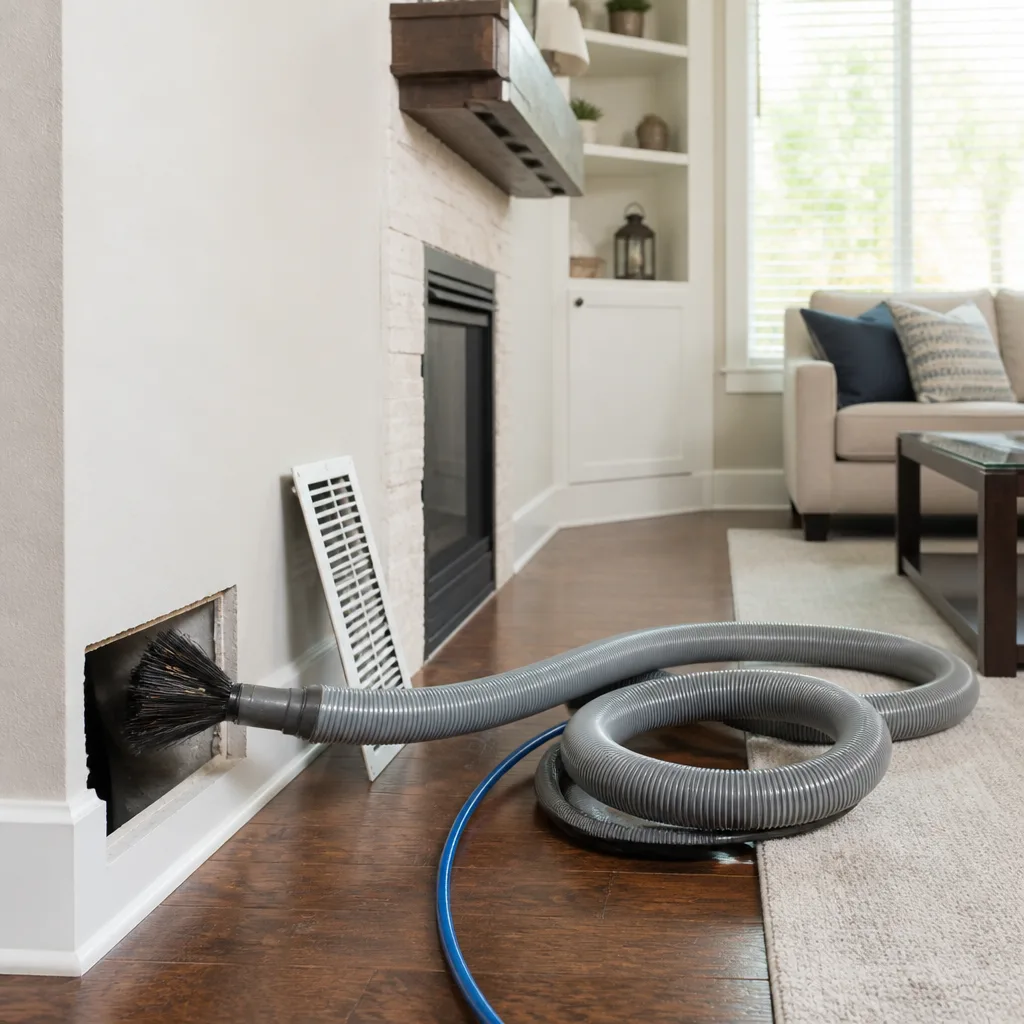 Whole-home duct cleaning
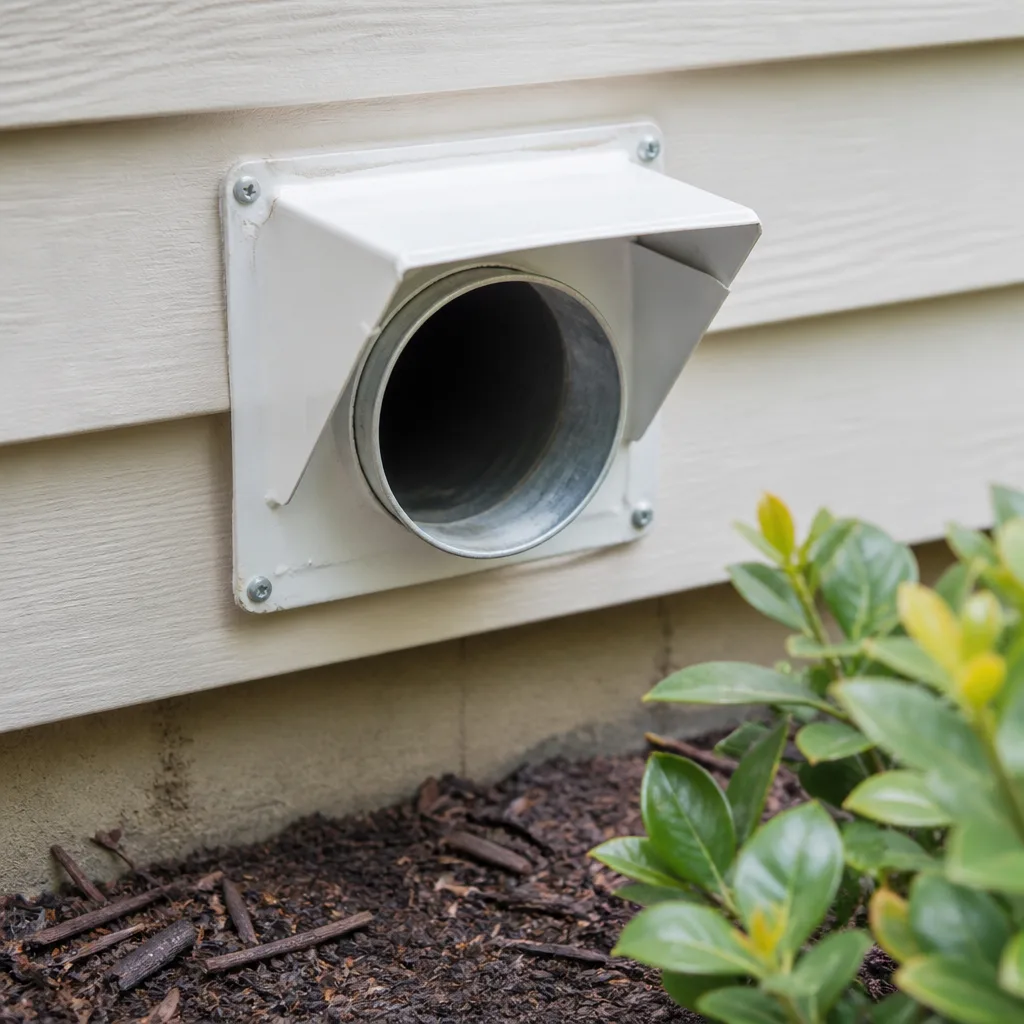 Dryer vent cleaning
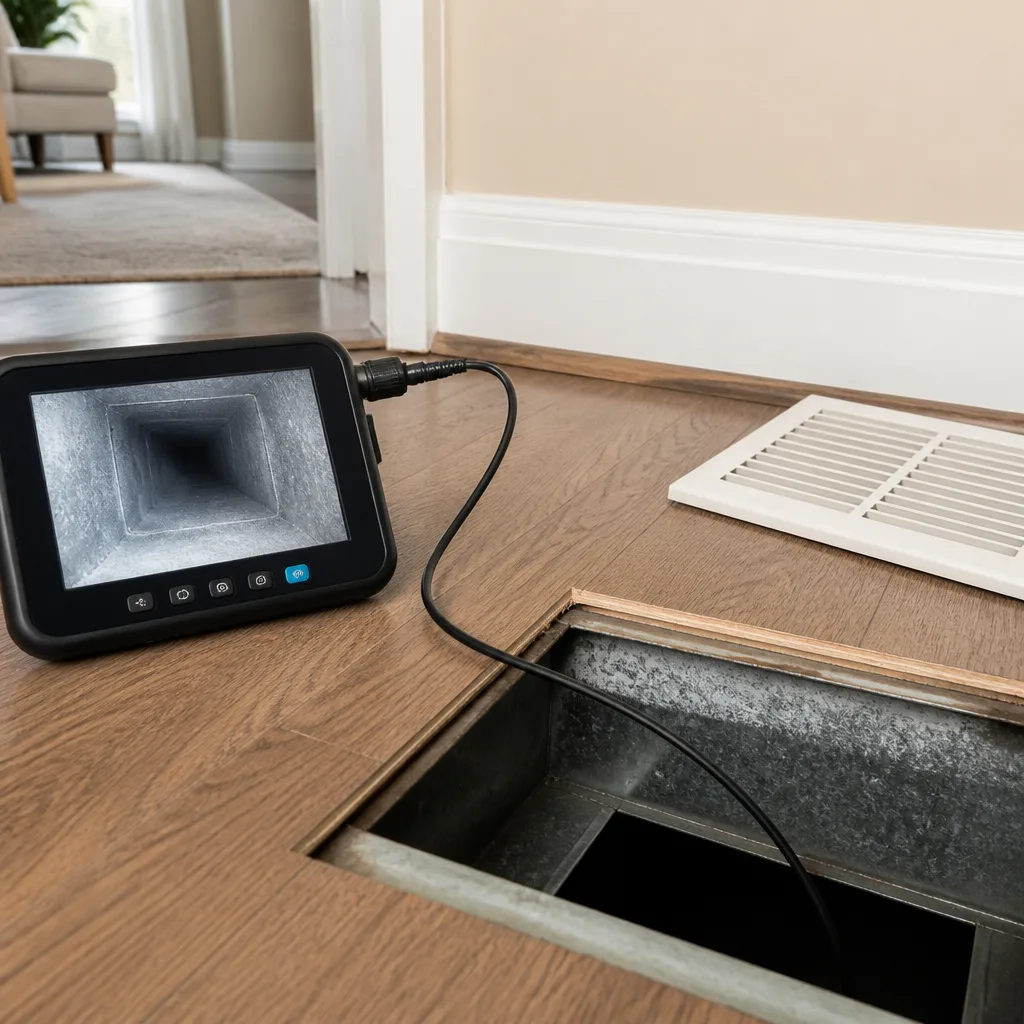 Camera inspection
 Sanitizing & deodorizing
Whole-system duct and dryer vent check with before-and-after photos - you see exactly what came out of your vents
That "$99 whole-house special" is a bait ad - the real number appears once they are in your hallway, or the "clean" is a shop-vac at the register. We photograph the inside of your ducts before and after instead.
How to Hire an Air Duct Cleaning Contractor in Green Lake: A Step-by-Step Guide
Most hiring advice for duct cleaning starts in the wrong place. It tells you to check a license and read some reviews, then pick whoever answers the phone. That misses the actual problem. The Federal Trade Commission has been warning consumers about air duct cleaning scams since 1997, and the fraud rarely happens at your front door. It happens in the gap between what a company promises and the equipment they actually bring. If you can’t tell a real collection unit from a shop-vac with a logo sticker, price shopping is guesswork. This guide teaches you to verify equipment, read a scope of work, and compare Green Lake bids by what’s inside them rather than a number at the top.
Quick Answer
Hiring an air duct cleaning contractor in Green Lake means verifying three things before anyone touches your system: that the contractor’s vacuum collection unit meets NADCA’s minimum airflow standard of 4,000 CFM, that they use mechanical agitation plus HEPA-filtered extraction (not just a vacuum hose), and that they’ll put the full scope in writing with before-and-after documentation. Ask to see the equipment and its HEPA filter rating before work starts. Compare bids by line-item scope, not price, and treat any “whole house” quote under $99 as a warning sign.
Styles & brands we work with
- Whole-home duct cleaning
- Dryer vent cleaning
- Camera inspection
- Sanitizing & deodorizing
Table of Contents
- Why Equipment Verification Matters More Than License Checks
- How to Confirm the Vacuum Meets the 4,000 CFM Standard
- Why Asking to See the Equipment Is Reasonable
- What a Proper Scope of Work Document Includes
- Red Flags Specific to the Green Lake and Seattle Market
- How to Compare Bids by Scope Rather Than Price
- The Step-by-Step Hiring Process
- What a Complete Job Actually Looks Like
Why Equipment Verification Matters More Than License Checks
A license tells you a contractor is allowed to work. It doesn’t tell you what they’ll use when they arrive. For duct cleaning, the tool is the job. A crew running a true negative-pressure system pulls dislodged dust out of the house and into a filtered collection unit. A crew running a portable vacuum with a brush attachment stirs the same dust back into your living room. Both can hold a business license. Both can have five-star reviews. Only one leaves your ducts cleaner than they started.
That’s why the verification order matters. Start with equipment, then process, then paperwork. The Green Lake housing stock makes this especially important. Many homes here date to the mid-twentieth century, with original rigid duct runs, some flex duct retrofits, and crawlspaces that hold moisture through the wet months. Older ductwork with aged sealant lets more debris settle into joints and boots, and it can shed loose material under aggressive cleaning. A contractor who understands that distinction uses controlled agitation and HEPA capture, not just high airflow and hope.
In our experience, the contractors worth hiring welcome the equipment conversation. They know the difference between a Rotobrush rotary brush system and a shop-vac. The ones who get defensive when you ask about their collection unit usually have a reason.
How to Confirm the Vacuum Meets the 4,000 CFM Standard
NADCA, the National Air Duct Cleaners Association, sets the industry’s reference standard for source removal: a vacuum collection unit with a minimum airflow of 4,000 CFM connected to the duct system under negative pressure. That threshold exists for a practical reason. Below it, the machine can’t maintain enough suction to keep dislodged debris moving toward the capture unit, which means dust settles back into the ducts or escapes into the room.
Here’s how to verify the standard without a degree in HVAC:
- Ask for the model number of the collection unit. Not “we have a big vacuum” but the actual make and model. Write it down.
- Ask for the rated CFM at the working pressure. A unit can be advertised at a peak airflow that drops sharply once it’s connected to ductwork. Ask what it delivers under load.
- Ask about HEPA filtration on the exhaust. A 4,000 CFM machine without HEPA capture is just moving dust faster. Look for a HEPA rating, and ask what micron level the filter is rated to.
- Confirm they connect to the system. A legitimate job seals the collection unit to a duct opening so the whole system runs under negative pressure. A vacuum sitting in the room with a loose hose is not the same thing.
- Look for Abatement Technologies, Nikro, or comparable professional platforms. These are purpose-built for containment and negative-pressure work. If the answer is “we use a shop vac and a compressor,” that’s your answer.
We operate Nikro HEPA-filtered vacuum equipment and Abatement Technologies containment tools precisely because the standard exists for a reason. Professional-grade Rotobrush rotary brush systems handle the mechanical agitation side, and the HEPA extraction catches what the brush loosens. If a Green Lake contractor can’t tell you the CFM and the filter rating, that’s information in itself.
Why Asking to See the Equipment Is Reasonable
Some homeowners hesitate to ask, worried it makes them look difficult. It doesn’t. You’re about to let a contractor open every duct in your house. Asking to see the machine is the same as asking a roofer which shingles they’ll use or a painter which primer. It’s a normal question, and the answer is part of what you’re paying for.
Here’s what to ask when the equipment is on site, before any hose goes in a register:
- Show me the HEPA filter. Ask for the rating. A true HEPA filter captures particles down to 0.3 microns at 99.97% efficiency. If the crew can’t tell you the rating, ask why not.
- Show me how the unit connects to the system. You want to see the connection seal at the duct opening. Negative pressure only works when the system is closed.
- Show me the agitation tools. A rotary brush, air whip, or forward-and-reverse air sweep should be visible. A single vacuum hose with no agitation is a surface job, not a source-removal job.
- Ask about containment. If anyone is doing work near a return that opens into a living space, you want to see plastic sheeting and negative-pressure setup, not just a drop cloth.
- Ask what happens if they find mold or damaged ductwork. A good answer describes inspection and documentation. A bad answer is a price increase before the equipment is even running.
In Green Lake, with its share of older homes and tight crawlspaces, containment matters more than it does in new construction. A crew that respects the process will walk you through their setup without being asked twice.
What a Proper Scope of Work Document Includes
A verbal promise is not a scope of work. Any contractor asking to start work without a written scope is asking you to trust that the job is exactly what you imagined. Before you sign, the document should include all of the following:
- A component list. Which parts of the system are being cleaned: supply trunks, branch runs, return ducts, registers, grilles, boots, the plenum, and the air handler. “Whole house” without a component list is not a scope, it’s a phrase.
- Access methods. How the contractor will reach the ducts. Will they remove registers, cut access holes in the trunk line, use existing service panels? Where will holes be cut, and how will they be sealed afterward?
- Agitation and extraction method. What tools will be used, and what vacuum. This ties back to the CFM question. It should be named, not described in general terms.
- Before-and-after documentation. Photographs of the duct interior before cleaning and after. Camera inspection of the trunk and main runs. This is the only verification a homeowner has that the work actually happened.
- Whether repair and sealing are included. Cleaned ducts with leaking joints shed debris again within months. If sealing isn’t included, it should be quoted as an option.
- The written estimate and what sets the price. One flat price per system, agreed before work starts. Not a per-vent charge, not a base fee plus add-ons.
- What isn’t covered. A real scope says what’s excluded: HVAC components needing mechanical repair, mold remediation beyond surface sanitizing, sections of duct that are inaccessible. Honest exclusions are a sign of an honest contractor.
The document should also name who does what. If a company subcontracts out the duct repair or the sanitizing, that should be disclosed. We handle air duct cleaning, duct repair and sealing, and sanitizing in-house, so the crew that cleans the system is the crew that fixes it. That’s not a universal arrangement in this market.
Red Flags Specific to the Green Lake and Seattle Market
The Seattle metro market has a particular pattern of duct cleaning advertising that homeowners should recognize. These are the warnings we hear about most from Green Lake residents who’ve had a prior bad experience:
- “Whole house” pricing under $99. No crew can clean a full residential system for that. What happens is the technician arrives, pokes a camera into a duct, and finds “severe contamination” that requires an immediate add-on quote. The low price is a door-opener, not a price.
- Mold treatment pitched on the first phone call. A contractor can’t diagnose mold over the phone. If mold treatment is offered before anyone has seen the system, that’s sales, not service.
- No camera inspection offered. A contractor who won’t show you inside the ducts before cleaning has no way of proving they cleaned them. Camera documentation should be standard, not an upsell.
- Per-vent pricing. Duct cleaning is a system job. A per-vent price encourages counting vents rather than thoroughly cleaning the system, and it gives a contractor a reason to look for extra vents.
- Refusal to share equipment details. If “what kind of vacuum” gets a brush-off, move on. The equipment is the job.
- No written scope, no signed estimate. Any contractor willing to start work without a piece of paper that you also have a copy of isn’t running a business a homeowner should trust.
- Getting routed to a call center. If your questions about the Green Lake job go to a national dispatch line, the person answering likely won’t be on the crew that shows up. Local specialists can answer specific questions about your system.
None of these red flags require you to become an expert. They just require you to ask the questions this guide walks through and to notice when answers don’t add up.
How to Compare Bids by Scope Rather Than Price
Two bids, $450 and $880. The cheap one looks obvious. But when you put the scopes side by side, the low bid often covers half the components, uses a portable vacuum instead of a truck-mounted or high-CFM unit, includes no camera documentation, and has no duct repair line. The high bid might include all of that, plus sealing of leaking joints that will otherwise undo the cleaning within a season. The lower price is doing less work.
When you compare bids, insist on seeing these line items in writing:
- Component list, item by item. Which supply and return ducts, which plenums, which registers, the air handler. If two bids list different components, they’re not the same job.
- Equipment make and model, with CFM and HEPA rating. If one bid names a source-removal vacuum and the other doesn’t, you know where the difference is.
- Agitation method. Rotary brush, compressed air, manual. The method affects how much debris actually releases from the duct walls.
- Documentation. Camera inspection before and after. Photo package. Written report.
- Sanitizing and its scope. Surface sanitizing of the duct interior, and what product is used. Guardsman-grade protective treatments are one option; ask what’s being applied and why.
- Duct repair and sealing line. Where sealing is needed, what the scope includes, and what it’s priced at.
- Filtration integration. If the bid proposes adding or upgrading filtration, the make and model should be stated. Honeywell and Aprilaire components are common options, and installing them during the same visit costs less than a separate job.
Price is the last thing to compare, not the first. Once the scopes match, then look at the numbers.
The Step-by-Step Hiring Process
Here’s the sequence that works. Follow it in order, and you’ll reduce the chance of a bait-and-switch by a wide margin.
- Ask for the vacuum make, model, CFM, and HEPA rating. Write the answers down. If a contractor can’t answer, that’s a red flag.
- Ask about agitation tools. Rotary brush, air whip, or air sweep should be named. A single vacuum hose is not enough.
- Request a written scope of work. Component list, access methods, documentation commitments, exclusions. Review it before anyone schedules.
- Ask for camera inspection documentation before and after. Confirm it’s included, not an optional add-on.
- Get at least two written estimates. Line-item them. Compare scopes, not totals.
- Ask who actually does the work. In-house crew, or subcontractor? In-house is generally better because the cleaning and the repair happen in the same visit.
- Confirm equipment will be visible before work begins. Ask the crew to show you the collection unit and the HEPA filter when they arrive.
- Ask about duct repair and sealing as part of the quote. Cleaning without sealing is a temporary result in a home with older ductwork.
- Sign the estimate before work starts. One flat price per system, documented, with a copy for you.
- Review the before-and-after photos after the job. Compare them. Ask questions if anything looks incomplete.
Green Lake homeowners who run this process generally find that the bids they receive are more comparable and the work more verifiable once they insist on documentation. Beyond duct cleaning, the same vetting applies to a related task: ask whether the contractor does dryer vent cleaning with the same standards, because dryer vents have their own fire-safety concerns and are often tacked on as an afterthought.
What a Complete Job Actually Looks Like
A complete duct cleaning job in Green Lake follows a predictable sequence, and knowing it helps you spot when a job is being cut short:
- Walkthrough and setup. The crew inspects the system, identifies problem areas, and sets up containment. In homes with accessible returns, plastic sheeting and negative-pressure equipment go up before anything runs.
- Connect the collection unit. The high-CFM vacuum is sealed to a duct opening. The whole system runs under negative pressure.
- Agitate each duct run. A rotary brush or air tool travels through each branch, loosening debris from the walls. Green Lake’s older ductwork sometimes needs a gentler approach on aged flex sections, so ask how the crew handles that.
- Extract the debris. HEPA filtration captures the loosened material at the collection unit. This is the step where shop-vac setups fail; they stir debris without capturing it.
- Clean the air handler and components. The blower, evaporator coil if it’s accessible, and plenums are part of the system and part of the job. HVAC cleaning is a separate line from duct cleaning, but a complete system job touches both.
- Inspect and document. Camera documentation of the cleaned duct internals. Before-and-after photos for the homeowner.
- Seal and repair where needed. Leaking joints, disconnected runs, damaged flex sections. Cleaning without this step is a reset, not a fix.
- Sanitize. Surface sanitizing of the duct interior with a product like a Guardsman-grade treatment, which is where the job leaves the system cleaner for longer than a scrubbed-only finish.
- Review filtration. If the existing filter is undersized for the home, a higher-rated Honeywell or Aprilaire component can be installed by the same crew that cleaned the system.
You can read more about the related filter and coil work on our HVAC cleaning page. The point is that a proper job touches the whole system, not just the visible registers.
Common Mistakes to Avoid
- Hiring on price alone. A quote that’s significantly below every other bid means either fewer components, lesser equipment, or a bait-and-switch. Compare scopes first, prices last.
- Not asking for CFM and HEPA ratings. If you can’t name the vacuum the contractor will use, you can’t compare them. The 4,000 CFM standard is your benchmark.
- Accepting “whole house” as a scope. Get a component list. “Whole house” is a marketing phrase, not a line item.
- Skipping camera documentation. Before-and-after photos and internal camera inspection are the only proof that the work happened. Insist on them in the estimate.
- Treating mold treatment as an automatic add-on. If it’s pitched on the first call, slow down. Diagnosis should follow inspection, not precede it.
- Cleaning without sealing. In Green Lake’s older homes, ducts with leaking joints will re-accumulate debris within months. Duct repair and sealing alongside cleaning is what makes the result hold up.
- Assuming the crew that shows up is the crew that was quoted. Ask in advance whether the work is done in-house. Subcontracted repair means two companies, two schedules, and usually two invoices.
See the difference
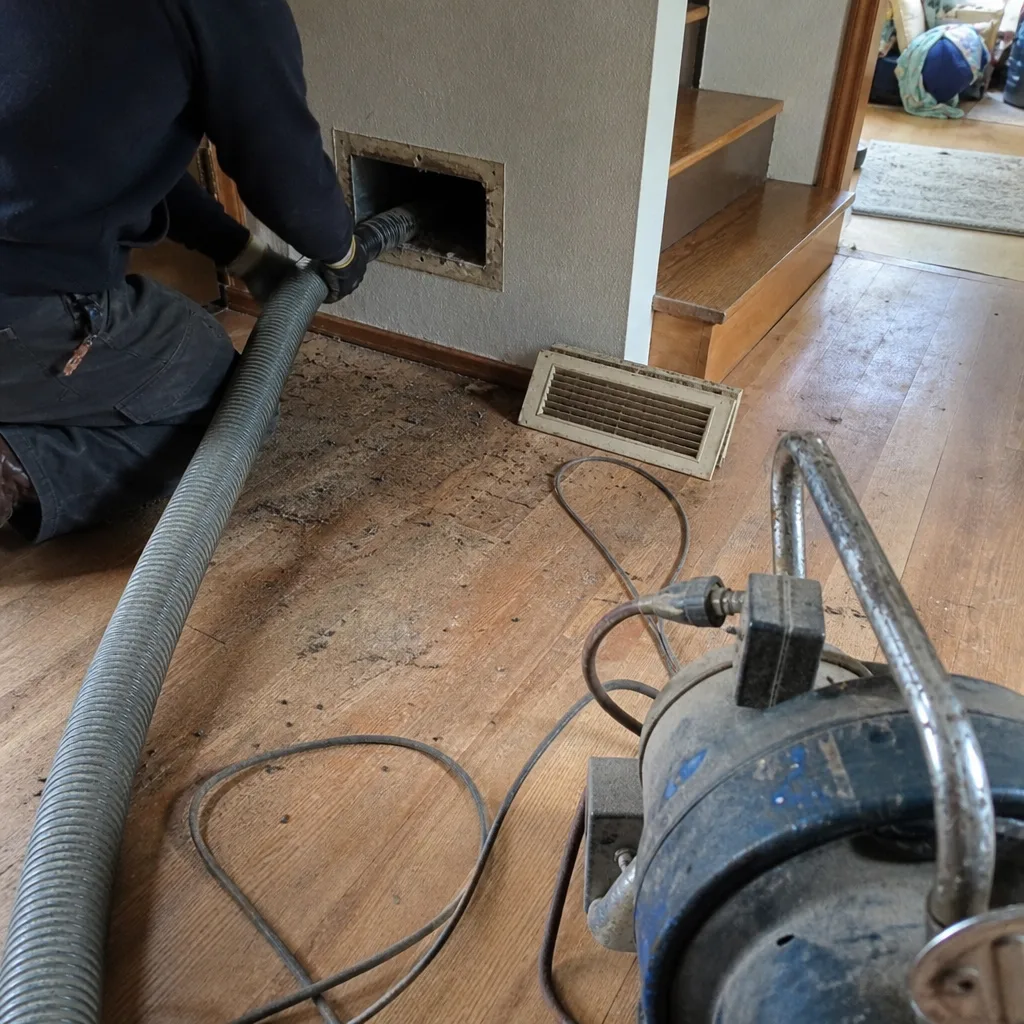 Before
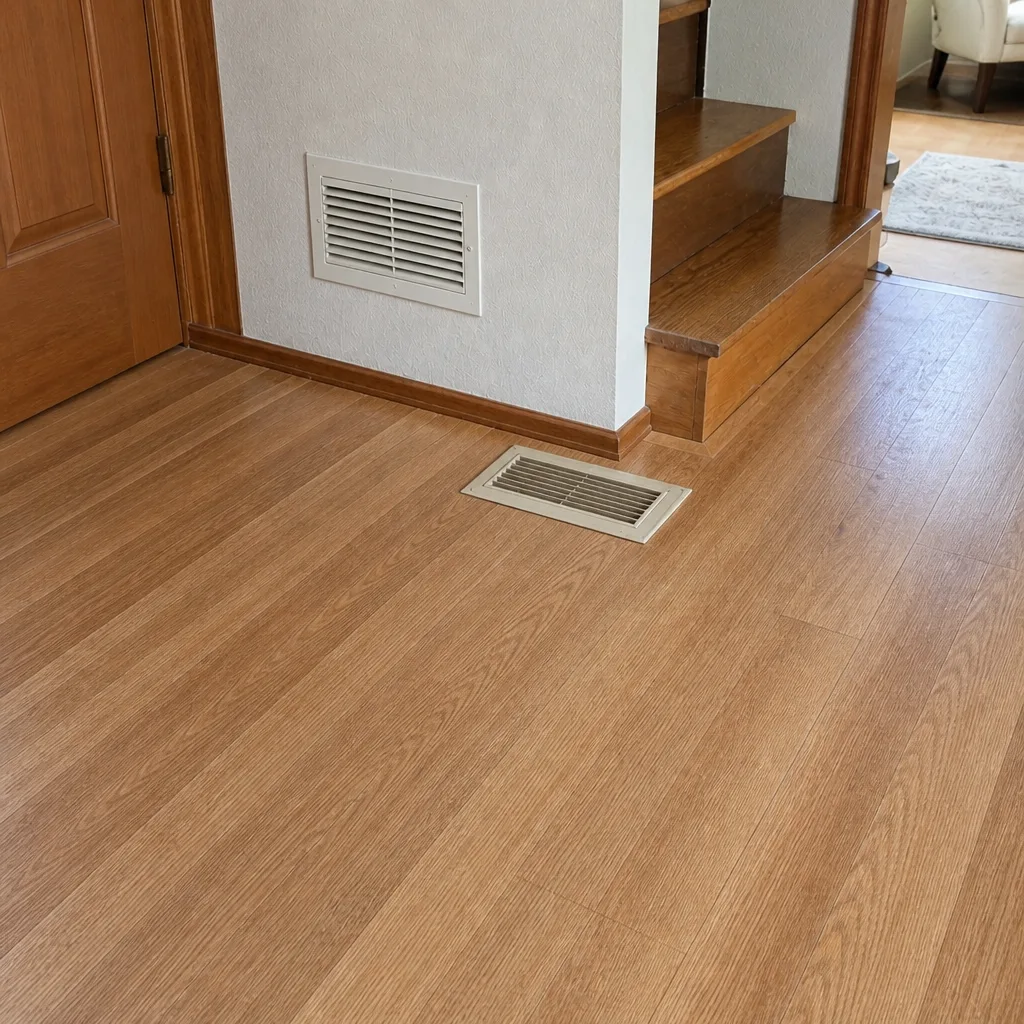 After
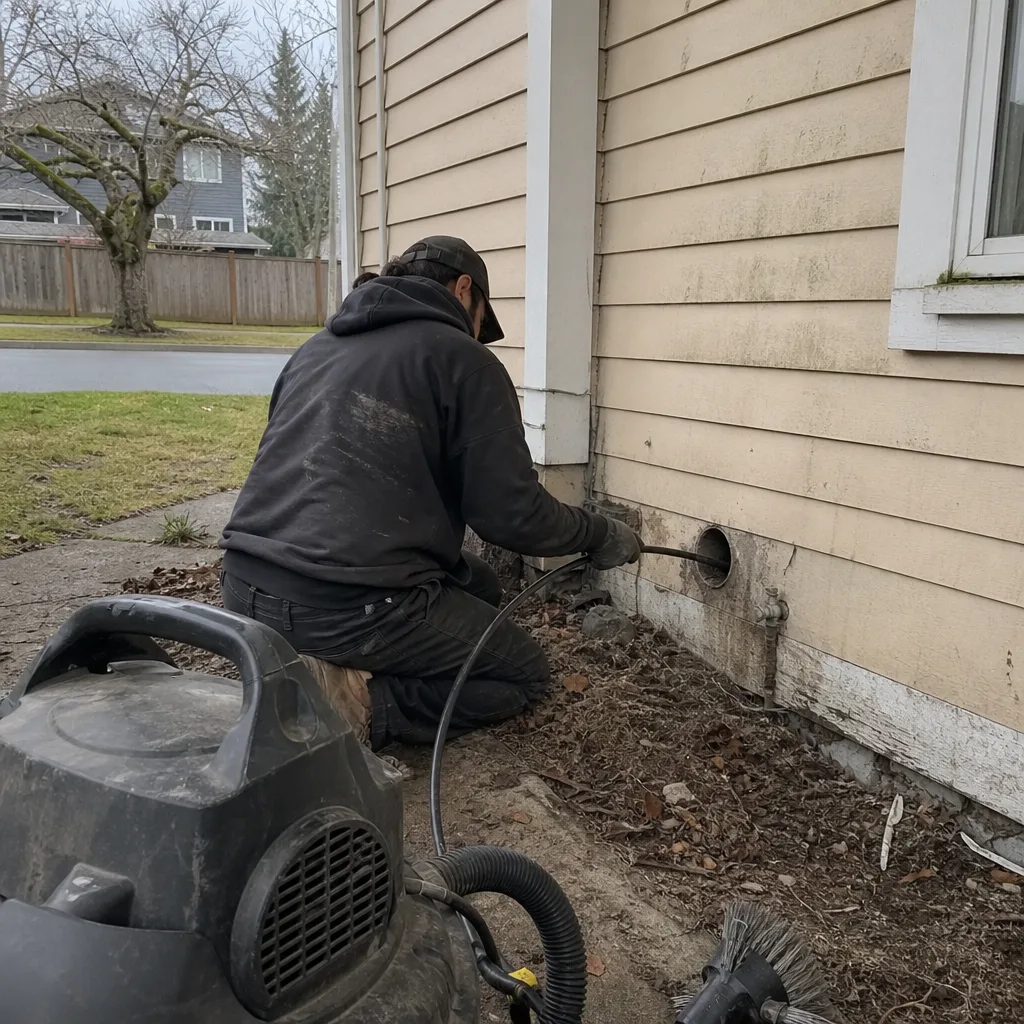 Before
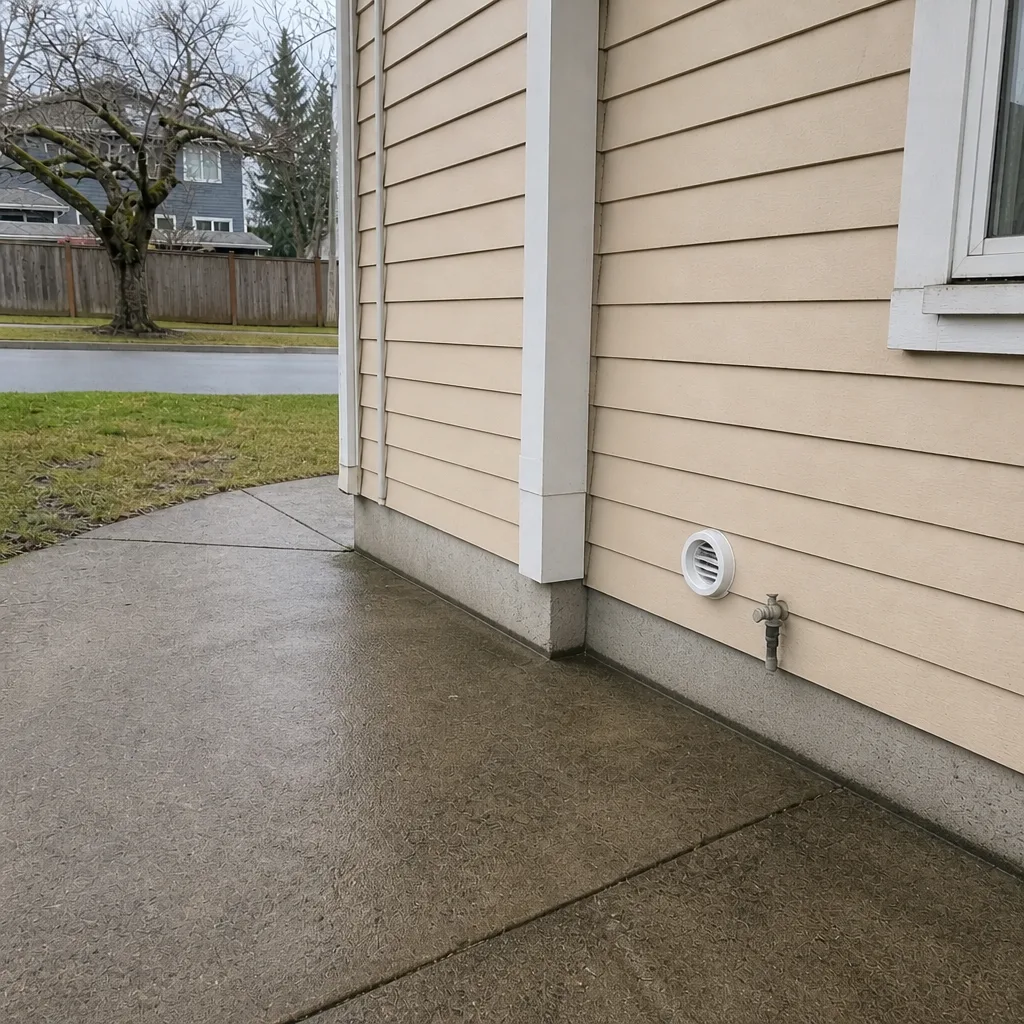 After
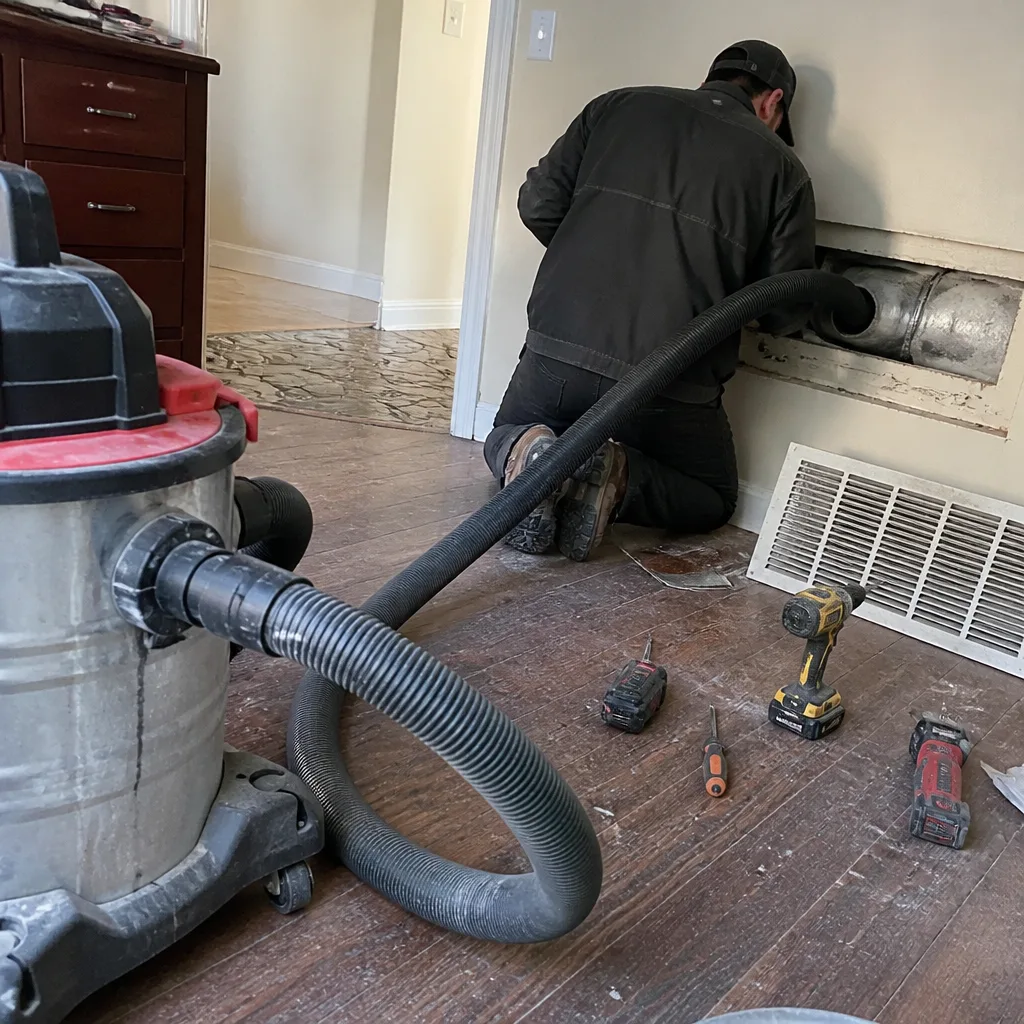 Before
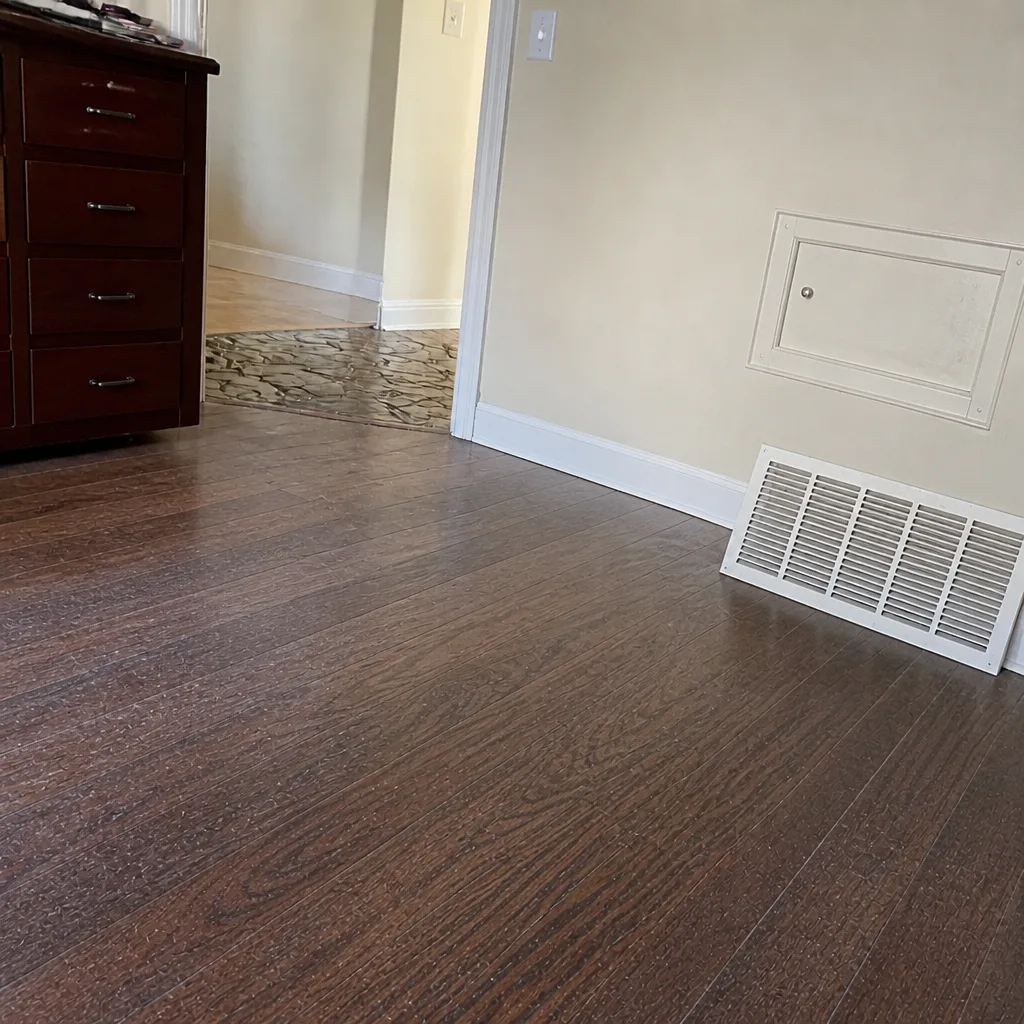 After
When to Call a Professional
Not every homeowner needs duct cleaning on a calendar. Some situations call for it regardless of how the ducts look from a distance. If you’ve just moved into a Green Lake home and don’t know the last time the ductwork was cleaned, a camera inspection is worth the call. If you’re seeing dust on surfaces shortly after cleaning them, or if visible debris is collecting at the registers, the ducts warrant a look. After a renovation or a water intrusion event, professional containment and cleaning are worth scheduling before the system runs again. If anyone in the house has persistent respiratory symptoms and the ducts haven’t been inspected in years, a camera inspection gives you actual information rather than a guess. And if you notice a musty smell when the heat or AC kicks on, that’s a sign the system should be professionally inspected rather than treated at home.
Air Duct Cleaning Green Lake offers free estimates in Green Lake. Call (877) 820-8098. We answer 24/7. Fast dispatch from 7am to 7pm, Sunday through Friday.
Frequently Asked Questions
Pricing depends on the size of the system, how many components are in scope, and whether repair or sealing is included. We price per system, not per vent, and set the final price in a written estimate before any work starts. There’s no discount coupon that leads to a bigger invoice once the technician arrives. Call (877) 820-8098 for an exact quote. Estimates are free.
Cheaper quotes usually cover fewer components, use lesser equipment, or are bait-and-switch opener prices that assume add-ons will follow. A quote that doesn’t name the vacuum, the CFM rating, and the component list isn’t comparable to one that does. Comparing bids by scope is the only accurate comparison. Call (877) 820-8098 and we’ll walk you through what makes up our estimate. Estimates are free.
Before-and-after photos and camera inspection of the internal ductwork are the only real proof. Insist on both in the written scope, and compare the photos after the job. A contractor who can’t provide documentation can’t show that the cleaning happened. Call (877) 820-8098 for a scope of work with documentation commitments. Estimates are free.
There’s no single interval that fits every home. Duct cleaning is prompted by conditions rather than a calendar: recent renovation, water intrusion, visible debris at registers, persistent dust, or a prior inspection that showed buildup. In older Green Lake homes, if the ducts have never been properly cleaned, a camera inspection establishes a baseline. Call (877) 820-8098 to schedule an inspection. Estimates are free.
Yes. Duct repair and sealing are handled in-house, so the crew that cleans the system can also repair leaking joints and disconnected runs in the same visit. That matters in older homes, where cleaning without sealing tends to be short-lived. Call (877) 820-8098 to include repair and sealing in the estimate. Estimates are free.
We use Rotobrush and Nikro equipment, the same professional platforms commercial IAQ contractors rely on. Nikro HEPA-filtered vacuum collection captures dislodged particulates instead of recirculating them, and Abatement Technologies containment tools go up wherever contamination risk is elevated. Ask us to show the equipment and filter rating before we start; that’s a reasonable request. Call (877) 820-8098 with questions about the equipment or the scope. Estimates are free.
The Bottom Line
The right way to hire an air duct cleaning contractor in Green Lake isn’t to check a license and pick the lowest bid. It’s to verify the equipment first: the collection vacuum’s CFM rating, the HEPA filter rating, the agitation tools. Then read the scope of work: a component list, camera documentation, and whether repair and sealing are included. Compare bids by those line items before you compare price. The industry has a real fraud problem, but it’s a problem you can defend against with a few very specific questions. Green Lake homeowners who ask them tend to end up with the work that was actually promised.
If you want a straight answer about what your system needs, call Air Duct Cleaning Green Lake at (877) 820-8098 for a free estimate. We answer 24/7. Fast dispatch from 7am to 7pm, Sunday through Friday. You’ll get a flat price per system agreed before work starts, before-and-after photos of your own ducts, and a written scope that covers cleaning, repair, sealing, and filtration in one visit if that’s what your home requires. Start with the Air Duct Cleaning Green Lake overview if you’d like to see the full scope of what we handle, then call when you’re ready to schedule.
Written by the team at Air Duct Cleaning Green Lake.