
Last updated November 24, 2026
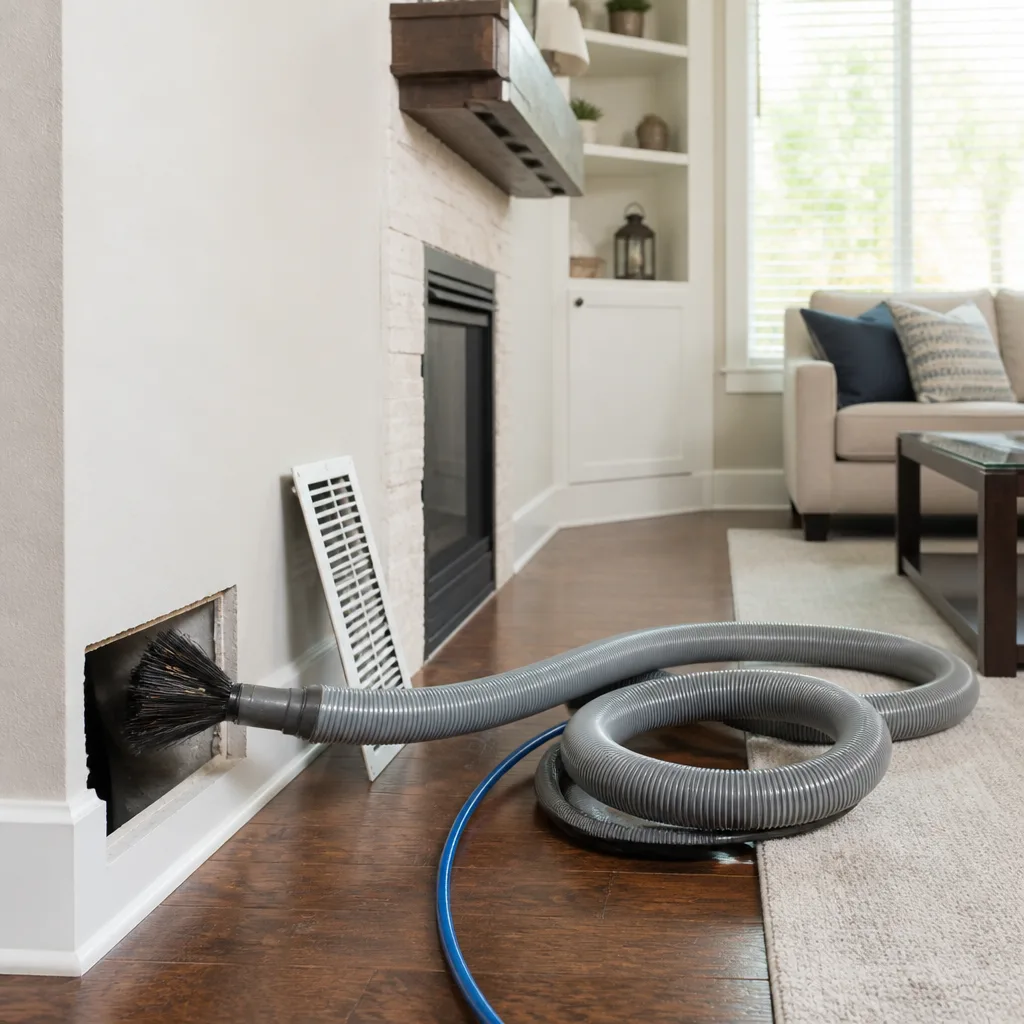 Whole-home duct cleaning
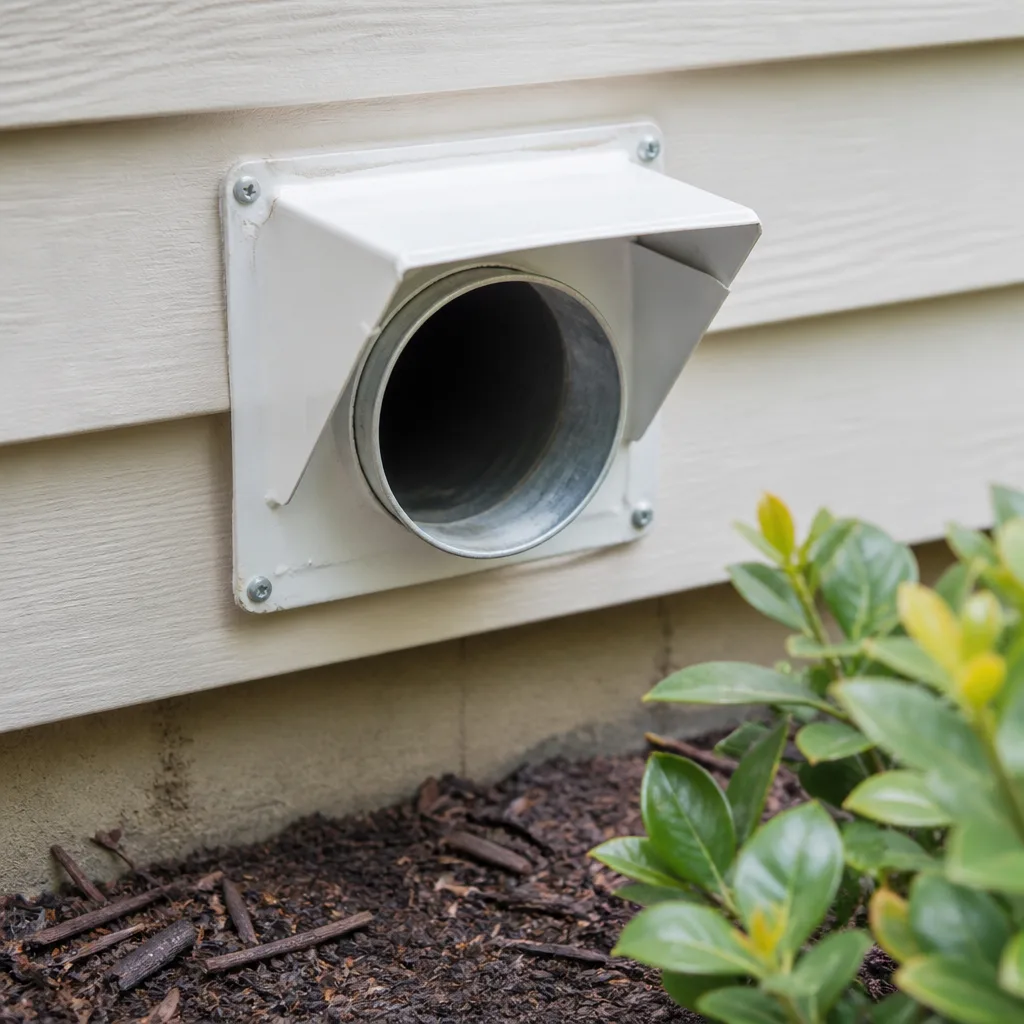 Dryer vent cleaning
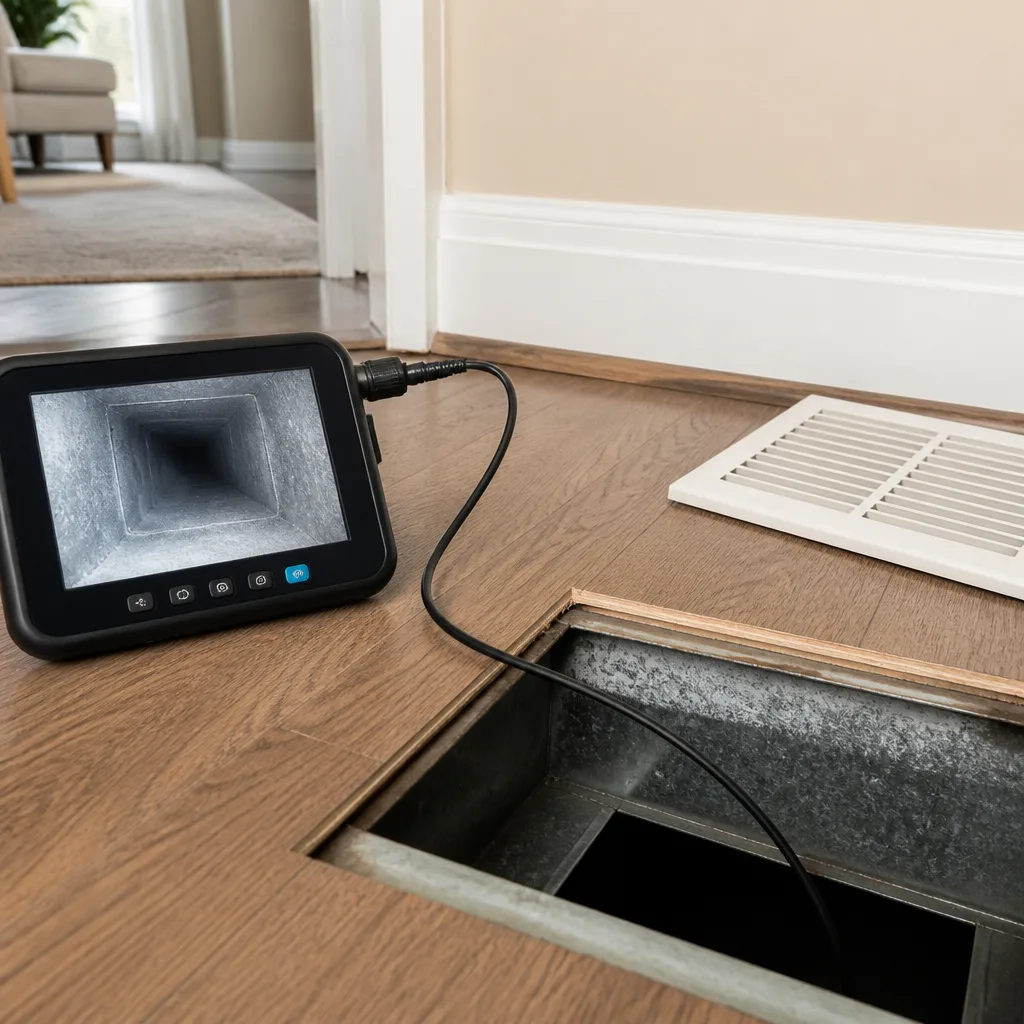 Camera inspection
 Sanitizing & deodorizing
Whole-system duct and dryer vent check with before-and-after photos - you see exactly what came out of your vents
That "$99 whole-house special" is a bait ad - the real number appears once they are in your hallway, or the "clean" is a shop-vac at the register. We photograph the inside of your ducts before and after instead.
Air Duct Cleaning Emergency Preparedness Guide for Green Lake Homes
When wildfire smoke rolls over Green Lake and the air inside your house starts to smell like a campfire, the instinct is to crank the HVAC fan and “flush it out.” That’s the wrong move. Running the system during a smoke event pulls fine PM2.5 particulate through the return, across the blower, and into every branch of ductwork, where it settles on interior surfaces and stays long after the sky clears. The same logic applies after a flood or a house fire: the sequence of actions matters more than the actions themselves. This guide walks Green Lake homeowners through the right protocol for each of the three emergencies that hit duct systems hardest, and shows you how to build a baseline record now so the recovery is faster and easier to document later.
Quick Answer
For a Green Lake home, emergency duct readiness comes down to three scenario-specific protocols: shut the HVAC system down during wildfire smoke rather than running it, treat post-flood contamination as microbial remediation (not routine cleaning), and wait until structural drying and reconstruction are finished before cleaning ducts after a fire. Before any of that happens, photograph your duct system, note static pressure readings, and record your last service date so an adjuster has something to work from.
Styles & brands we work with
- Whole-home duct cleaning
- Dryer vent cleaning
- Camera inspection
- Sanitizing & deodorizing
Table of Contents
- Wildfire Smoke Infiltration: The Shutdown Protocol
- Interim Filtration While the Smoke Lingers
- Post-Flood and Sewer Backup: Why This Is a Different Job
- Post-Fire Restoration: Getting the Sequence Right
- Documenting Duct Condition for Insurance Claims
- Building a Pre-Emergency System Baseline
- Common Mistakes to Avoid
- Frequently Asked Questions
Wildfire Smoke Infiltration: The Shutdown Protocol
Fine smoke particulate doesn’t stay suspended. It moves with pressure differentials, and your duct system is a low-resistance pathway between the outside air and every room in the house. The moment smoke arrives, the system stops being a comfort tool and becomes a distribution network. The correct first action is to turn it off, not up.
We’ve seen this play out across Green Lake after inland smoke events in recent summers: a homeowner runs the fan to “clear the air,” the smell fades for a day, then returns stronger, and the coil is coated. Once PM2.5 deposits on a wet or oily evaporator coil, it binds. That’s when a routine cleaning turns into a coil cleaning plus a duct cleaning plus a filtration upgrade.
Here’s the sequence we recommend for a smoke event in Green Lake:
- Turn the thermostat to Off. Not Fan, not Auto. Off. That stops air movement through the return and stops the system from pulling in outside smoke.
- Close windows and exterior doors, and seal the fresh-air intake if your system has one.
- Set up portable HEPA air cleaners in the rooms where people sleep and spend their days. One unit per main living area is a reasonable starting point for most Green Lake homes.
- Leave the system off until the outdoor air quality index has come back down and stayed down for a full day.
- Once the smoke clears, run the system briefly and note any odor, soot smell, or visible dust puffing from registers. That tells you whether you’re due for professional cleaning or can wait.
- If the odor persists after a day, schedule cleaning of the ducts, the blower, and the evaporator coil together. Cleaning the ducts without the coil leaves the source in place.
We use a Rotobrush rotary brush system to agitate deposits off duct walls and Nikro HEPA-filtered vacuum equipment to capture what comes loose, rather than recirculating it into the room. That combination matters most on smoke jobs because the deposited particulate is fine and easily re-entrained.
Interim Filtration While the Smoke Lingers
Between the shutdown and the professional cleaning, filtration is your bridge. Filter upgrades are the single cheapest, fastest lever a Green Lake homeowner has, and they’re worth setting up before you need them.
Three layers work together during a smoke event:
- Portable HEPA units in sleeping and living areas. These capture what makes it inside, and they need to be sized to the room, not the house.
- A high-MERV furnace filter rated for the static pressure your blower can handle. Overshooting the MERV rating on a system that wasn’t designed for it chokes airflow and can freeze the coil. Ask before you buy.
- Sealed return paths so unfiltered air doesn’t bypass the filter through gaps at the filter slot or return plenum. This is the one people skip, and it’s often the biggest leak.
For homeowners who want a permanent answer, we integrate Honeywell and Aprilaire filtration components into existing systems. Those are media cabinets and electronic air cleaners designed for continuous duty, not a one-season fix. Because the same technicians who clean your system can install the filtration, you don’t have to coordinate two contractors. We’ve found that most Green Lake homes built before the 1990s have filter slots sized for a 1-inch filter, and upgrading to a 4-inch media cabinet is often the right call once you’ve been through a smoke season.
What you should not do is run the system on Fan continuously to “filter the air.” That pulls smoke into the ducts faster than the filter can remove it, and it loads the coil. Keep the system off and let the portable units do the work.
Post-Flood and Sewer Backup: Why This Is a Different Job
Water intrusion and sewer backup create a microbial problem inside ductwork, and microbial contamination is categorically different from particulate. Standard duct cleaning removes dust and debris. It does not address mold colonization, bacterial load, or the residual odor that follows a sewer backup. Treating a flooded system like a dusty one is the single most expensive mistake we see in Green Lake.
Two things make it different. First, mold growth in a duct system is a moisture problem, not a dust problem, and it will return if the system isn’t fully dried and the source corrected. Second, porous duct liner and flex duct that have been wet are generally not cleanable to a defensible standard; they get removed and replaced. Anyone who tells you a wet flex run can simply be cleaned and returned to service is telling you something that won’t hold up under scrutiny. For contamination events in Green Lake homes, we work to IICRC remediation standards, with negative-pressure containment and HEPA filtration running for the duration.
The response sequence for a water intrusion looks like this:
- Stop the system. Do not run the fan to dry it out. Air movement spreads spores through the whole house.
- Call your insurer and photograph everything, including inside the ducts if you can see into a register boot.
- Get the structure dry first. Structural drying is a separate trade, and it needs to be complete before duct work begins.
- Have the system assessed for microbial contamination. That means someone looking inside the plenum, the coil, and a sample of the runs, not just peering through a supply register.
- Remove and replace any duct material that’s been wet and is not cleanable. Seal the rest after cleaning.
- Sanitize with a treatment suited to the contamination and run the system only after it’s fully dry and cleared.
We deploy Abatement Technologies containment and negative-pressure equipment on these jobs, the same class of gear used in mold remediation and post-construction cleanup. If a contractor shows up with a shop vac and a spray bottle, you’re getting a cosmetic job, not a remediation.
Post-Fire Restoration: Getting the Sequence Right
Duct cleaning after a house fire is not the first step. It’s one of the last. Cleaning a duct system while demolition, structural drying, or reconstruction is still underway means you’re cleaning a system that will be recontaminated before the job is done. The smoke residue and ash that get pulled through during reconstruction settle right back where you started.
We’ve seen Green Lake homeowners pay for a duct cleaning twice because the sequence was wrong. The correct order is:
- Board-up and stabilize the structure, and stop the HVAC system.
- Structural drying, if water was used to fight the fire. This comes before anything else, because moisture plus char is a mold substrate.
- Demolition and debris removal, including any duct runs that were directly involved in the fire or are visibly charred.
- Reconstruction, from framing to drywall to paint, with the HVAC system sealed off and returns taped.
- Final cleaning, including ducts, blower, coil, and the air handler cabinet.
- Sanitizing and sealing the system, and replacing the filter.
- Verification before the system is put back into service.
Clean ducts are only part of the job. We also repair and seal damaged ductwork, because a fire or a smoke event often exposes joints that were leaking all along. Guardsman-grade protective treatments are available as part of the sanitizing service if your adjuster or remediation contractor calls for a longer-lasting residual.
One Green Lake-specific note: this area’s older housing stock often has original sheet metal trunk lines mixed with later flex additions. That mix means the cleaning scope has to be decided after the ducts are actually inspected, not from a phone description.
Documenting Duct Condition for Insurance Claims
Adjusters don’t pay based on what you remember. They pay based on what’s in the file. Documentation for a duct claim falls into three categories, and you want all three.
- Photographs: wide shots of the mechanical room and air handler, close-ups of the filter slot and coil, interior shots of each register boot if the camera reaches, and dated photos of any visible contamination, soot, or water staining.
- Air quality readings: particle counts or similar measurements taken before and after cleaning. A contractor report without before-and-after readings is much easier for an adjuster to discount.
- Contractor reports: a written scope that names what was cleaned, what was removed and replaced, what treatment was applied, and what equipment was used. Named equipment matters. “Professional cleaning” is not a line item an adjuster can evaluate. “Rotobrush rotary brush agitation with Nikro HEPA extraction, coil cleaned, 40 feet of flex replaced” is.
Keep a copy on your phone and a copy in the cloud. Green Lake property managers we work with keep a shared folder per unit, and it shortens every claim.
Building a Pre-Emergency System Baseline
The best time to prepare for an emergency is before it. A baseline record takes an hour to build and turns a frantic post-emergency assessment into a straightforward comparison.
What goes in the baseline file:
- Photos of the air handler, filter slot, and each accessible register, with dates.
- The filter size and MERV rating currently installed, and how often you change it.
- The date and scope of your last professional air duct cleaning, including which equipment was used.
- Static pressure readings at the supply and return, taken by a technician. These are the single most useful numbers in the file, because they tell a future contractor how much restriction the system was carrying before the event.
- Any prior duct repair or sealing work, with the date and location.
- The manufacturer and model of any air quality equipment, including Air Duct Cleaning Green Lake components if you’ve had filtration installed.
If you’re unsure of your static pressure or your last service date, a routine cleaning visit is a reasonable time to establish both. While we’re on site for something else, such as dryer vent cleaning, we can take the readings and photograph the system so the record exists.
Common Mistakes to Avoid
- Running the HVAC system during a smoke event to “clear the air.” This is the most common error we see in Green Lake. It pushes fine particulate into the ducts and onto the coil, where it becomes much harder to remove.
- Treating a post-flood duct system like a dust problem. Microbial contamination needs remediation standards, containment, and in many cases removal and replacement. A standard cleaning pass won’t fix it and won’t satisfy your insurer.
- Cleaning ducts before reconstruction is finished after a fire. You’ll pay twice. Seal the system during construction and clean once, at the end.
- Oversized MERV filters on undersized blowers. A high-MERV filter that starves the system of airflow can freeze the coil and shorten the life of the blower. Match the filter to the system, not to the label.
- Skipping the coil. Ducts and coil are one air path. Cleaning one without the other leaves the source in place, especially after smoke or soot events.
- Relying on a verbal scope of work for an insurance claim. Get it in writing, with named equipment and before-and-after readings.
- Waiting until after an emergency to look for the filter slot. In Green Lake homes with finished basements, the filter access is sometimes behind a panel or in a closet, and finding it during an emergency wastes the window when filtration matters most.
See the difference
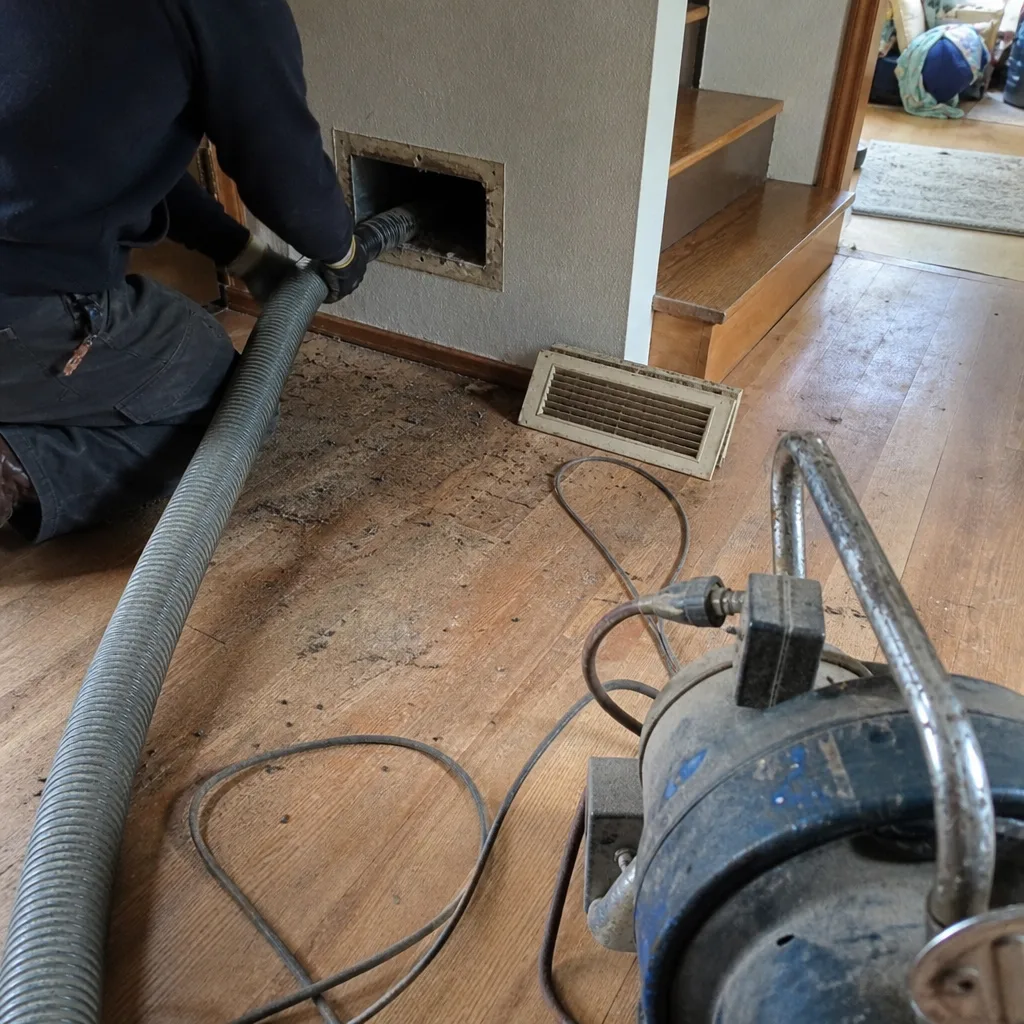 Before
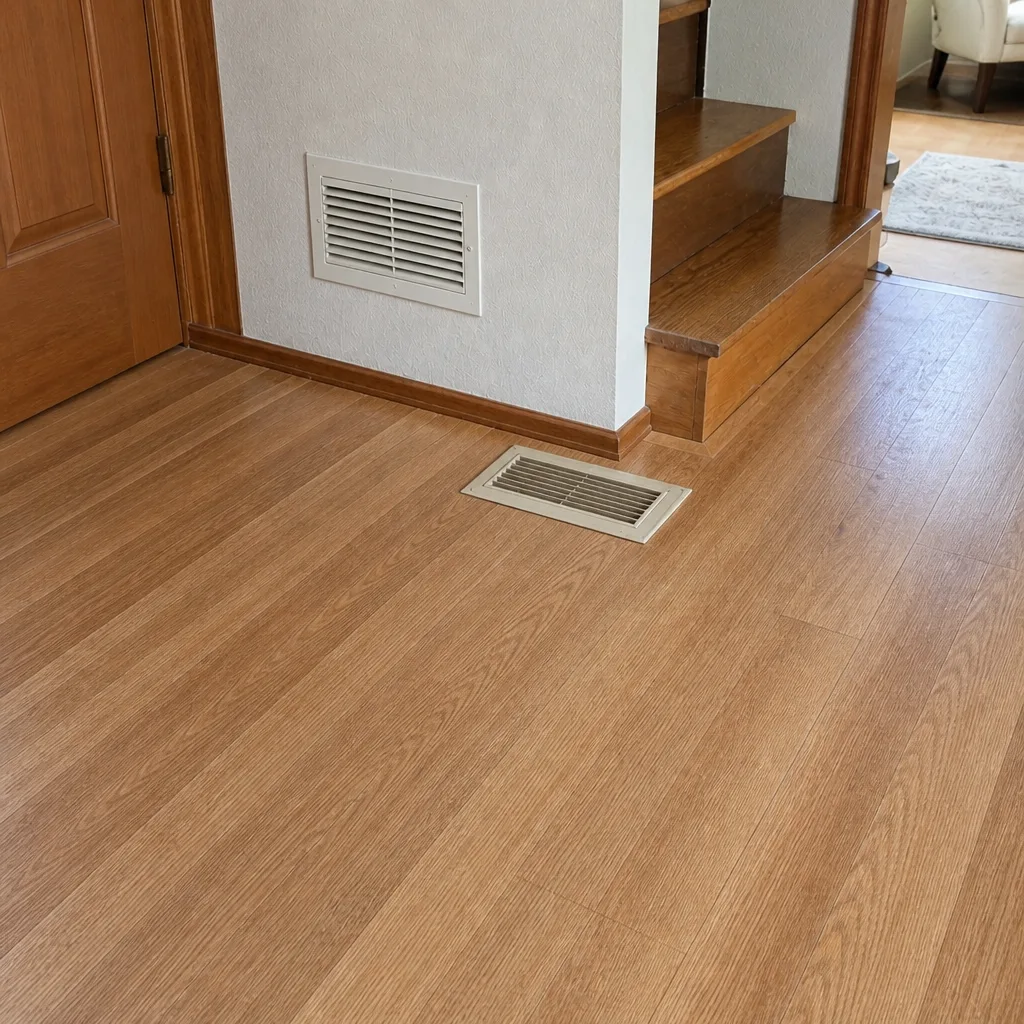 After
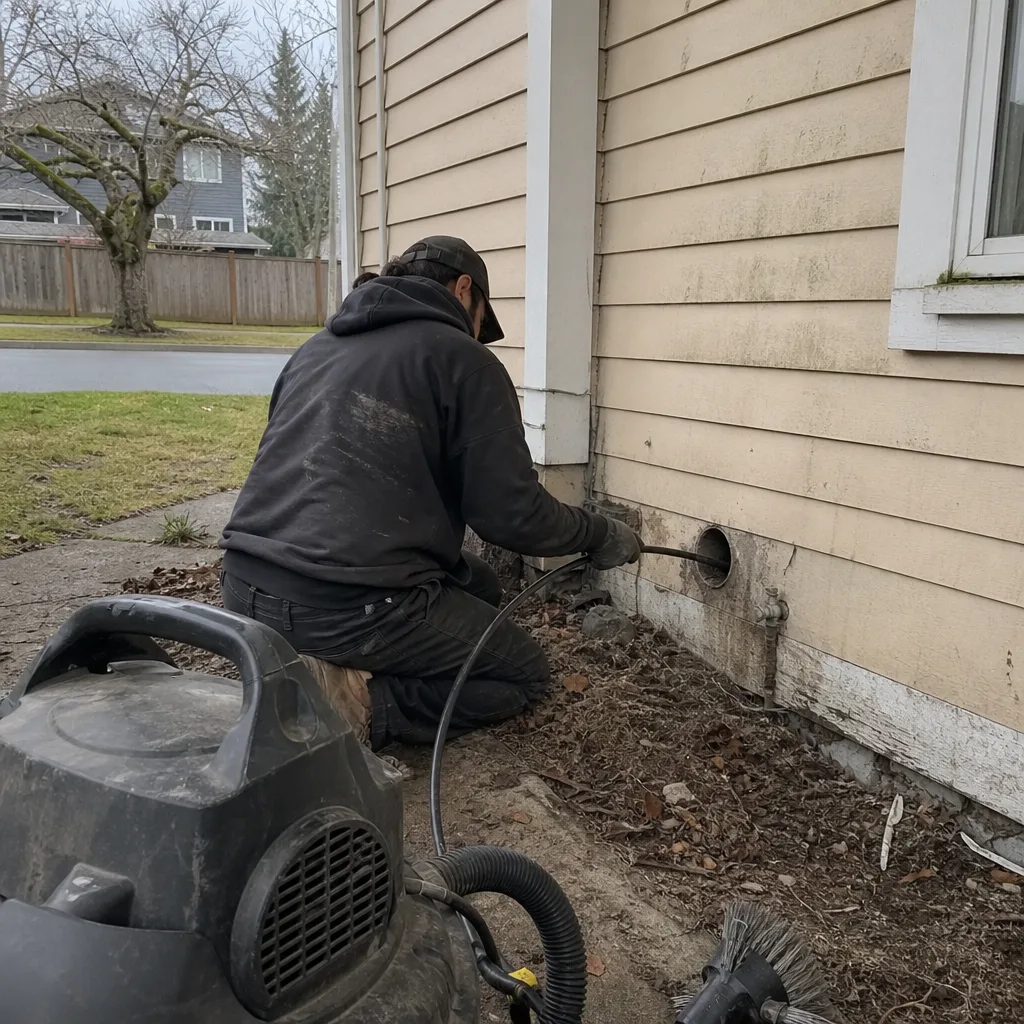 Before
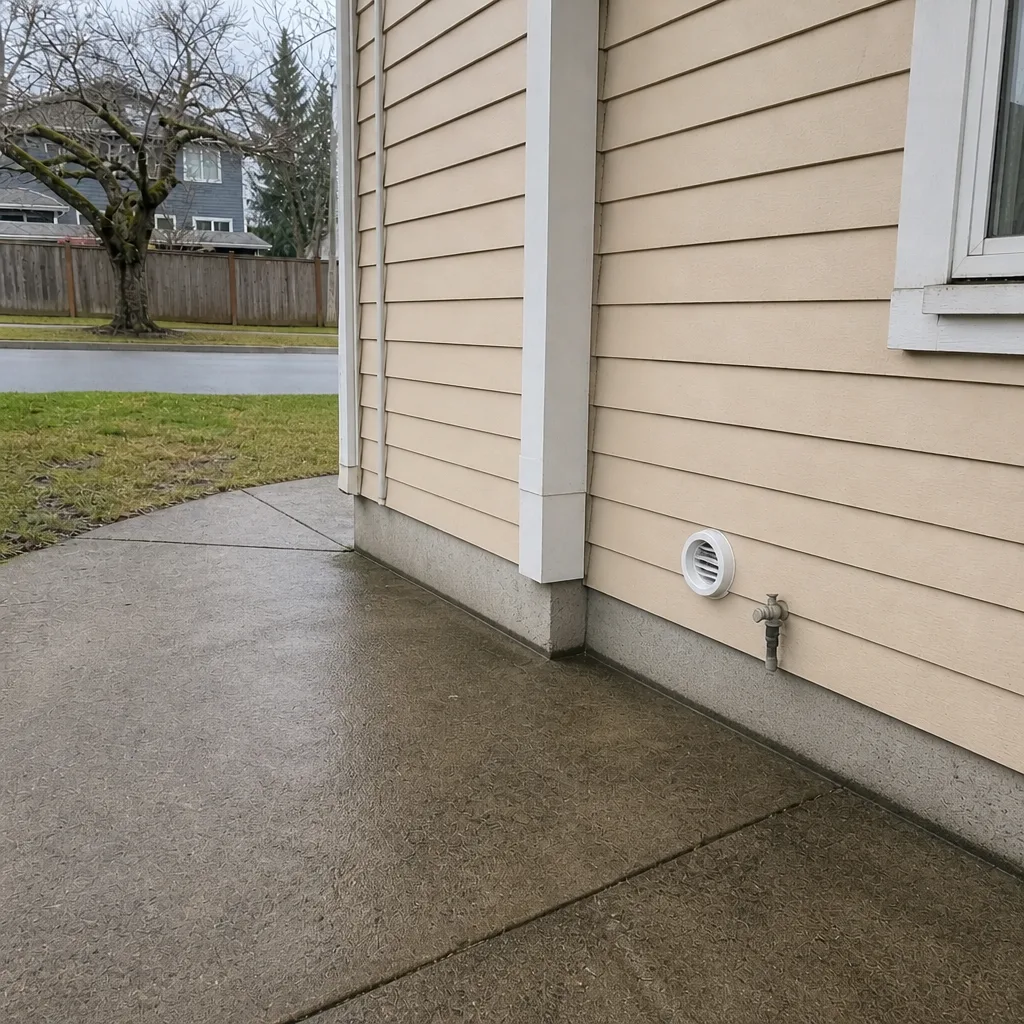 After
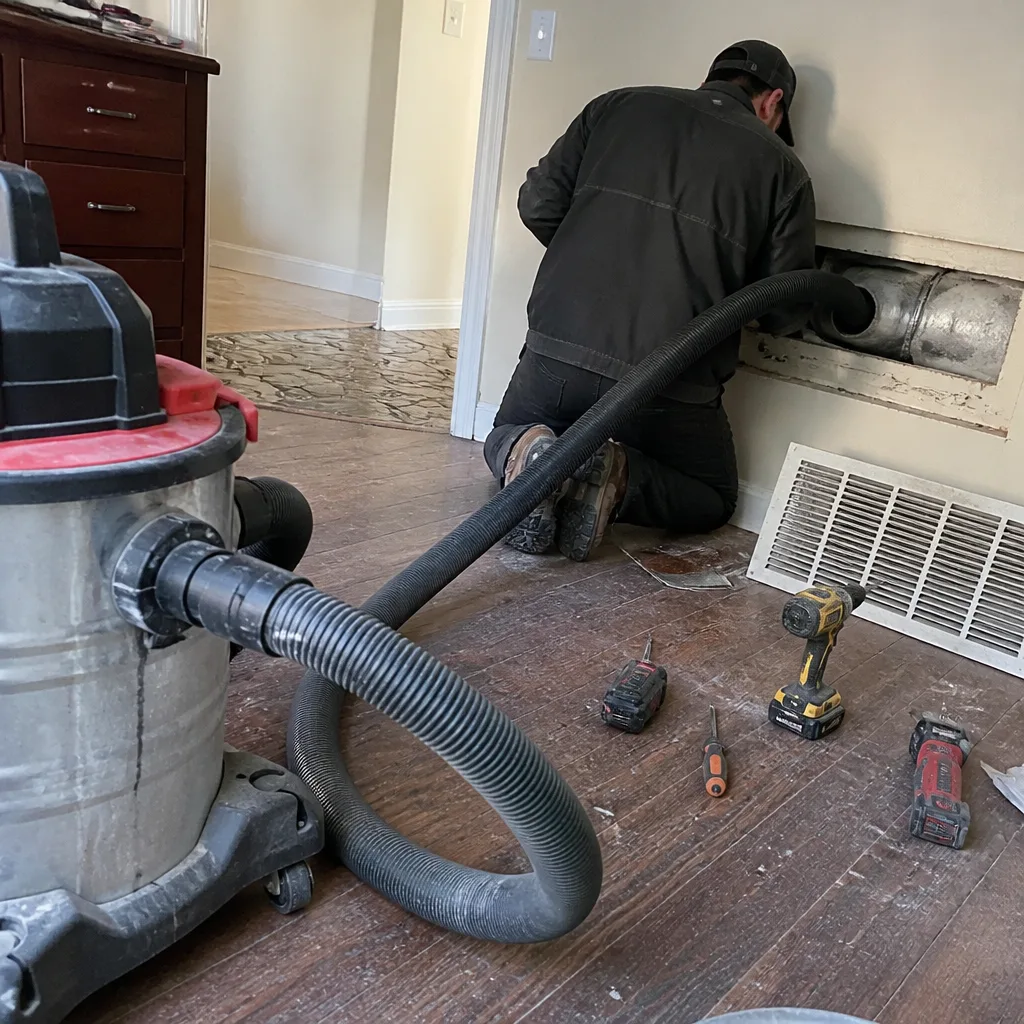 Before
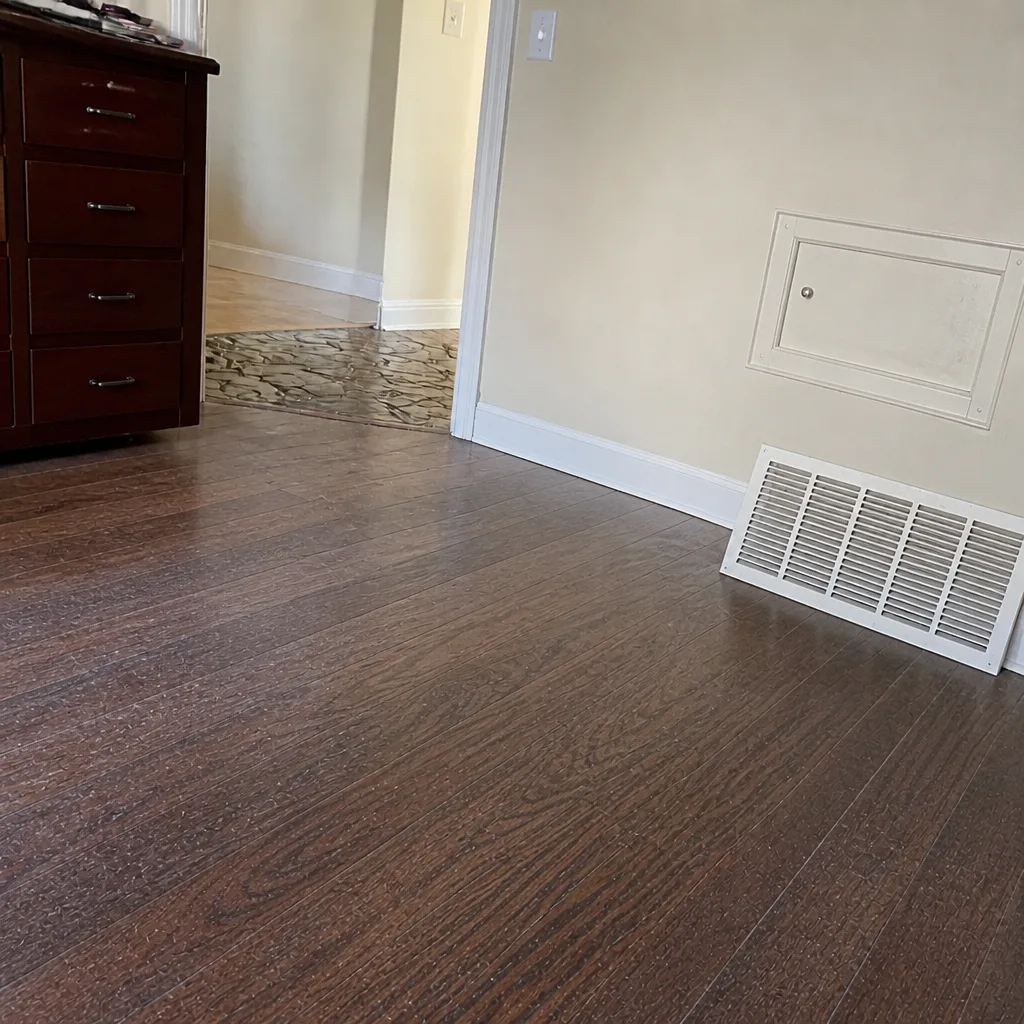 After
When to Call a Professional
Call a professional when the odor or visible contamination persists after the outdoor air has cleared, when there’s been any water intrusion into the duct system, or when a fire has affected the structure. Also call if you’re filing a claim, because a written scope with before-and-after readings is what adjusters need. Beyond those triggers, schedule an assessment if your system is more than a few years past its last cleaning and you’ve been through a smoke season or a renovation. We handle the full scope in-house: HVAC cleaning, duct repair and sealing, sanitizing, and filtration upgrades. Air Duct Cleaning Green Lake offers free estimates in Green Lake. Call (877) 820-8098. We answer 24/7. Fast dispatch from 7am to 7pm, Sunday through Friday.
Frequently Asked Questions
Turn the HVAC system off completely, not to Fan, and close up the house. Running the system pulls fine smoke particulate into the ducts and onto the coil, where it’s much harder to remove later.
For a short smoke event with the system shut down, a portable HEPA unit in the main living areas is often enough, and professional cleaning can wait. If the smoke smell persists after the outdoor air clears, deposit has formed inside the system and it needs to be cleaned.
No. Water intrusion and sewer backup create microbial contamination, which requires remediation standards, negative-pressure containment, and often removal and replacement of wet duct material rather than a standard cleaning pass.
After. Cleaning before demolition, drying, and reconstruction are complete means the system gets recontaminated before the job is done, and you pay for the cleaning twice.
Dated photos of the system and any visible contamination, before-and-after air quality readings, and a written contractor scope naming the equipment and treatments used. A verbal description won’t hold up.
Most homes don’t need a fixed schedule, but a cleaning is worth it after a smoke event with persistent odor, after any water intrusion, after a renovation, and when you can’t remember the last service date. Call (877) 820-8098 for an exact assessment. Estimates are free.
The Bottom Line
Emergency duct readiness is about sequence, not speed. Shut the system off during smoke. Treat water intrusion as remediation, not cleaning. Wait until reconstruction is done after a fire. Document everything, and build a baseline before you need it. The Green Lake homes that come through these events with the least damage and the easiest claims are the ones that had a plan and a photo folder before the smoke rolled in. And when the work needs doing, one visit can cover cleaning, repair, and filtration upgrades together. Call (877) 820-8098 for a free estimate. We answer 24/7. Fast dispatch from 7am to 7pm, Sunday through Friday.
Written by the team at Air Duct Cleaning Green Lake.