
Last updated November 24, 2026
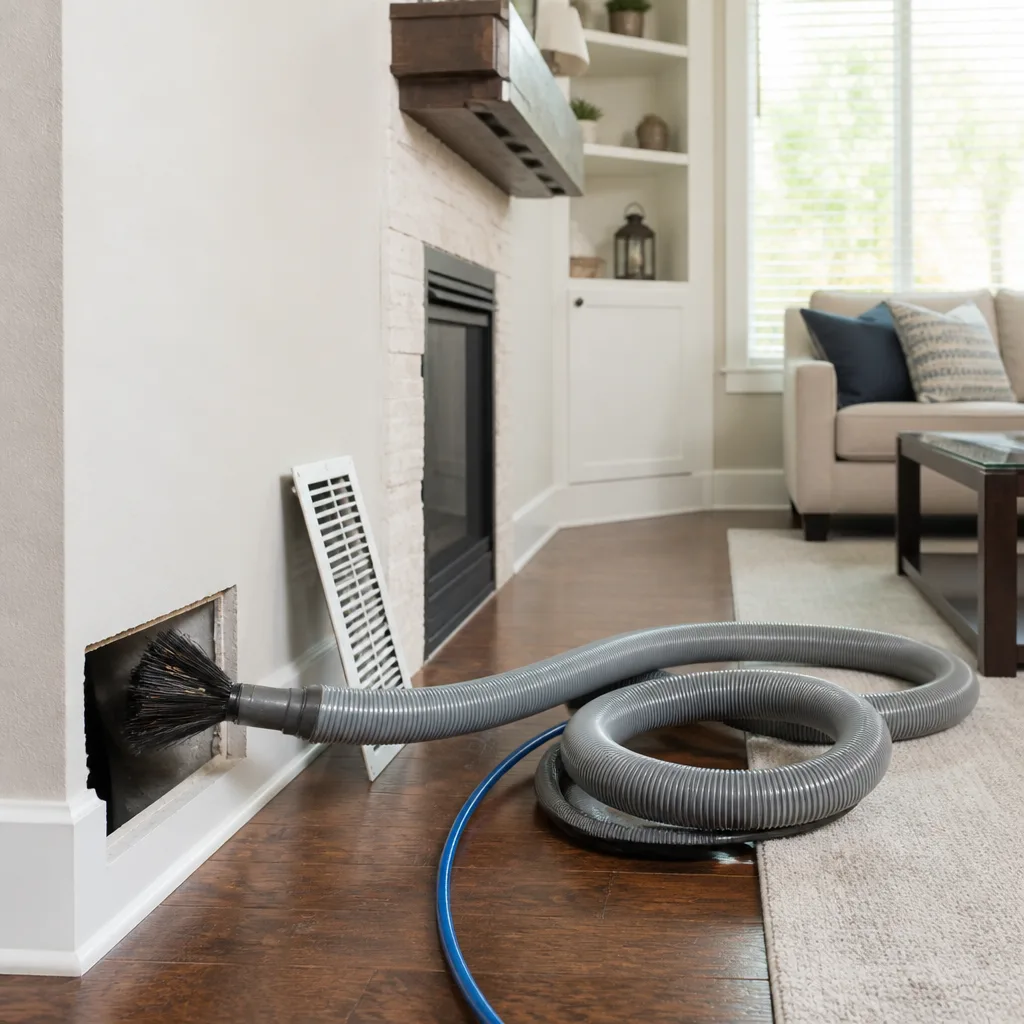 Whole-home duct cleaning
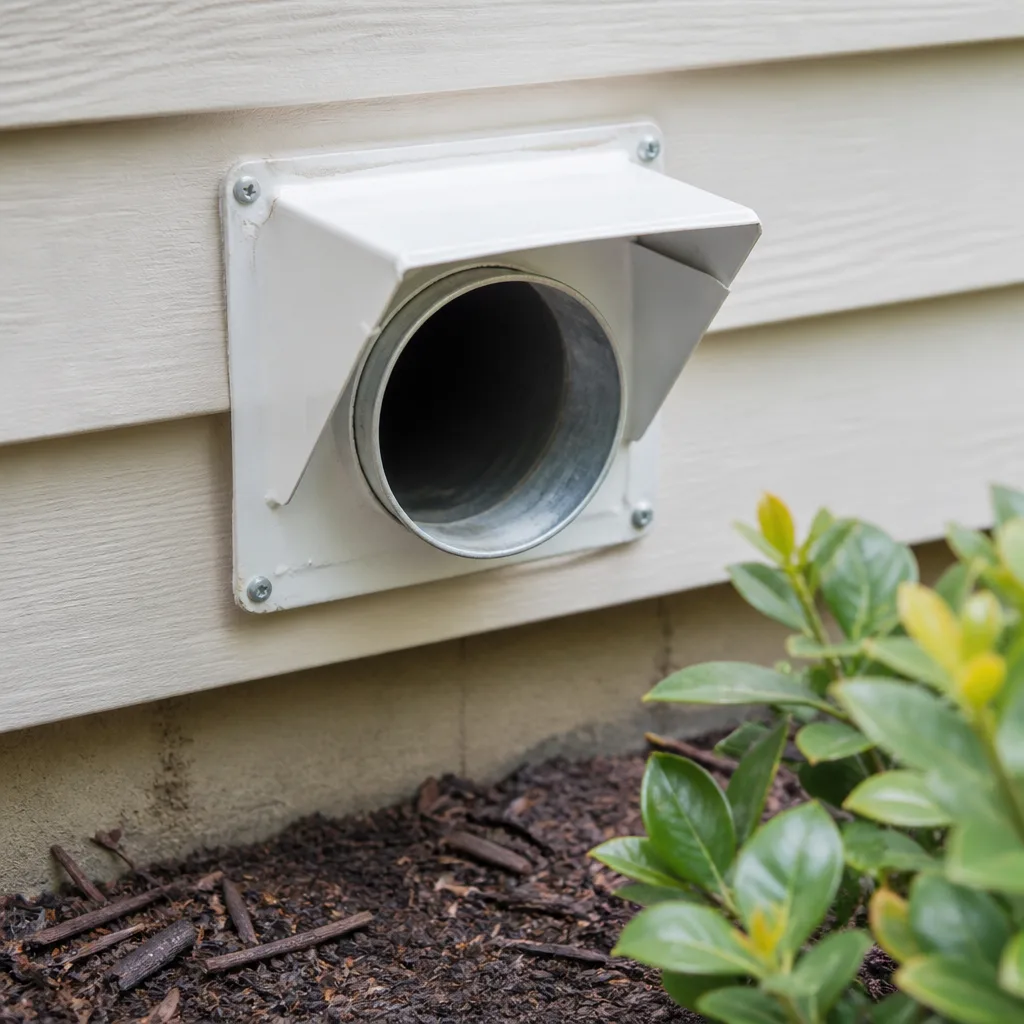 Dryer vent cleaning
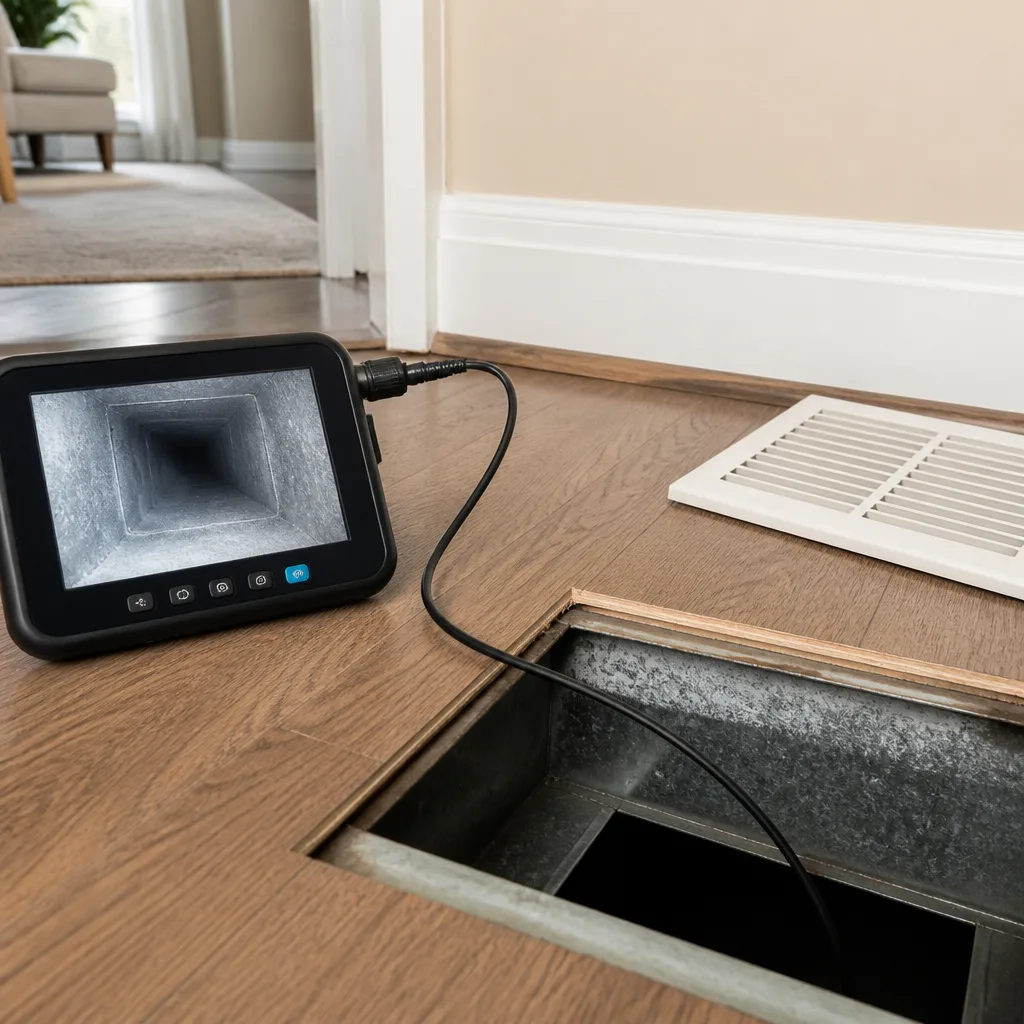 Camera inspection
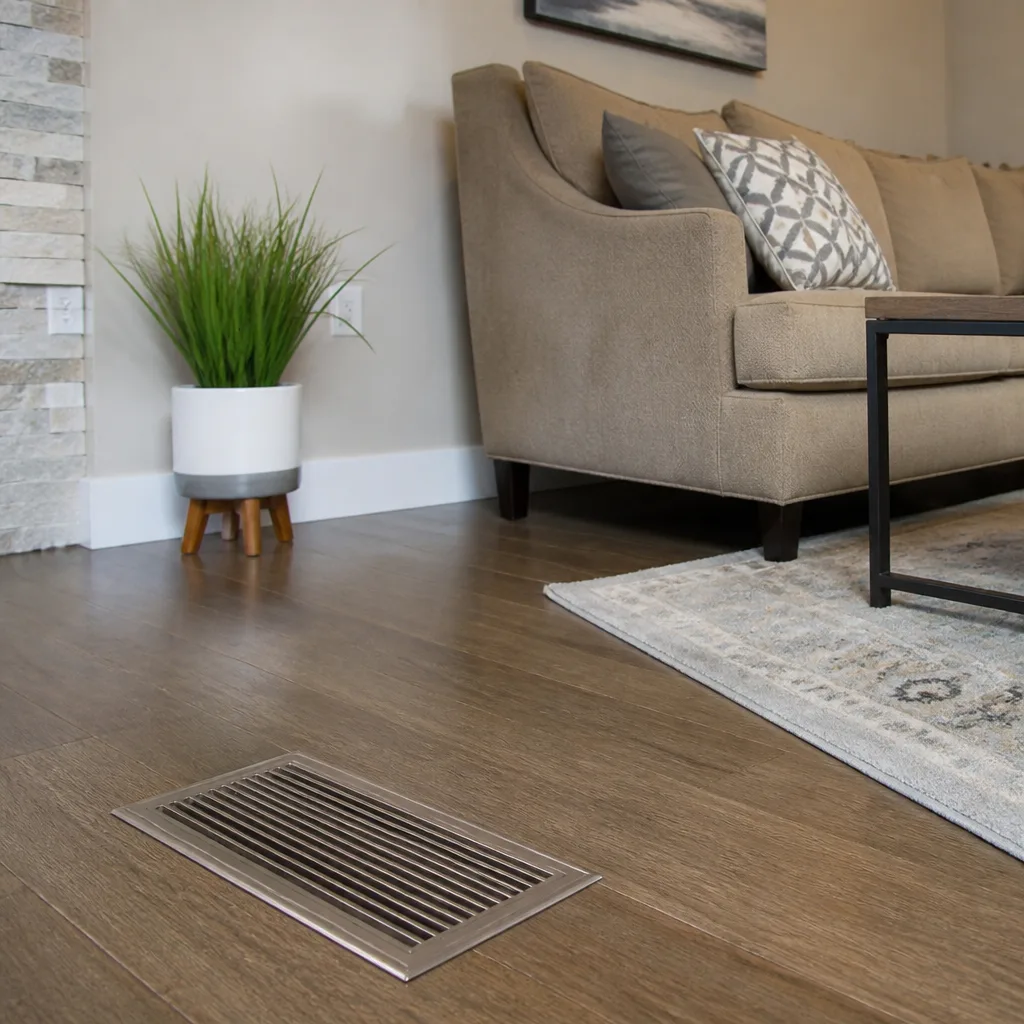 Sanitizing & deodorizing
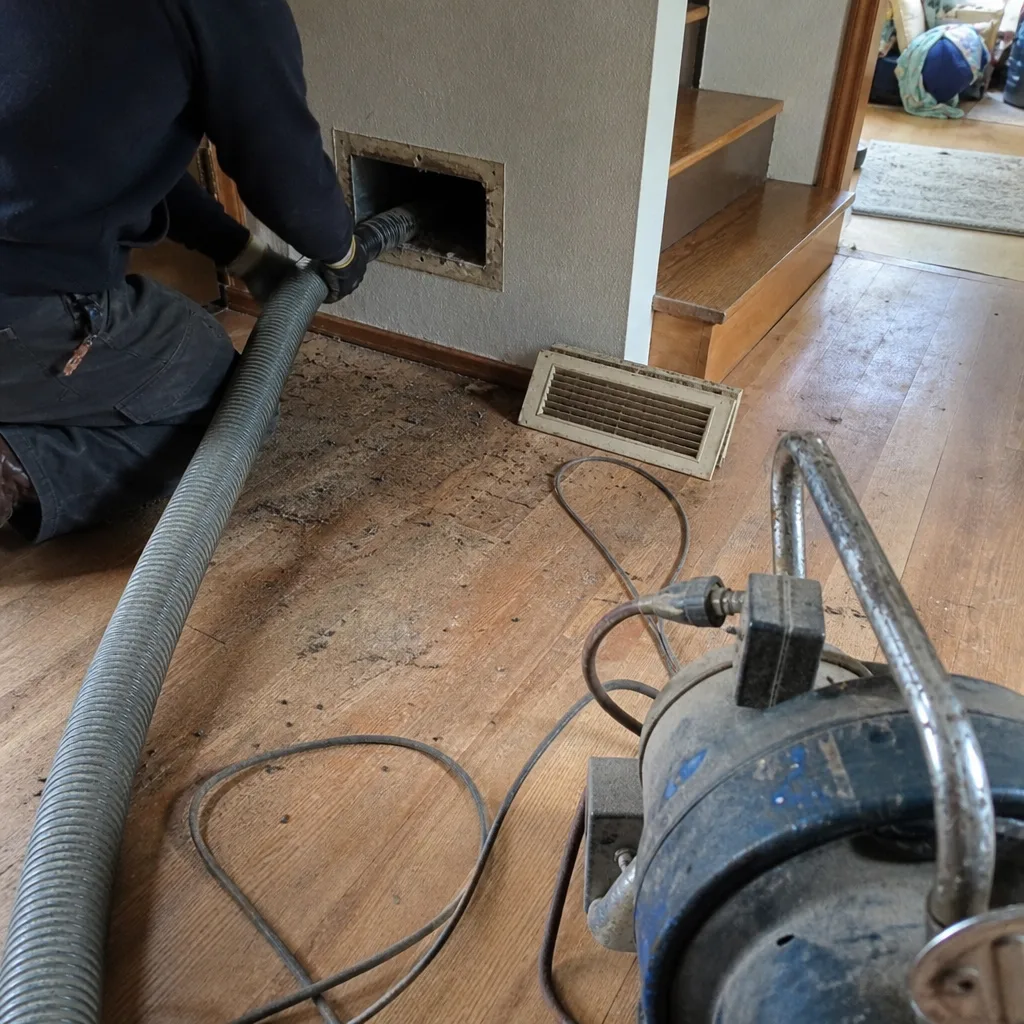
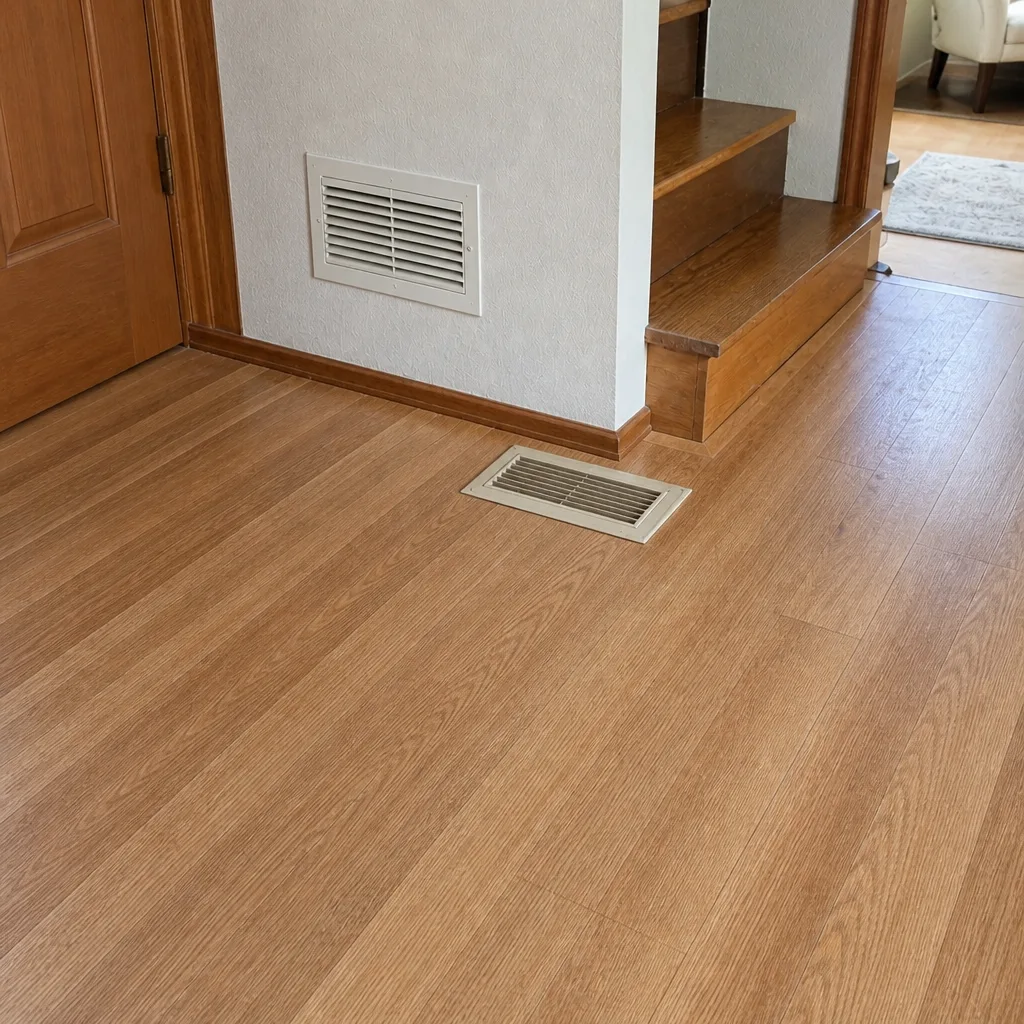
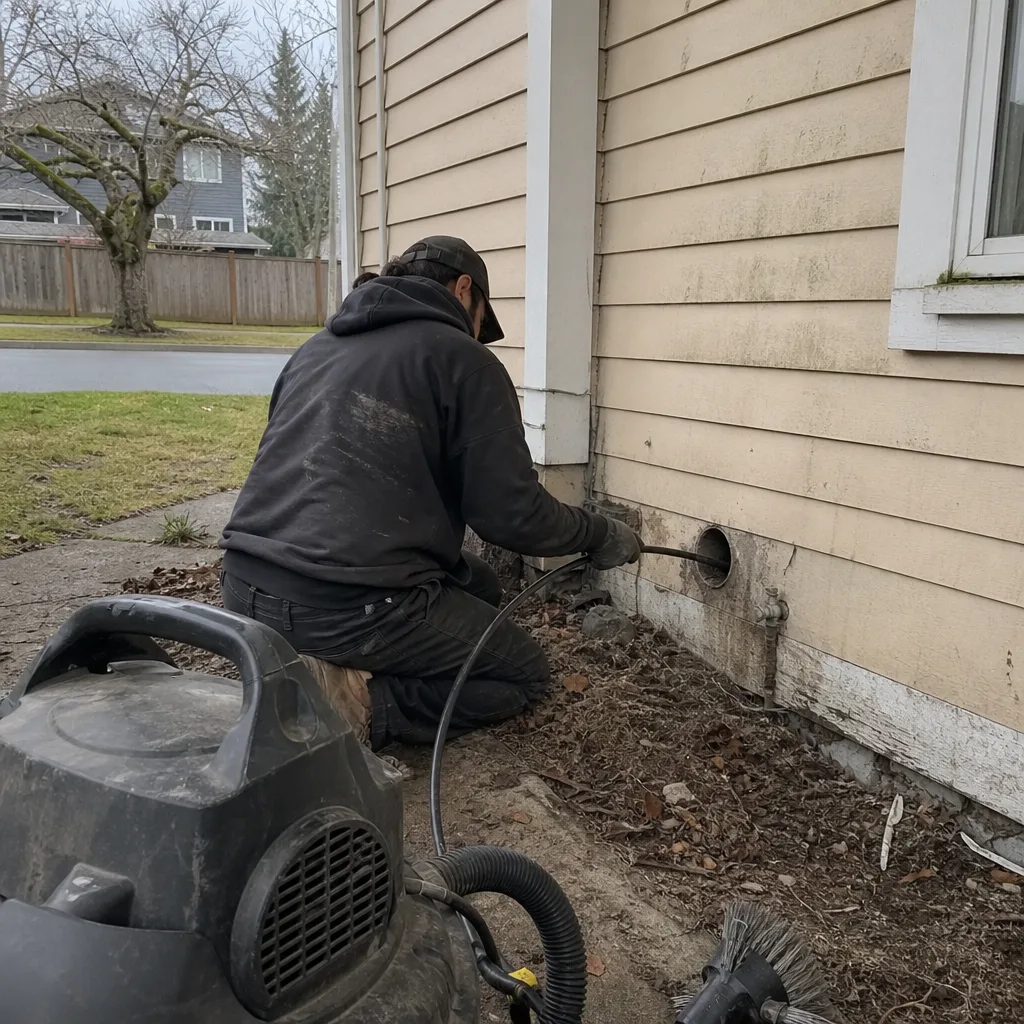
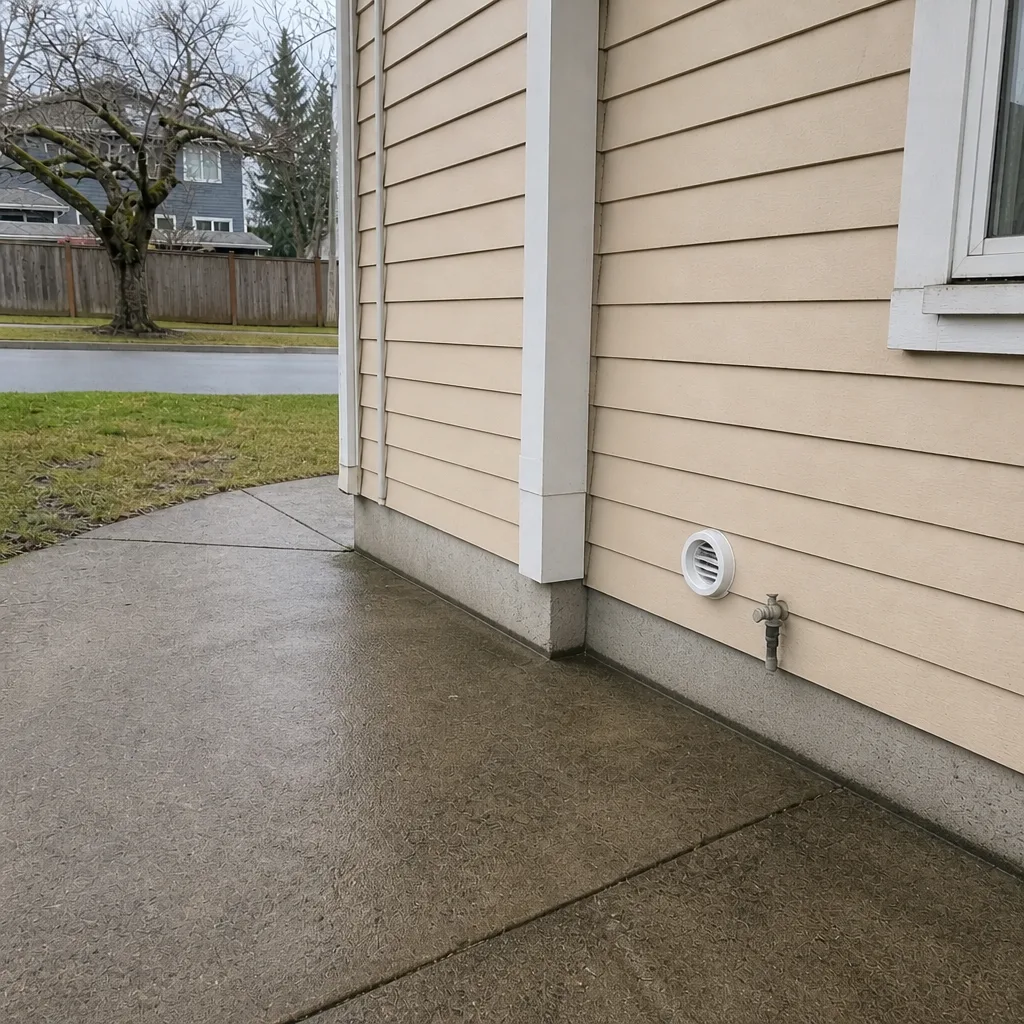
Whole-system duct and dryer vent check with before-and-after photos - you see exactly what came out of your vents
That "$99 whole-house special" is a bait ad - the real number appears once they are in your hallway, or the "clean" is a shop-vac at the register. We photograph the inside of your ducts before and after instead.
The Complete Guide to Air Duct Cleaning in Green Lake
Most air duct guides you’ll find online were written for Phoenix or Atlanta, places where the system runs hard in dry heat and ducts spend their lives in conditioned space. That advice doesn’t travel well to Green Lake. Here, ductwork often sits in unconditioned crawlspaces and attics through a wet season that runs the better part of nine months, and the contamination that builds up is a different animal entirely: damp biofilm on flex duct, mineral dust baked onto coils, and particulate that clings instead of drifting. This guide covers what a full-system clean actually involves, how to read the results, and why Green Lake homes need a closer look before anyone quotes a price.
Quick Answer
A full-system air duct cleaning in Green Lake means cleaning the supply runs, return runs, air handler, evaporator coil, and drain pan with mechanical agitation and HEPA-filtered extraction, not just vacuuming the trunk lines. Because of our humidity, older housing stock, and dense tree canopy, most Green Lake homes benefit from camera inspection before a quote and a sanitizing step after extraction. Expect honest whole-system pricing, a written estimate that sets the final price, and before-and-after documentation of your own ducts.
Styles & brands we work with
- Whole-home duct cleaning
- Dryer vent cleaning
- Camera inspection
- Sanitizing & deodorizing
Table of Contents
- Why Green Lake Ductwork Is Different
- How Pacific Northwest Humidity Affects Flex Duct and Sheet Metal
- Older Craftsman and Mid-Century Homes: Non-Standard Geometry
- What a Full-System Clean Actually Includes
- Reading Pre- and Post-Cleaning Particle Counts
- Negative Pressure and HEPA Filtration: Preventing Cross-Contamination
- The Equipment Behind a Verifiable Result
- How Often Does It Really Need Doing?
Why Green Lake Ductwork Is Different
Green Lake sits in a band of the city where the tree canopy is dense, the housing stock is old, and the ground holds moisture well into summer. Those three things combine into duct conditions you won’t find in a drier market. Ducts in this neighborhood sit in unconditioned crawlspaces that stay damp from fall through late spring. The air moving through them picks up a different load than it would in a house with a conditioned basement.
What that means in practice is that the contamination inside Green Lake ducts is less “dry dust piled on a shelf” and more “damp film that has bonded to the duct wall.” A shop vacuum or a low-powered blower won’t move that. You need mechanical agitation to break the bond, and you need real extraction to pull what’s dislodged out of the system instead of puffing it into the living room.
Tree canopy matters here too. Green Lake is one of the leafier parts of the area, and the pollen, seed fluff, and fine organic debris that accumulate on roofs and near returns get drawn into the system through any gap in the envelope. Once inside, that material becomes food for the biological growth that humidity encourages. It’s a two-part problem: the wet, and what the wet feeds.
Homes here also tend to run their heating systems through a long shoulder season. That means the blower moves air through a damp duct system for a longer stretch of the year than you’d expect, which advances accumulation faster than the standard “every three to five years” rule of thumb suggests. In our experience, Green Lake homes often need attention on a shorter interval than the national average, and visual inspection is the only reliable way to know.
How Pacific Northwest Humidity Affects Flex Duct and Sheet Metal
Flex duct and sheet metal fail in different ways under the same moisture load, and understanding the difference tells you what a cleaning job should actually target.
Flex Duct: The Sag Problem
Flexible duct is a plastic liner wrapped around a wire helix, and it sags between supports. A low point in a flex run collects condensation. Condensation plus dust equals a damp film that holds onto particulate and doesn’t dry out during the wet season. Once that film sets, the duct’s interior surface area effectively shrinks and airflow drops. Mechanical rotary brushing is the only way to break it loose, and HEPA extraction is how it leaves the house.
Sheet Metal: The Coil and Plenum Problem
Sheet metal runs in older Green Lake homes often pick up a mineral-heavy dust that bakes onto the evaporator coil and the inside of the plenum. That dust holds moisture against the metal, and over time you get corrosion pitting around the coil face. A coil that’s coated this way can’t transfer heat efficiently, so the system runs longer, which moves more damp air, which deposits more dust. Cleaning the coil and drain pan isn’t decorative; it’s part of stopping that cycle.
We use Rotobrush rotary brush systems to agitate both duct types, paired with Nikro HEPA-filtered vacuum equipment to capture what comes loose. The HEPA stage matters more in a humid climate because the dislodged material is heavier and wetter; without proper filtration it settles back into the home instead of leaving.
Older Craftsman and Mid-Century Homes: Non-Standard Geometry
Green Lake’s housing stock includes a lot of Craftsman-era homes and mid-century builds, and neither followed the predictable layouts that newer construction does. Duct runs were added, extended, and rerouted over the years, often with no documentation. Some have been tied into additions. Some have been partially sealed. A few have sections that don’t run where the register locations suggest.
That’s why a phone quote is a guess and a camera inspection is a real answer. Before we quote a Green Lake job, we want to know the actual run count, the duct material at each segment, and whether there’s been water intrusion in a crawlspace section. Non-standard geometry means the job scope varies widely from house to house, and an honest estimate depends on knowing what’s actually there.
Numbered inspection sequence we follow before quoting:
- Register count and location check across every floor, including any registers hidden behind furniture or trim.
- Air handler and plenum inspection, including coil face condition and drain pan.
- Camera inspection of the longest and most accessible trunk runs, looking for flex sag, disconnected sections, and moisture staining.
- Crawlspace or attic access check to confirm duct condition where it sits in unconditioned space.
- Written estimate per system, with the scope spelled out segment by segment.
This sequence is the reason we don’t quote per vent. A home with twelve registers in a standard layout and a home with twelve registers in a rewired Craftsman addition are not the same job, and pricing them the same misleads the customer.
What a Full-System Clean Actually Includes
A full-system clean covers five components, and any contractor who skips one isn’t doing the job you’re paying for.
- Supply runs: every branch from the trunk to the register, agitated and extracted.
- Return runs: the return side carries the highest particulate load and often gets skipped by cheap contractors.
- Air handler: the blower wheel, housing, and cabinet interior, cleaned in place.
- Evaporator coil: the coil face and fins, which is where the humidity-driven mineral dust accumulates.
- Drain pan: the pan and drain line, cleared of biological growth and standing moisture.
If a quote only mentions “ducts,” ask what happens to the coil and drain pan. In a Green Lake home with a damp crawlspace, the coil and pan are where the moisture problem lives. Leaving them untouched means the system re-contaminates the ducts within a season.
We also handle HVAC cleaning as part of the same visit, so the air handler, coil, and ductwork are cleaned as one system rather than in separate appointments. And because older Green Lake ductwork sometimes has disconnected sections or crushed flex, we offer duct repair and sealing in-house. A clean duct with a hole in it is a clean duct that won’t stay clean.
Full scope under one roof means you’re not coordinating a duct cleaner, an HVAC tech, and a repair contractor across three visits. Our technicians have up to 14 years of experience, and they work with the same equipment on a repair call as they do on a full clean.
Reading Pre- and Post-Cleaning Particle Counts
A particle count reading taken before and after cleaning is the closest thing this trade has to a receipt. It’s a verifiable number, not a marketing claim, and it should be part of any job you’re paying for.
Here’s how to interpret it. A particle counter samples the air at a return or in the living space and reports the count of particles at a given size threshold. You take a reading before extraction, run the job, and take another after the system has run for a short period. If the second reading is meaningfully lower, the cleaning did something. If it isn’t, either the job wasn’t complete or the contamination source is still present.
What matters when reading the numbers:
- Same location, same conditions. A reading taken in a different room or at a different fan speed isn’t a comparison.
- Post-cleaning run time. The system needs a little run time after extraction before the second reading, or you’re measuring the job site, not the result.
- Direction of change, not a magic number. There’s no universal target. What matters is the delta.
- The reading is a check, not the whole job. Visual documentation of the duct interior before and after is the other half.
We pair particle readings with before-and-after photos of your own ducts, taken with a camera inside the runs. That’s the evidence trail: numbers plus images of your actual system, not a stock photo or a generic claim.
Negative Pressure and HEPA Filtration: Preventing Cross-Contamination
Negative pressure means the cleaning equipment is pulling air out of the system and holding the surrounding space at a lower pressure, so dislodged debris travels into the vacuum rather than into your kitchen. It’s the difference between cleaning a duct system and redistributing its contents across the living room.
On a routine Green Lake job, we run the vacuum through the system and the HEPA filtration captures what comes loose. On jobs where contamination risk is elevated, we bring in Abatement Technologies containment and negative-pressure equipment. That’s the standard you’d expect on a mold remediation or a post-construction cleanup, and it’s the right tool when a crawlspace run has been wet or when a system has sat unused through a damp season.
Why it matters more here than in a dry market: damp particulate is heavier and clings harder. Without containment, the agitation step can throw that material into the air faster than a standard vacuum can capture it. Negative pressure and HEPA filtration are how a full-system clean stays a clean, rather than trading duct dust for room dust.
For homes with confirmed biological growth, we offer sanitizing as part of the job, including Guardsman-grade protective treatments that extend cleanliness beyond the visit itself. We also install and integrate Honeywell and Aprilaire air quality components, so filtration can be upgraded in the same visit if the existing filter setup isn’t keeping up.
The Equipment Behind a Verifiable Result
The equipment question is the one that separates a real clean from a cosmetic one, and it’s worth asking about before you book anyone in Green Lake.
We operate Rotobrush and Nikro systems, which are purpose-built duct cleaning platforms rather than shop-vac workarounds. Rotobrush provides the rotary brush that agitates the duct wall; Nikro provides the HEPA-filtered vacuum that captures what’s dislodged. Together they handle the two-step process the job actually requires. Neither one alone is enough.
For elevated-risk work, Abatement Technologies negative-pressure and containment tools come out. That’s the same standard used on mold remediation and post-construction cleanups, and it’s what lets us clean a wet crawlspace run without cross-contaminating the living space.
We don’t subcontract any of our five service categories: air duct cleaning, dryer vent cleaning, HVAC cleaning, duct repair and sealing, and air quality and sanitizing. One crew handles the whole scope, which matters because a repair issued by one contractor and a cleaning done by another is how systems end up half-solved. If you’re also looking at the dryer side of the house, dryer vent cleaning runs on the same equipment and the same visit.
How Often Does It Really Need Doing?
The national rule of thumb is every three to five years, but Green Lake conditions push that shorter for many homes. Damp crawlspace runs, dense tree canopy, and older duct geometry accelerate accumulation. A home with pets, recent renovation dust, or a system that sat through a wet season unused will need attention sooner than the standard interval suggests.
Signs it’s time, regardless of the calendar:
- Visible dust on register grilles that returns within days of cleaning.
- A musty smell when the system first kicks on.
- Uneven airflow between rooms that wasn’t there before.
- Visible debris or moisture staining inside a crawlspace run.
- Recent renovation or a system that’s been off for a season.
If any of those are present, an inspection is a better next step than guessing. Call (877) 820-8098 and we’ll book a free estimate. We answer 24/7. Fast dispatch from 7am to 7pm, Sunday through Friday.
Common Mistakes to Avoid
- Accepting a per-vent price. Per-vent pricing rewards a contractor for counting registers and encourages them to skip the coil and drain pan, which are the two most important components in a Green Lake home. Ask for a per-system price with a written scope.
- Skipping the coil and drain pan. In a damp crawlspace climate, cleaning the ducts while leaving a contaminated coil and pan means the system re-contaminates within a season. Both should be on the scope.
- Believing a phone quote. Green Lake’s older Craftsman and mid-century homes have rewired, extended, and undocumented duct runs. A phone quote can’t scope that job accurately; a camera inspection can.
- Not asking what equipment is being used. A shop vacuum and a blower aren’t a duct cleaning system. Ask specifically about rotary agitation and HEPA extraction before booking.
- Accepting a result without documentation. Before-and-after photos of your own ducts and a particle count delta are the evidence. A verbal assurance isn’t.
- Hiring a duct cleaner who won’t do repairs. If the run has a disconnected section or crushed flex, cleaning it is wasted work. Repair and sealing need to be part of the same scope.
- Ignoring the dryer vent. The dryer vent pulls its own load of lint and in a damp climate that lint can stay wet. It’s a separate system and it deserves its own check.
See the difference
 Before
 After
 Before
 After
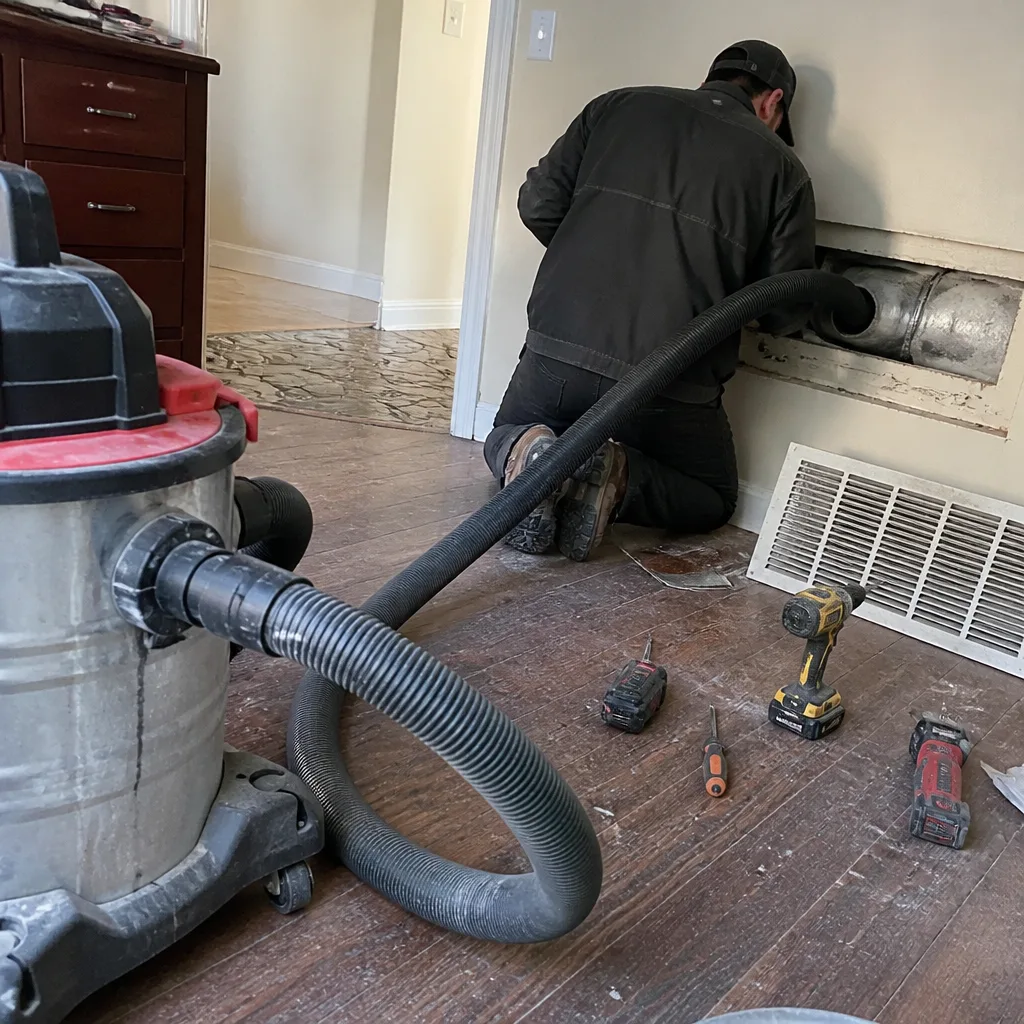 Before
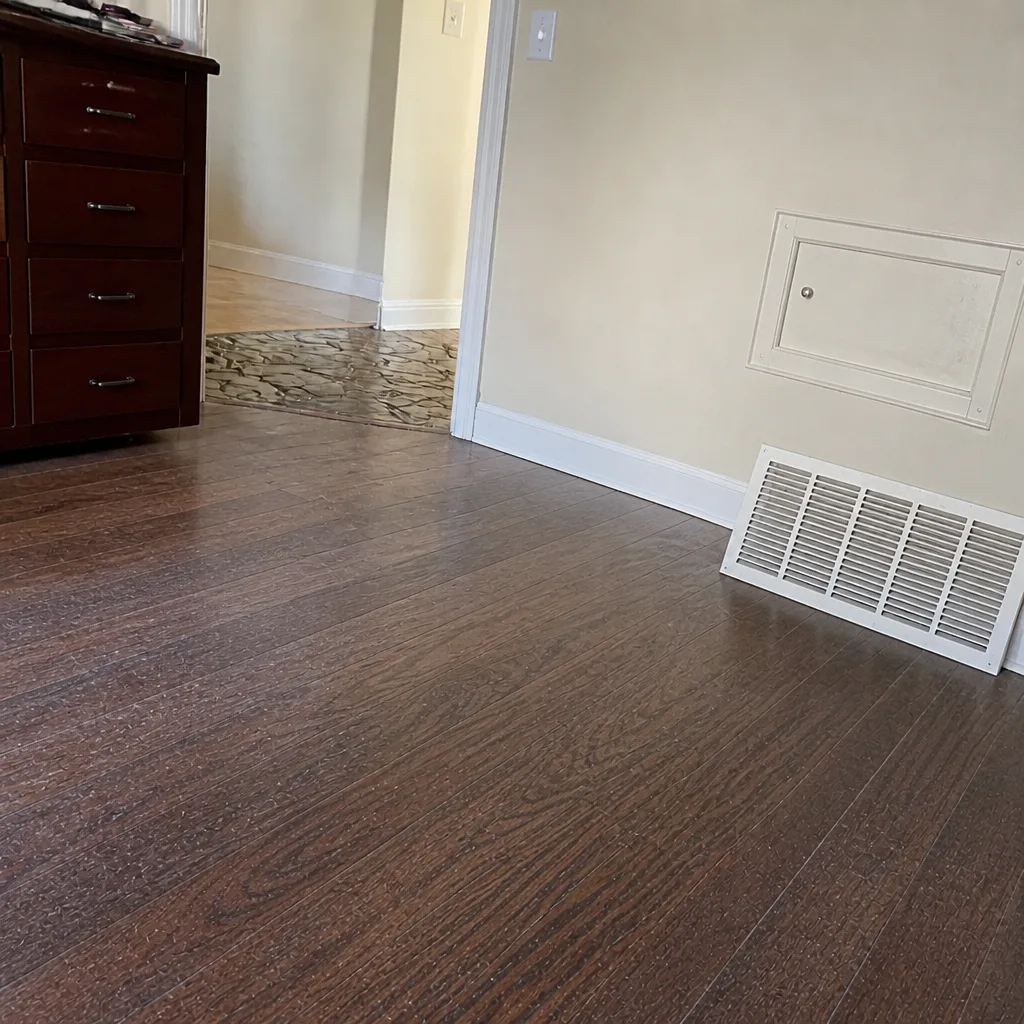 After
When to Call a Professional
Some duct issues are clearly a professional job, and this is a good place to be specific. Call a professional if you can see moisture staining or biological growth inside a crawlspace duct run, if a register has lost airflow entirely, if you smell mustiness when the system starts, if your ductwork includes sections in unconditioned space that have been wet, or if you’re planning a renovation and want the system cleaned before dust spreads. Duct repair and sealing belong with a trained technician too; a crushed or disconnected flex run needs to be opened up and reconnected, not taped over. Safety matters here: if a crawlspace run has visible mold growth, don’t disturb it yourself, since agitating it without containment spreads spores through the home. We use Abatement Technologies containment and negative-pressure equipment for exactly that situation. Air Duct Cleaning Green Lake offers free estimates in Green Lake – call (877) 820-8098. We answer 24/7. Fast dispatch from 7am to 7pm, Sunday through Friday.
Frequently Asked Questions
Pricing is per system, set by a written estimate after inspection, not per vent. The final price is the one on the written estimate, agreed before work starts, and the estimate is free. For a specific number on your home, call (877) 820-8098 for an exact quote.
Cheaper quotes usually leave out the air handler, coil, and drain pan, or skip rotary agitation and rely on a blower. They also tend to price per vent, which encourages counting registers instead of inspecting runs. Ask what equipment is being used and what’s on the scope before comparing two numbers. Call (877) 820-8098 and we’ll walk you through a full-scope estimate.
You should see before-and-after photos of your own ducts, taken inside the runs, plus a particle count comparison from the same location before and after. Ask for both. We document every job that way, and we’ll show you the images. Call (877) 820-8098 to schedule an estimate.
More often than the national three-to-five-year rule for many homes here, because damp crawlspace runs and dense tree canopy speed up accumulation. The reliable answer is visual: an inspection tells you what your system actually needs, not a calendar. Call (877) 820-8098 for a free estimate.
Yes. Craftsman-era and mid-century homes in this neighborhood often have duct runs that were extended, rerouted, or undocumented, and the scope varies widely from house to house. A camera inspection is what makes the written estimate accurate. Call (877) 820-8098 to book one.
Yes. Duct repair and sealing are in-house services, so a disconnected section or crushed flex run gets fixed as part of the same job rather than handed off to another contractor. Cleaning, repair, and sanitizing can be scheduled together. Call (877) 820-8098 and we’ll scope it on the estimate.
The Bottom Line
Air duct cleaning in Green Lake is not the same job it is in a dry inland market. The wet season, the tree canopy, the crawlspace duct runs, and the older housing stock change what accumulates, where it accumulates, and what it takes to remove it. A full-system clean covers supply, return, air handler, coil, and drain pan. Rotary agitation and HEPA extraction are the process; negative pressure and containment are the protection; particle counts and before-and-after photos are the proof. Per-vent pricing and phone quotes skip the parts that matter. Start with an inspection, ask what equipment is used, and insist on documentation of your own ducts. For related work, see dryer vent cleaning or the main air duct cleaning and Air Duct Cleaning Green Lake pages.
Ready to book a free estimate? Call (877) 820-8098. We answer 24/7. Fast dispatch from 7am to 7pm, Sunday through Friday.
Written by the team at Air Duct Cleaning Green Lake.