
Last updated November 24, 2026
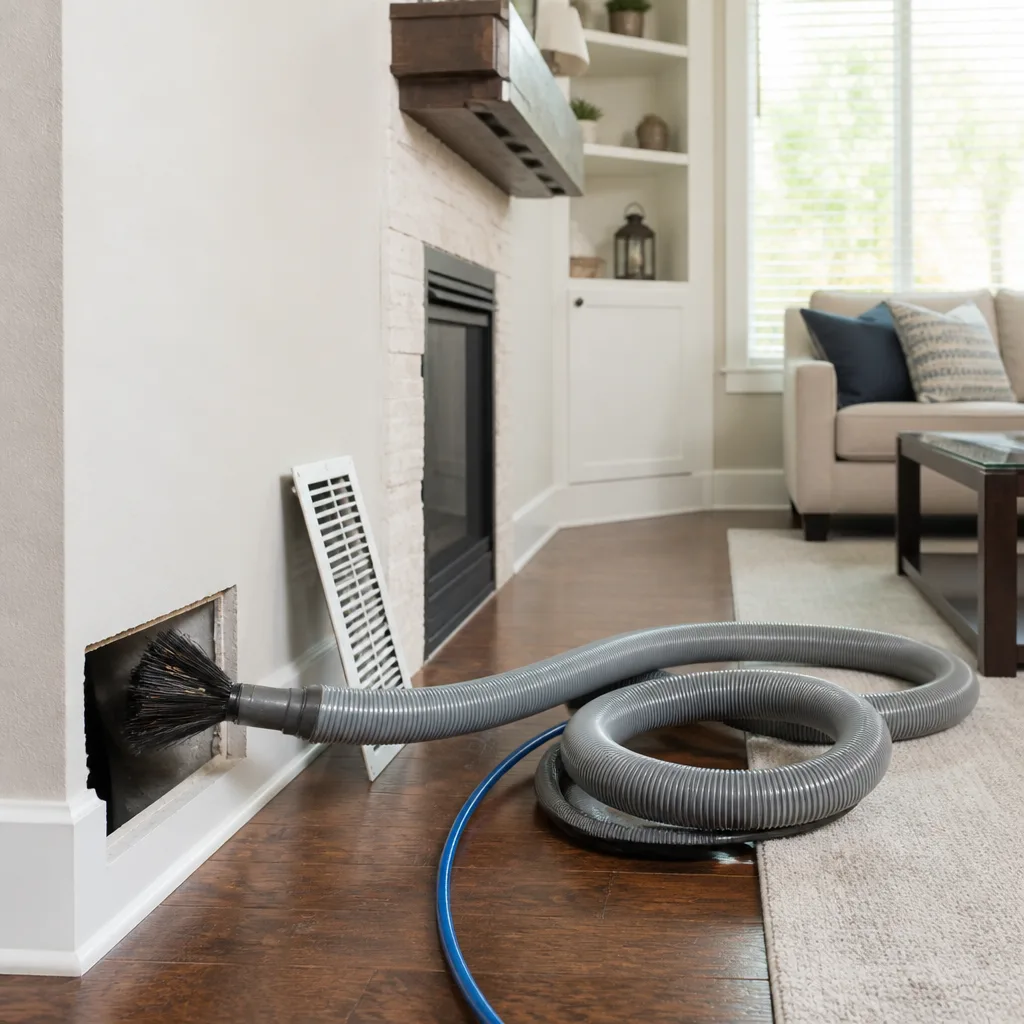 Whole-home duct cleaning
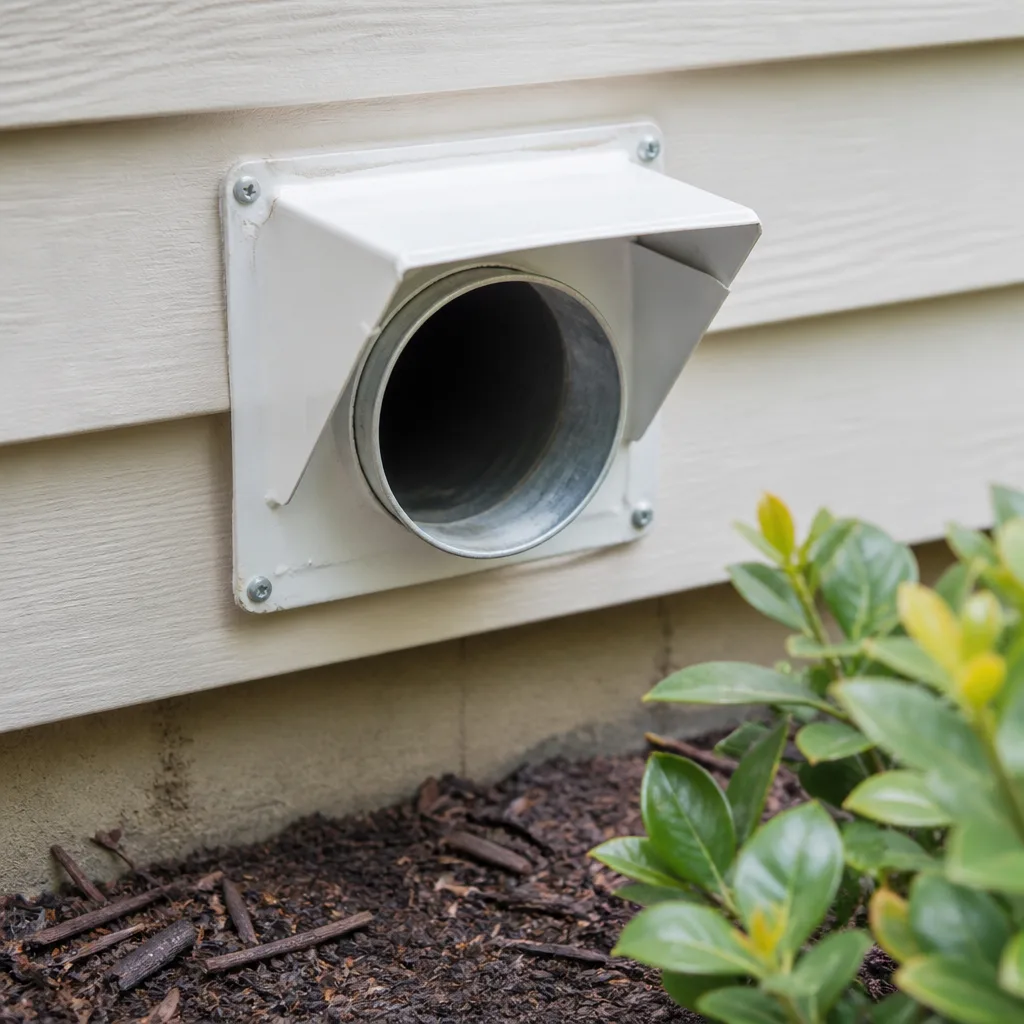 Dryer vent cleaning
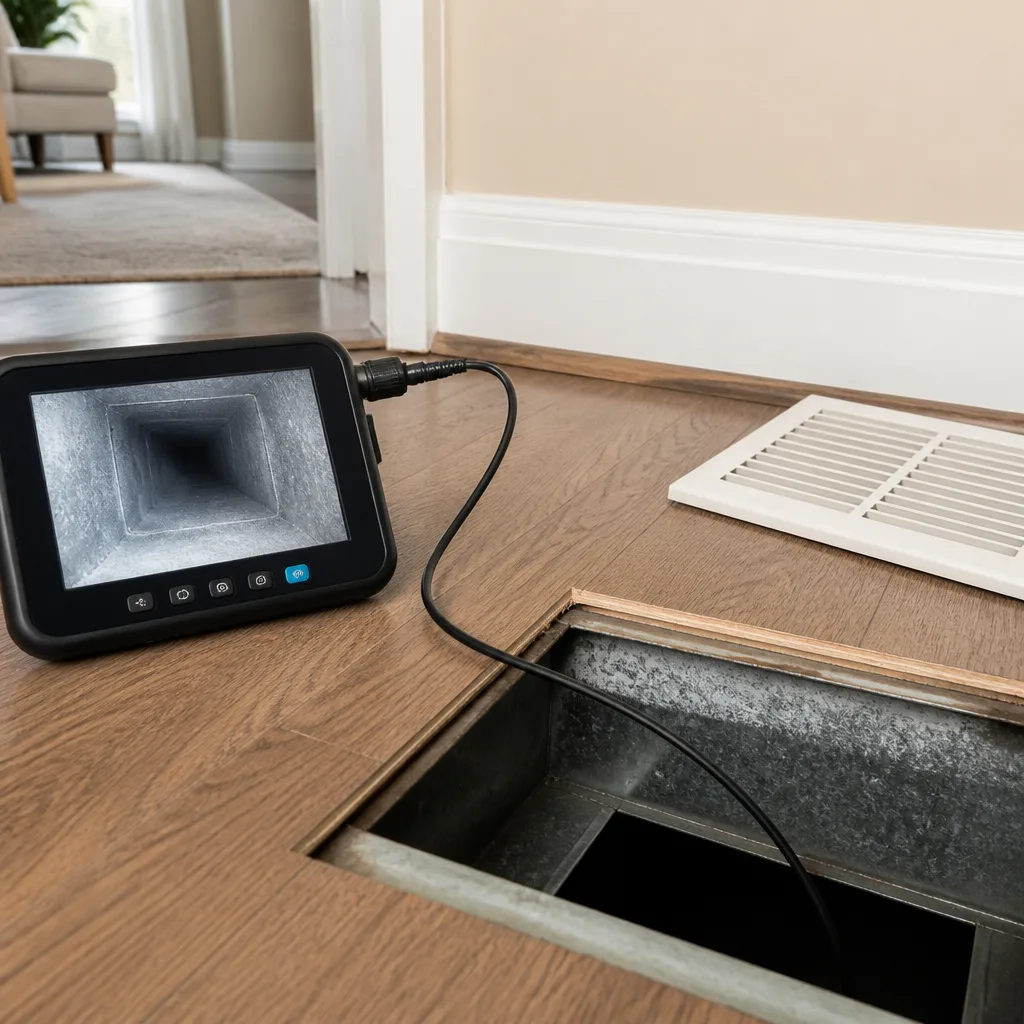 Camera inspection
 Sanitizing & deodorizing
Whole-system duct and dryer vent check with before-and-after photos - you see exactly what came out of your vents
That "$99 whole-house special" is a bait ad - the real number appears once they are in your hallway, or the "clean" is a shop-vac at the register. We photograph the inside of your ducts before and after instead.
Air Duct Cleaning Warning Signs: A Green Lake Homeowner’s Reference Guide
Visible dust on a supply register and a musty smell from the same vent look like one problem from across the room. They aren’t. One usually points to a duct system that needs cleaning. The other often points to moisture somewhere in the system, and cleaning alone won’t fix a moisture problem. Treating both the same way is how homeowners end up paying for a cleaning that doesn’t solve what they noticed in the first place. This guide sorts the warning signs by root cause rather than lumping them into one scary list, so you can triage what you’re seeing in your Green Lake home before you spend anything.
Quick Answer
The most reliable air duct cleaning warning signs in a Green Lake home are visible dust streaking at registers, a musty or “dirty sock” odor when the system starts, filters that clog faster than they used to, and uneven airflow between rooms. Of those, only the dust indicators point to a duct cleaning need on their own. Odor, filter loading and airflow problems usually have a second cause upstream (moisture, a coil, or a leak), which is why a professional assessment matters before you book a cleaning.
Styles & brands we work with
- Whole-home duct cleaning
- Dryer vent cleaning
- Camera inspection
- Sanitizing & deodorizing
Table of Contents
- Particulate Warning Signs: What Visible Dust Actually Means
- Biological Warning Signs: Odor and Growth Need a Different Response
- Dirty Ducts vs. a Dirty Coil: Telling Them Apart
- Uneven Airflow Is Rarely a Cleaning Problem
- When Filters Clog Faster Than Usual
- Tracing Odor: Duct System or Drain Pan?
- Common Mistakes to Avoid
- When to Call a Professional
Particulate Warning Signs: What Visible Dust Actually Means
Particulate signs are the ones you can see: dust streaks, dark staining, and debris around return grilles. They tell you material is moving through the system and settling where the airflow slows. In most Green Lake homes that means the ducts have accumulated a layer of dust that the filter isn’t catching, either because the filter is undersized for the house or because the system has been running with gaps and leaks at the joints. Either way, the fix usually starts with a proper assessment of the whole system, not just a vacuum at the register.
- Dark staining around supply registers. A shadow ring or gray smear at the grille edge usually means air is escaping around a loose seal and pulling dust with it.
- Dust settling on horizontal surfaces within a day of cleaning. That’s a sign particulate is bypassing the filter or re-entering the living space from leaky return ductwork.
- Debris visible inside the return drop. Shine a light into the return grille and look up. A thin film is normal. Flakes, clumps, or matted dust are not.
- Dust puffs at startup. If you see a small cloud when the system kicks on, the supply run has material sitting in it that the blower pushes out.
Here in Green Lake, the long wet season keeps windows closed for months, and a closed house concentrates whatever the system is moving. That’s not a reason to panic. It’s a reason to look at the ductwork honestly rather than assume the filter is doing all the work. Professional agitation with a Rotobrush rotary brush followed by Nikro HEPA-filtered extraction is designed to remove the settled layer rather than stir it up, which is why the equipment matters more than the sales pitch.
Biological Warning Signs: Odor and Growth Need a Different Response
Odor, visible growth, and a damp smell when the system starts are biological indicators, not particulate ones. This distinction matters because biological signs usually mean moisture is present somewhere upstream of the ducts themselves. Cleaning the ducts in that situation can make things worse if the moisture source is still active: you remove the visible growth and then the same conditions let it return. Our experience is that a biological warning sign should trigger a moisture investigation first and a cleaning second.
- Musty, earthy, or “dirty sock” smell at startup. This often tracks to a damp coil, drain pan, or insulated interior of the air handler rather than the duct runs.
- Visible dark spots or fuzzy growth near the evaporator coil or the plenum. If you can see it through an access panel, there is more behind the coil you cannot see.
- Humidity that stays high indoors even with the system running. In Green Lake, where homes run their cooling for long stretches in humid weather, a system that never fully dries out is a breeding ground. Runtime humidity is the local factor here.
- Allergy-like symptoms that improve when the system is off. A pattern like that is worth investigating, though it isn’t proof on its own.
Where risk is elevated, containment is what separates a routine cleaning from a remediation-grade job. We use Abatement Technologies negative-pressure and containment tools in exactly those situations, so dislodged debris is captured rather than redistributed into the living space. If you’re seeing biological signs, that’s the equipment standard to ask about before anyone starts work in a Green Lake home.
Dirty Ducts vs. a Dirty Coil: Telling Them Apart
Cleaning ducts without addressing a fouled air handler coil leaves the root cause intact. The coil is the wet, finned component that conditions the air, and it’s the part most likely to collect dust, biological growth, and debris from a system that’s been running dirty for a while. Ducts can look clean at the registers while the coil is matted with material. We see this often on systems where someone cleaned the ducts and the smell or dust came back within a season.
Here’s how to tell what you’re dealing with:
- Look at the coil through the access panel. If you can see it, and the fins are dull, matted, or coated, the coil needs cleaning regardless of what the ducts look like.
- Check the filter housing and the blower compartment. Dust buildup there points at the air handler as the source, not the duct runs.
- Note the pattern of the problem. Dust at supply registers is a duct issue. Dust at return grilles plus a dusty filter box is upstream. Odor at startup is usually the coil or drain pan.
- Compare the cost of doing both. Cleaning one without the other tends to mean paying for the second visit soon after. A scope that covers ducts and HVAC together – what we call HVAC cleaning – is the more honest way to book it.
The reason we handle all five service categories in-house, cleaning through duct repair and air quality upgrades, is that separating them is what produces those back-and-forth visits. One crew, one visit, one assessment that covers both the ducts and the equipment they connect to.
Uneven Airflow Is Rarely a Cleaning Problem
Inconsistent airflow between rooms is more reliably a duct restriction or leakage issue than a cleaning issue. That’s the piece most warning-sign lists get wrong. If the bedroom at the end of the run is weak while the living room roars, the likely cause is a crushed flexible duct, a closed damper, an undersized branch, or a joint that’s come apart in the attic or crawlspace. Cleaning removes dirt. It doesn’t reshape a duct or reconnect a joint. Repairs do, and that’s why we keep duct repair and sealing in-house rather than handing it off.
- A room that’s always weak, in every season. Consistent imbalance points to a design or damage issue, not dirt.
- Airflow that changed suddenly. Something moved, disconnected, or collapsed. Worth inspecting.
- Whistling or roaring at a register. Restricted airflow through a small opening makes noise. Cleaning won’t silence it; locating the restriction will.
- Rooms that were fine and aren’t now. This can be duct damage, a damper knocked closed, or a sealing failure at a joint.
In Green Lake homes with finished attics and long flexible runs, we look for crushed sections and disconnected joints before we assume the answer is a cleaning. If the ducts are dirty too, both get handled: clean the system, then seal and repair what’s leaking. That order matters because sealing over a dirty duct leaves the contamination in place.
When Filters Clog Faster Than Usual
A sudden increase in how fast your filter loads is one of the more underrated warning signs, because it tells you something about upstream conditions rather than the ducts themselves. If a filter that used to last a season now looks clogged in half the time, more particulate is reaching it from somewhere: a filter box that’s unsealed and pulling attic or crawlspace air, a return path that’s drawing from a dirty space, or a coil and plenum coated with material that the airflow is slowly lifting into the filter. Cleaning the ducts alone won’t fix the loading rate if the source is a leak.
- Filter loads faster after a renovation or a season of heavy runtime. Normal. Check again after a fresh filter.
- Filter consistently loaded on one side more than the other. Usually a return-path imbalance or leak at the housing.
- Filter housing visibly bypassing air around the edges. That’s a seal issue and worth fixing before more particulate settles in the plenum.
- Coil access area noticeably dirty when you look in. Time for a full-system assessment, not just a filter change.
When we install and integrate Honeywell and Aprilaire air quality components, it’s often because the household has run into exactly this pattern. A properly matched filter housing and media filter changes in a properly sealed system stop the loading problem at its source instead of chasing it with more filter replacements.
Tracing Odor: Duct System or Drain Pan?
Most odor complaints in a Green Lake home trace to the drain pan, not the ducts. The pan sits under the evaporator coil and catches condensate. In humid weather, especially in a house that runs the cooling system for long stretches, the pan can hold standing water or a wet film, and the blower pushes that smell through the supply runs. It reads as a duct smell, but the fix is at the pan and coil, not in the branches. Cleaning the ducts without cleaning the pan leaves the source untouched, and the odor returns fast.
Here’s how to narrow it down:
- Note when the smell appears. Startup odor tends to point to the air handler. Odor that’s constant points to the ducts or the room itself.
- Look for standing water or slime in the drain pan. If you can see it through the access panel, that’s your source. If it’s dry and clean, look further.
- Check whether the odor is stronger at supply or return grilles. Stronger at supply means it’s coming from ahead of the branches. Stronger at return points at the air handler or return path.
- Rule out the obvious. A damp crawlspace or a bathroom exhaust ducted into the return can mimic a duct odor. Green Lake’s wet winters make those easy to overlook.
Where we find a fouled pan or coil, the sequence is to clean the air handler, sanitize the affected surfaces, and use a guardsman-grade protective treatment as part of the sanitizing service so the surface stays cleaner longer. That’s the part a plain cleaning misses.
How Air Duct Cleaning Works (and Why Equipment Changes the Outcome
Understanding the process helps you judge whether a warning sign is being addressed at the root or just at the surface. Professional duct cleaning is not a vacuum at the register. It’s mechanical agitation of the duct interior with a rotary brush, plus high-powered extraction that pulls dislodged material out of the system and traps it in a HEPA filter rather than blowing it back into the room. That combination is the difference between a cleaning that holds and one that reads clean for a week.
Here’s the sequence we run:
- System assessment. Identify the source category: particulate, biological, coil, airflow, or filter loading. Each leads to a different scope.
- Containment. Where risk is elevated, set up negative pressure with Abatement Technologies equipment so material stays out of the living space.
- Agitation. Run the Rotobrush rotary brush through the duct runs to loosen the adhered layer, not just the surface dust.
- Extraction. Pull the loosened material out through a Nikro HEPA-filtered vacuum.
- Coil and air handler. Clean the wet side, drain pan, and blower, since that’s where odor and growth usually originate.
- Seal and repair. Close leaks and repair damaged ducts so the cleaned system stays clean.
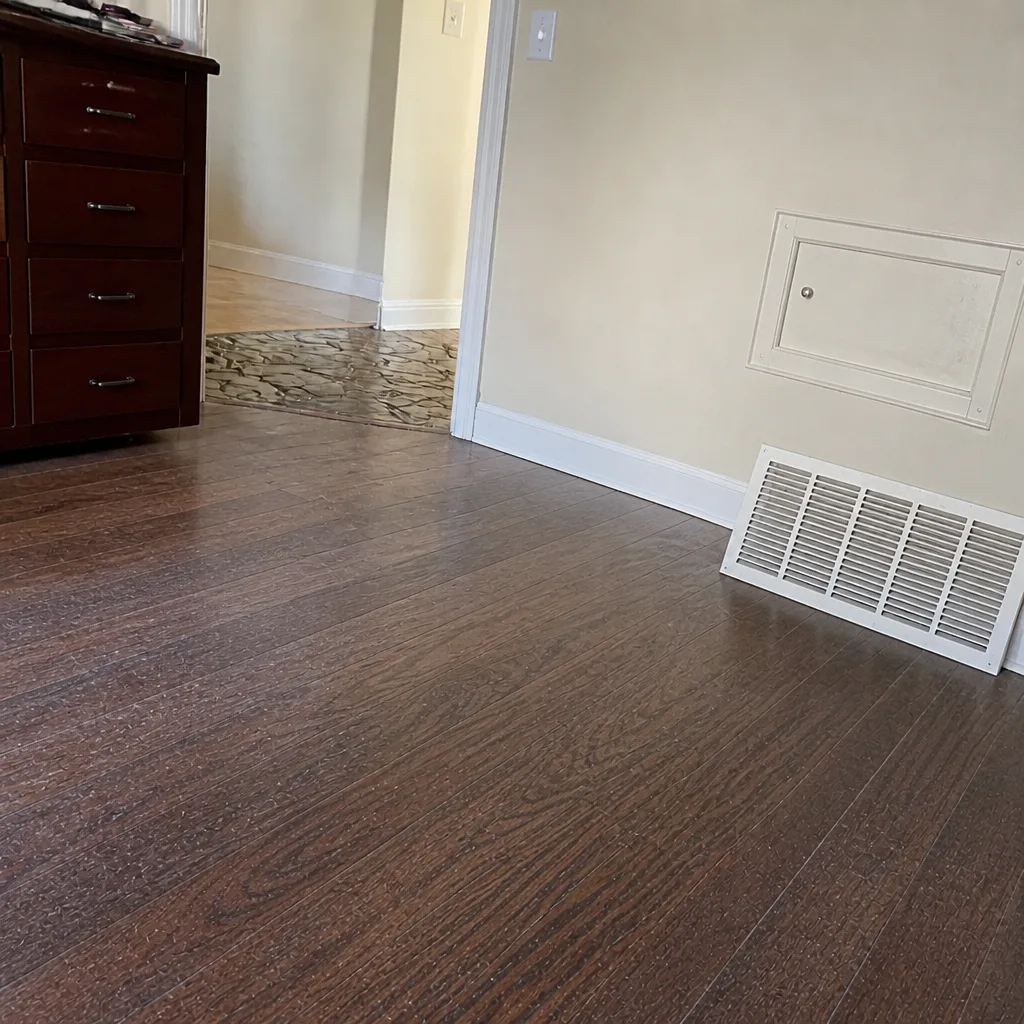
- Document. Before-and-after photos of the ducts, so you can see what got removed rather than taking someone’s word for it.
We run Rotobrush and Nikro platforms on every duct job and keep the repair, sanitizing, and air quality upgrade work in-house. That matters in Green Lake because it means the company assessing a warning sign is the same one who can fix what it finds, rather than handing you off to a second contractor.
See the difference
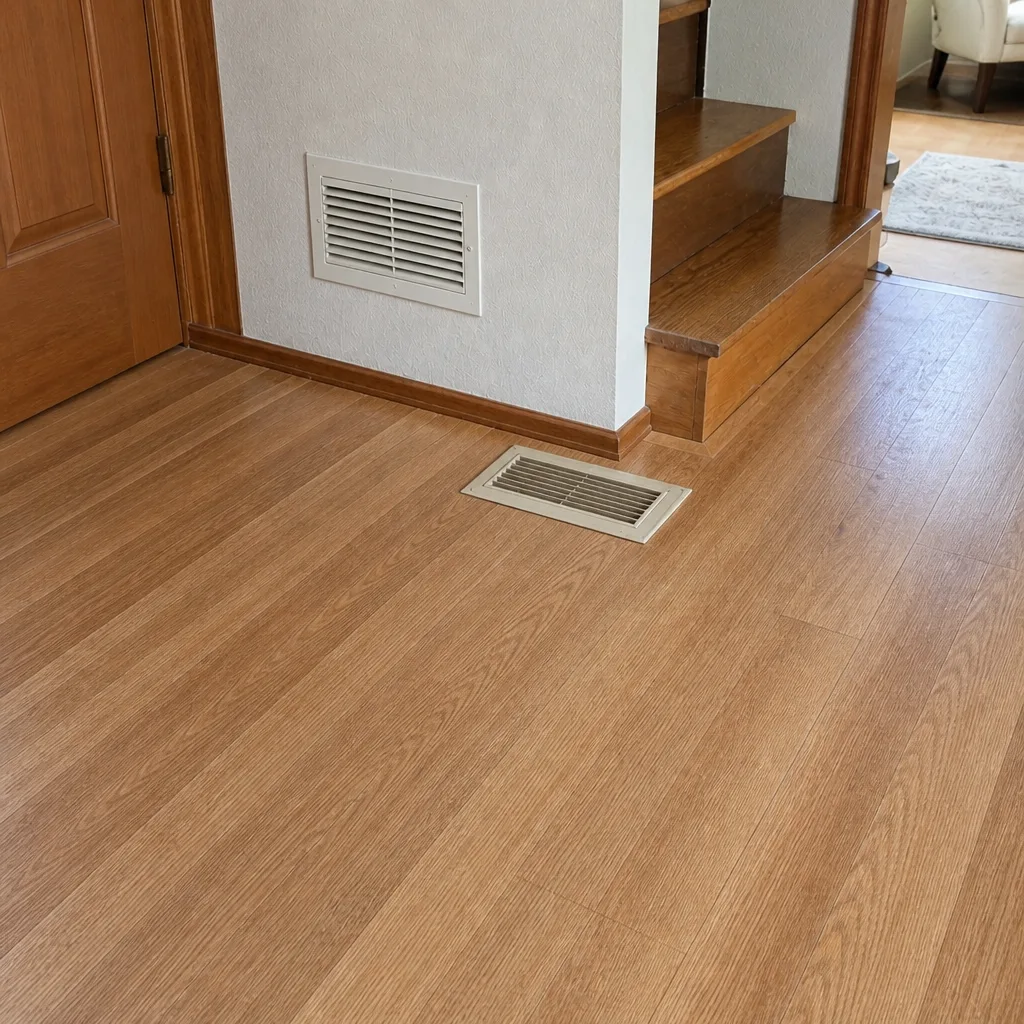
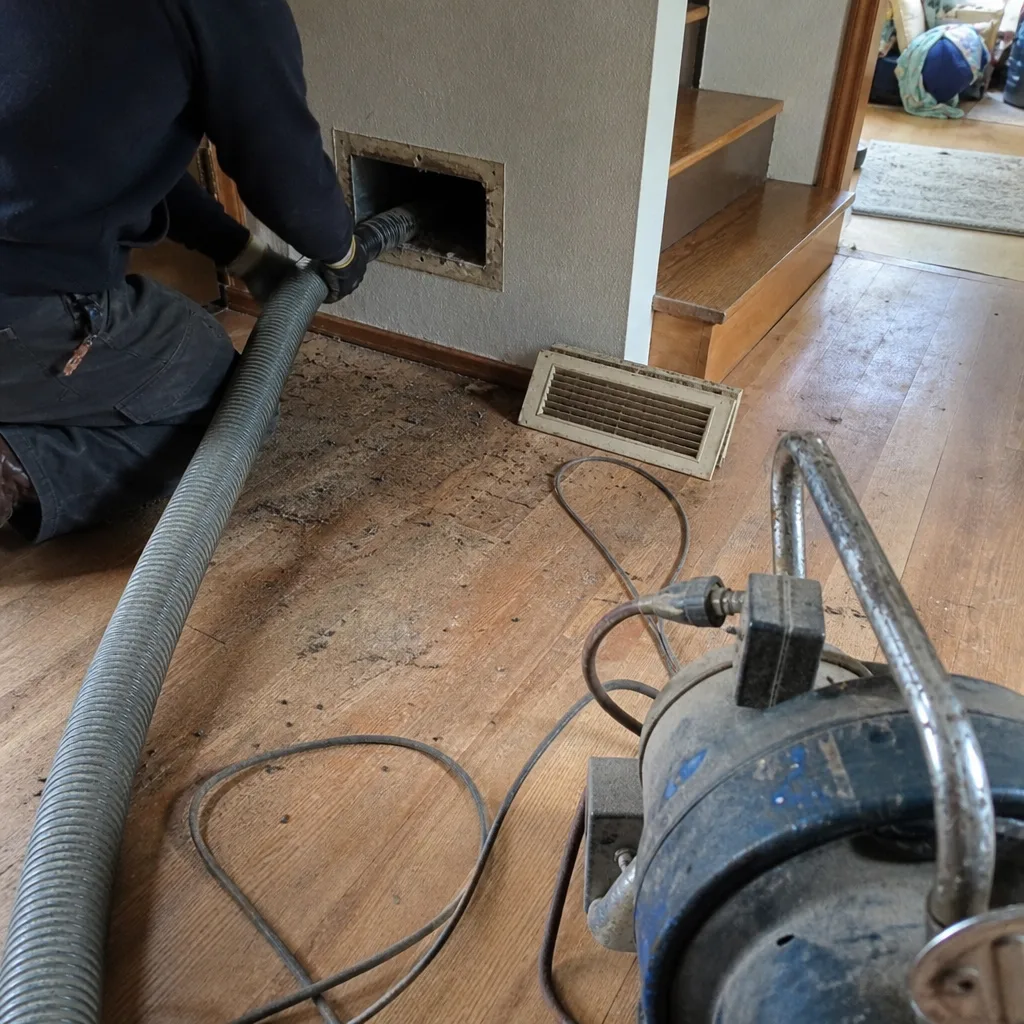 Before
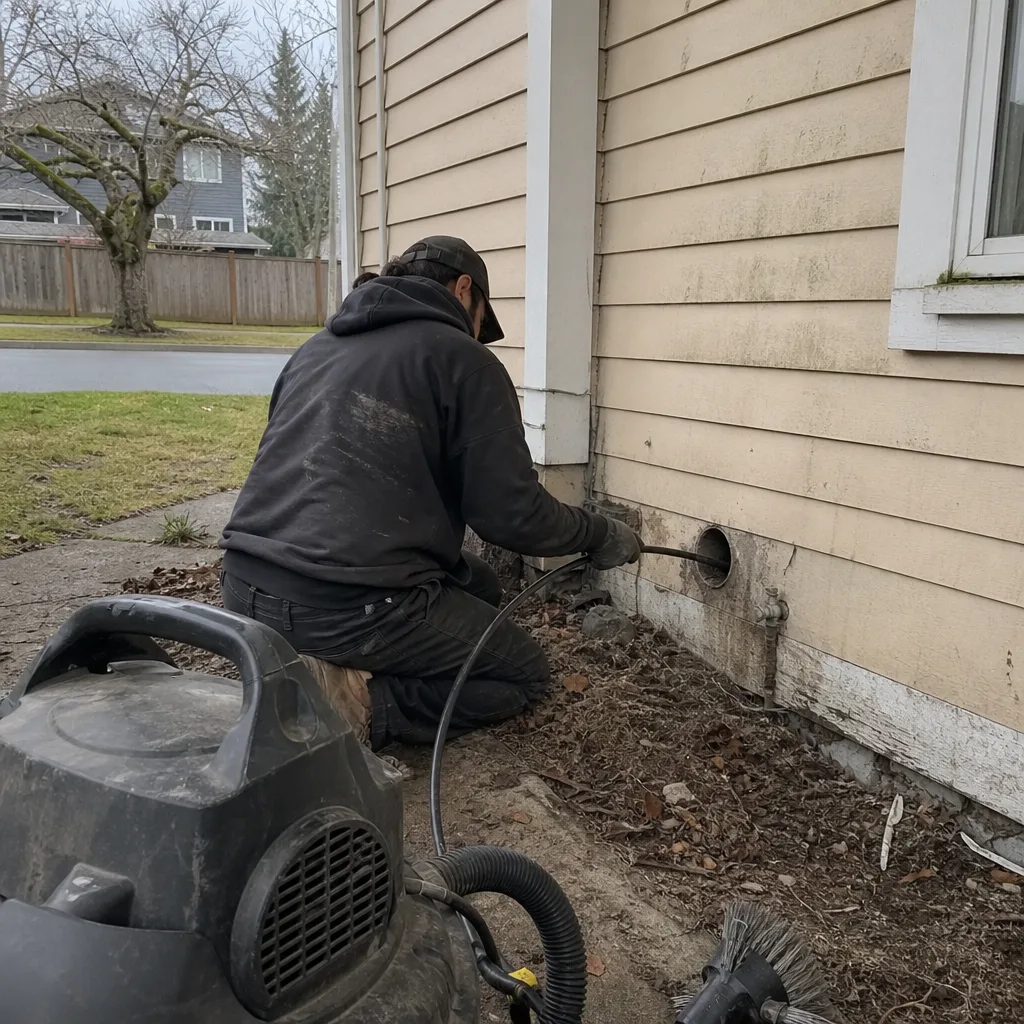
 After
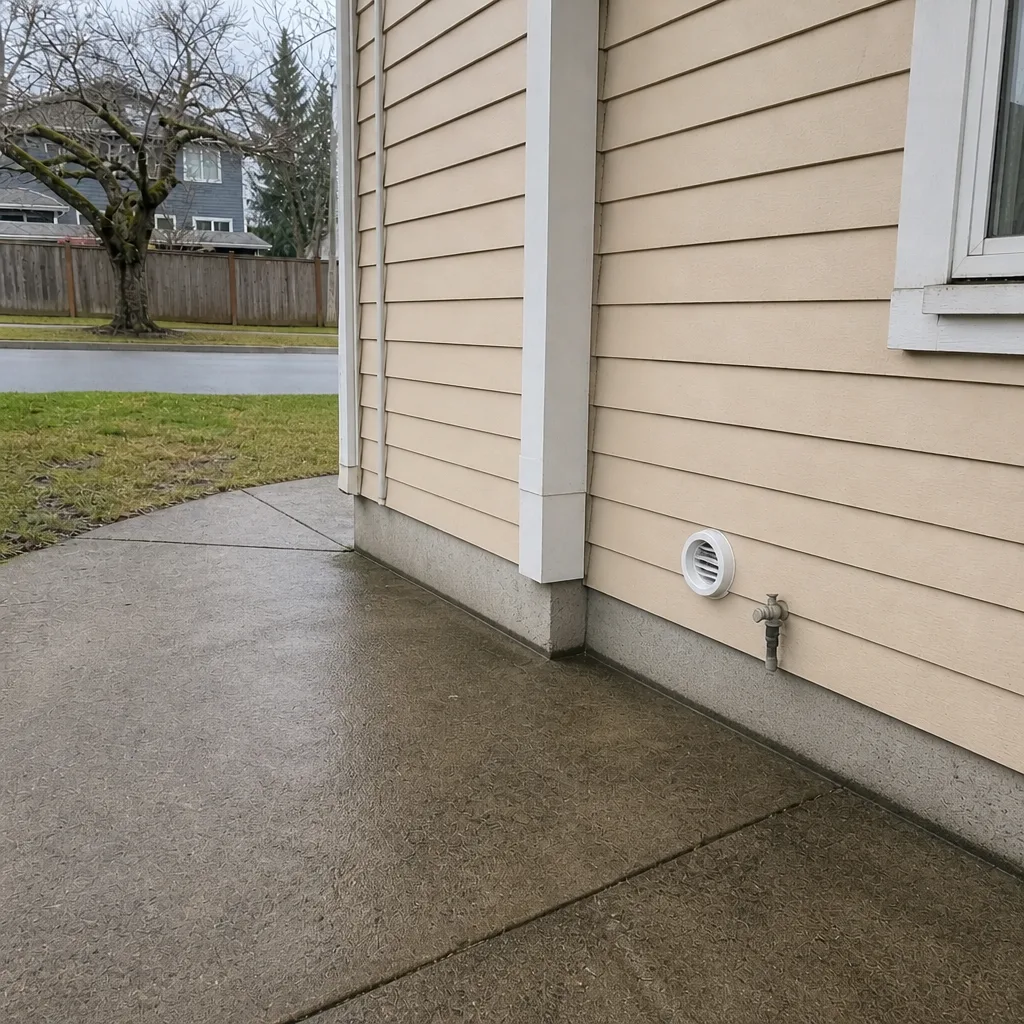
 Before
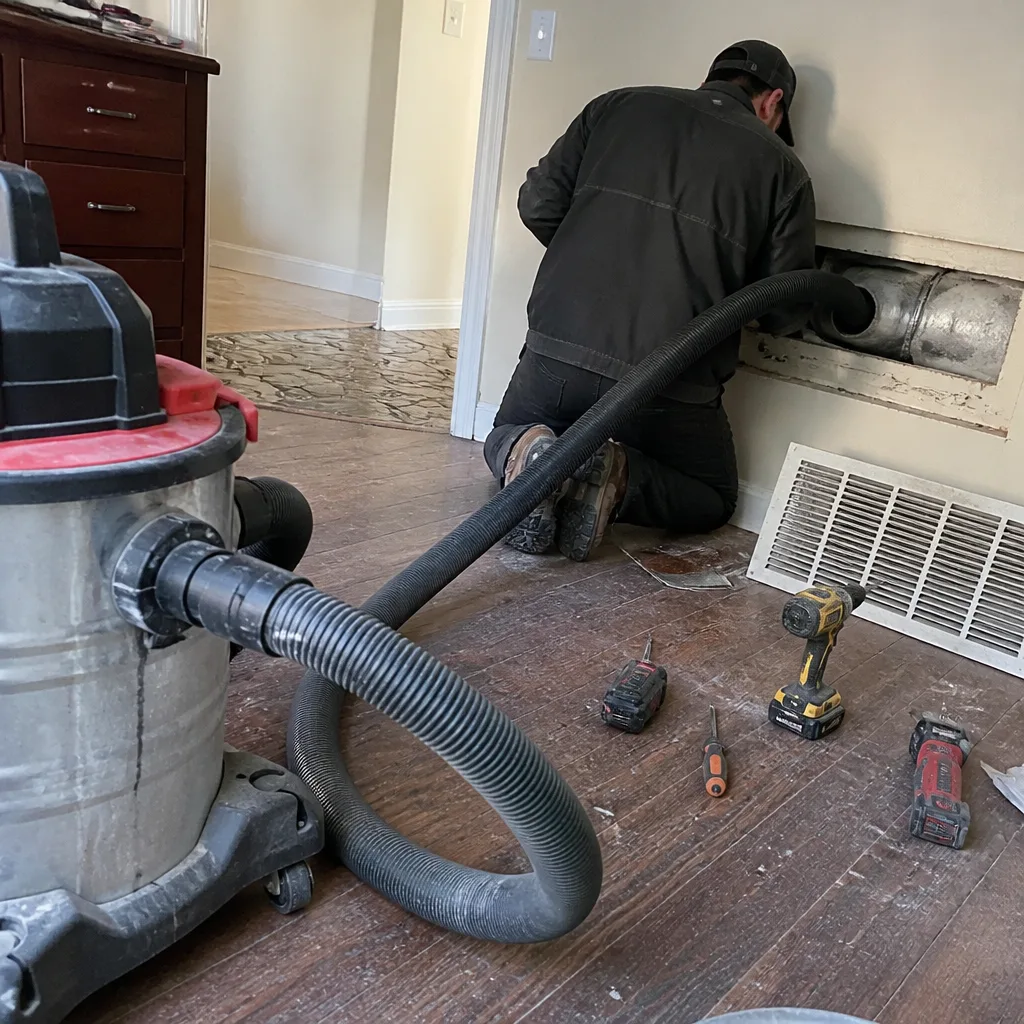
 After
 Before
 After
Common Mistakes to Avoid
- Treating an odor like a dust problem. If the smell comes from the drain pan or coil, cleaning the ducts will clear it for a week and then it returns. Address the moisture source first.
- Cleaning ducts without cleaning the coil. That leaves the root cause intact and usually means a repeat visit within the same year. Book a full Air Duct Cleaning Green Lake scope that includes the air handler.
- Assuming weak airflow means dirty ducts. It usually means a damaged branch or a disconnected joint. Cleaning doesn’t fix either, and buying a cleaning won’t solve the room that never gets cool.
- Sealing ductwork before it’s cleaned. Sealing over contamination traps it in place. Clean first, then seal.
- Skipping the dryer vent inspection. Many Green Lake homeowners have their dryer vent cleaning deferred for years, and the vent is often as dirty as the duct system. It’s the same visit if you ask.
- Buying on the lowest quote alone. If a quote is dramatically below everyone else’s, it usually reflects a shorter process, less equipment, or a price that grows on the day. Ask what equipment will be on site and how the work is documented.
- Ignoring a filter that loads too fast. That pattern says something upstream is leaking or coated. Change the filter, note the interval, and get the system assessed if it keeps loading early.
When to Call a Professional
Call a professional when a warning sign persists after a filter change. That covers a musty smell that comes back after cleaning, dust settling on surfaces within a day, a room that never gets airflow, a filter that clogs early twice in a row, or visible growth near the coil or drain pan. Any of those means the cause is upstream of the dust you can see, and the fix needs a full-system look rather than a filter or a single-vent cleaning. Air Duct Cleaning Green Lake offers free estimates in Green Lake – call (877) 820-8098 to book an assessment.
Frequently Asked Questions
Honest pricing for a full-system cleaning in Green Lake is quoted per system, not per vent, and includes the air handler, drain pan, and coil inspection. We give a written estimate before any work starts, and that estimate sets the final price. Call (877) 820-8098 for an exact quote – estimates are free.
A quote that’s well below the rest is usually priced for a shorter process: surface-level vacuuming, no coil work, no containment, and sometimes a price that grows once the technician is on site. We book one flat price per system, agreed in writing before work starts, with before-and-after photos of your own ducts. Call (877) 820-8098 to compare a full-system quote.
You know it was done when you can see before-and-after photos of your own duct runs, and when the system passes a visual check at the coil and plenum after cleaning. Ask for both. We provide them as part of every job. Call (877) 820-8098 to book.
Most Green Lake homes need a full cleaning every few years, not every year. The trigger is the warning signs you’ve noticed, not the calendar. If you’re seeing repeat dust, odor, or filter-loading patterns, get an assessment. Call (877) 820-8098 for a free estimate.
No. Most musty smells in a Green Lake home trace to the drain pan or a damp coil, and cleaning the ducts alone won’t clear them. The right step is to check the air handler first, then clean the ducts if the assessment confirms it. Call (877) 820-8098 and we’ll look at the whole system.
Air duct cleaning covers the duct runs. HVAC cleaning covers the air handler, coil, blower, and drain pan as well as the ducts. If the warning sign is odor, growth, or filter-loading, the HVAC scope is usually what’s needed. Call (877) 820-8098 to talk through which scope fits your home.
The Bottom Line
Not all duct warning signs point to the same fix. Dust at registers is usually a cleaning issue. Odor, growth, and rising humidity are usually a moisture or coil issue. Uneven airflow is usually a duct restriction. Fast-clogging filters point upstream. Green Lake’s long humid cooling season makes the moisture category worth taking seriously, and the fastest way to sort which category you’re in is a full-system assessment rather than a guess. Clean the ducts when the signs call for it, fix the coil and leaks when they don’t, and seal what you clean so the result holds. Call (877) 820-8098. We answer 24/7. Fast dispatch from 7am to 7pm, Sunday through Friday.
Written by the team at Air Duct Cleaning Green Lake.