
Last updated November 24, 2026
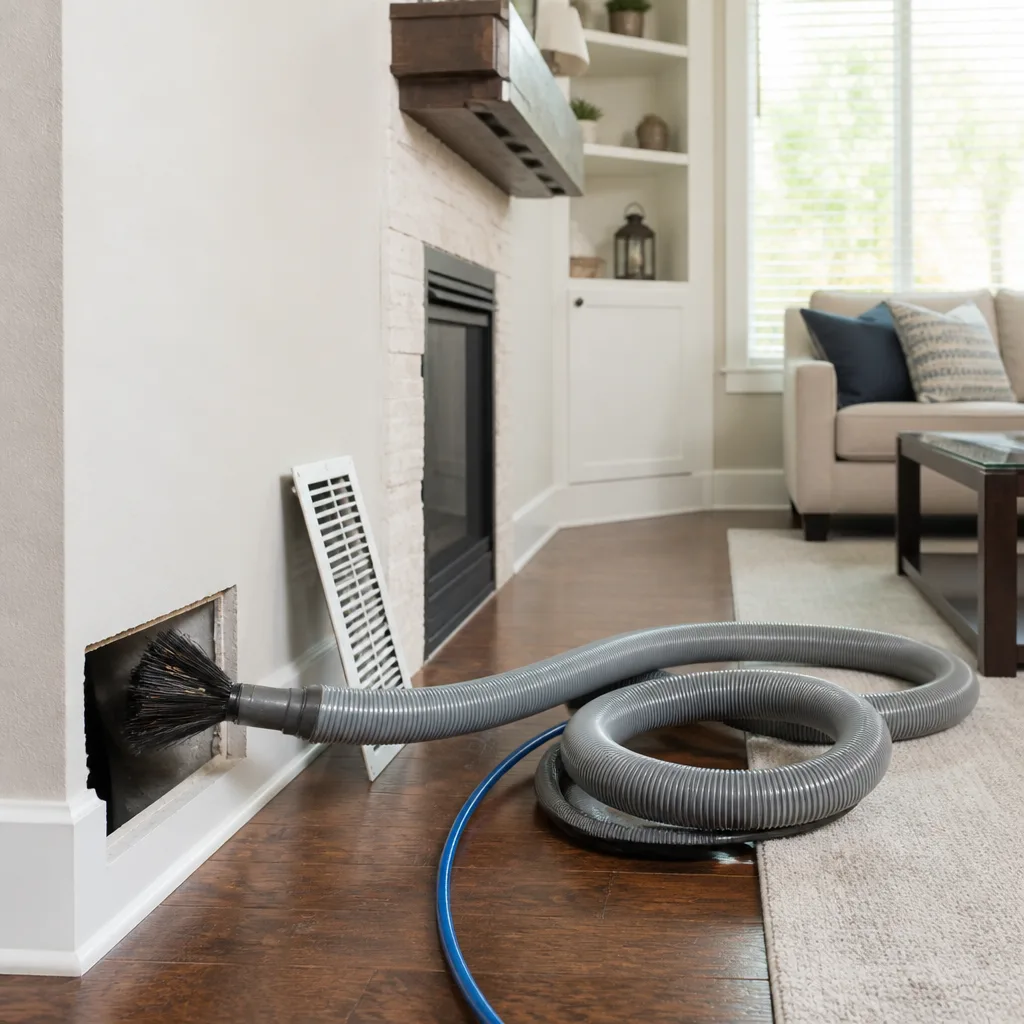 Whole-home duct cleaning
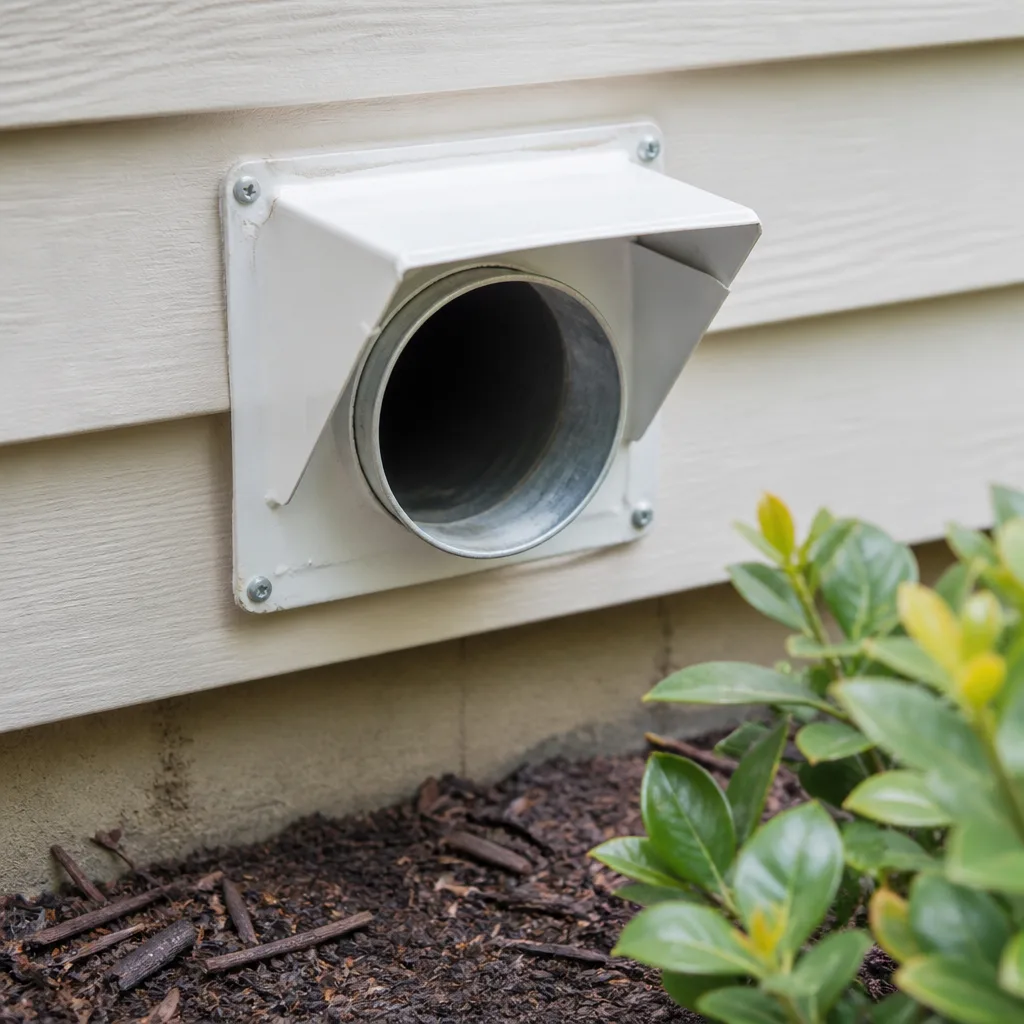 Dryer vent cleaning
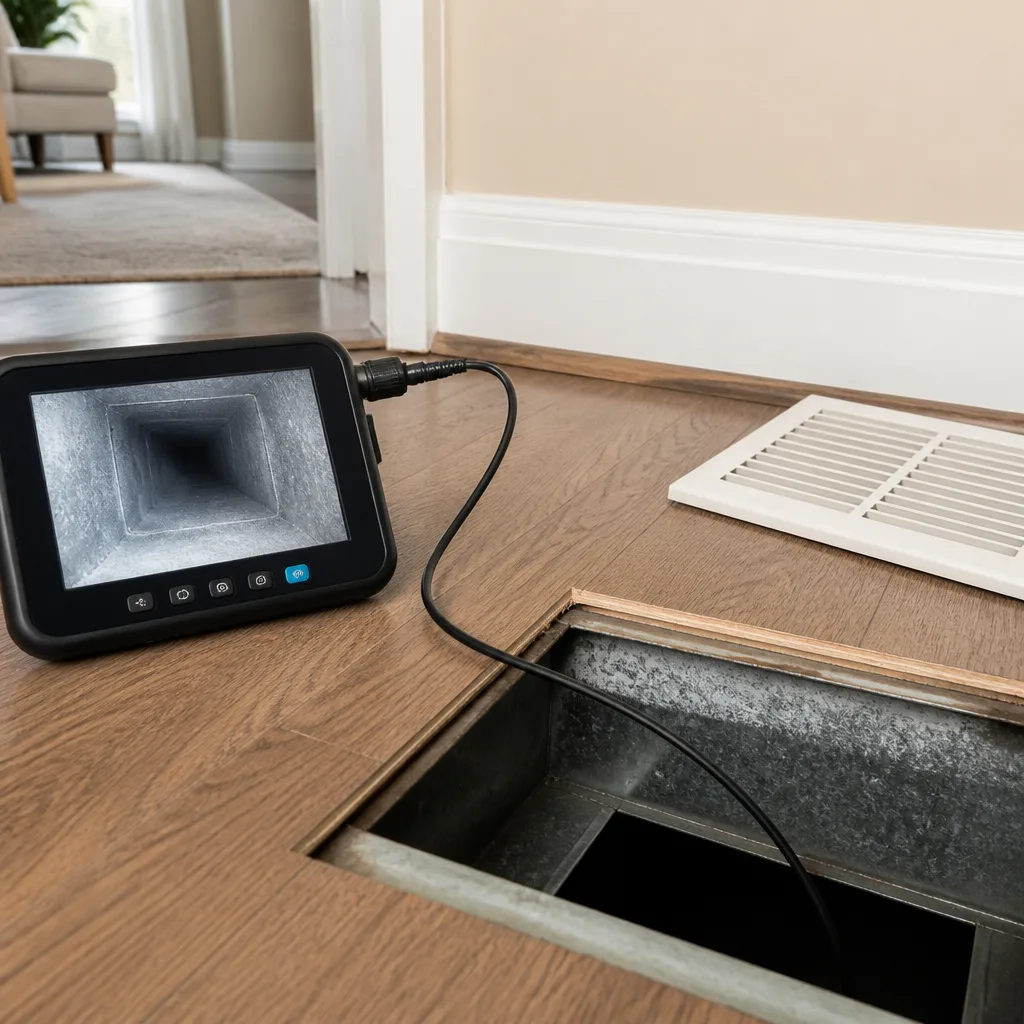 Camera inspection
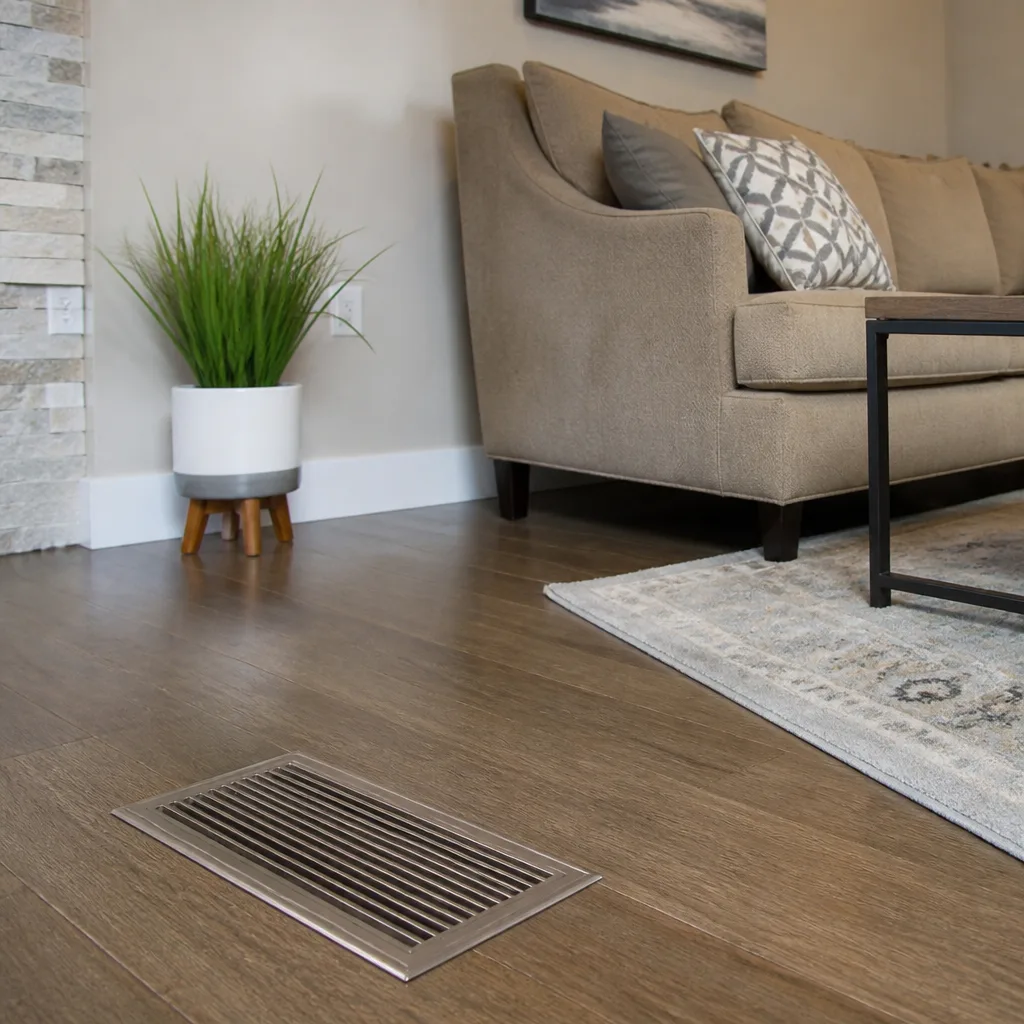 Sanitizing & deodorizing
Whole-system duct and dryer vent check with before-and-after photos - you see exactly what came out of your vents
That "$99 whole-house special" is a bait ad - the real number appears once they are in your hallway, or the "clean" is a shop-vac at the register. We photograph the inside of your ducts before and after instead.
Air Duct Cleaning Maintenance Checklist for Green Lake Homeowners
A filter change schedule built for a dry climate can leave a Green Lake home running on a clogged system for months. That’s the problem with calendar-based maintenance advice: it was written for somewhere else. Green Lake’s air doesn’t behave like Phoenix’s or Miami’s, and the duct maintenance that actually protects your system here depends on what your equipment is telling you, not what month it is. This guide replaces the generic “change your filter every 90 days” rule with condition-based triggers you can see, measure, and log. You’ll learn how to read your registers and blower wheel, track static pressure, handle wildfire smoke season and pre-winter checks, and document everything so future service has a real baseline.
Quick Answer
A working air duct maintenance checklist for a Green Lake home centers on four condition-based tasks: inspect supply and return registers monthly for visible particulate, check the blower wheel for dust loading, log static pressure readings twice a year to catch restriction buildup, and schedule a full professional cleaning when those signals point to internal contamination. Seasonal triggers – post-wildfire smoke, the start of heating season, and the end of any renovation – matter more than a fixed calendar interval.
Styles & brands we work with
- Whole-home duct cleaning
- Dryer vent cleaning
- Camera inspection
- Sanitizing & deodorizing
Table of Contents
- Why Calendar-Based Advice Fails in Green Lake
- Reading Your Registers as a Duct Condition Gauge
- The Blower Wheel: Your System’s Leading Indicator
- Logging Static Pressure to Catch Restriction Early
- Seasonal Tasks Specific to Green Lake
- Post-Renovation Debris Assessment
- Documenting System Condition for Future Comparisons
- What Professional Equipment Sees That You Can’t
Why Calendar-Based Advice Fails in Green Lake
The “change your filter every 90 days” rule assumes a stable environment with predictable particulate loads. Green Lake homes don’t have that. Smoke from regional wildfires pushes particulate into the air for weeks at a stretch during summer, then heating season brings a different load entirely. A filter that looks fine in April can be fully loaded by August if smoke settles in. A duct system that stayed clean for two years can pick up a season’s worth of accumulation in one smoky month.
Condition-based maintenance fixes that. Instead of asking “how long has it been,” you ask “what is the system showing me right now.” The indicators are observable by any homeowner willing to look: dust patterns at the registers, the color and texture of the blower wheel, the pressure your system is working against, and how the whole thing behaves when it runs. None of these require a technician to read. They require you to know what to look at.
We’ve seen the difference in our work across Green Lake. Homes on the same block, same build year, same system size, can have wildly different duct conditions because one had a renovation, one sat through two smoke seasons without a filter change, and one has a five-micron gap in a supply trunk the homeowner never noticed. The calendar can’t tell you that. The system’s own signals can.
What Condition-Based Maintenance Looks Like in Practice
- Monthly: a quick visual pass at every supply and return register.
- Every filter change: a look at the blower wheel through the access panel.
- Twice a year: a static pressure reading logged to a running record.
- Event-driven: a full inspection after wildfire smoke season, before heating season, and after any renovation.
That’s the whole schedule. No arbitrary 90-day rule. Just a routine that responds to what Green Lake’s air is actually doing to your home.
Reading Your Registers as a Duct Condition Gauge
Supply and return registers are the most accessible window into what’s happening inside your ductwork. They won’t tell you everything, but they’ll tell you enough to know when to look deeper. The idea is to use them as a proxy for duct interior condition, reading their surfaces the way you’d read a gauge.
What to Look For Each Month
- Visible dust on the supply vanes. A thin, even film after a few weeks is normal. A thick buildup, or flecks that look like lint rather than dust, points to particulate moving through the supply side.
- Dark rings or streaks around the return grille. These mark air being pulled at high velocity past the frame. Heavy streaking suggests the return path is working harder than it should.
- Discoloration on the register face. Yellowing or gray staining on return registers usually means the filter behind it has been bypassing – either loaded, incorrectly sized, or loose in its frame.
- Debris on the floor or sill below a register. Anything that lands there came out of the system. Small grit is routine. Fibrous pieces are not.
- Airflow you can feel with a hand. A register that once pushed a strong current and now barely moves air is telling you something upstream is restricted.
Photograph each register once. Then photograph it again on your next monthly pass. The comparison is the point. Green Lake homes sit in a mixed climate where the load changes with the season, and a register that looked normal in June can look very different by September when wildfire smoke has settled over the region. The photo log makes that change visible.
What the Register Signal Means
If two or three registers show heavy buildup and the rest look clean, you’re likely looking at a localized issue – a failed joint, a disconnected run, or a filter that’s failing to catch particulate before it reaches the supply side. If every register shows the same loading, the problem is systemic, and a full air duct cleaning assessment is the right next step. Either way, the register pass costs you ten minutes and gives you real information to act on.
The Blower Wheel: Your System’s Leading Indicator
The blower wheel is the single best early indicator of overall system condition, and it’s the part most homeowners never look at. It sits inside the air handler, spinning to move air through the system. As dust accumulates on its fins, the wheel loses efficiency, the motor works harder, and every downstream symptom gets worse. The blower wheel is where a duct maintenance problem starts showing up before you notice anything at the registers.
How to Inspect It Safely
Turn the system off at the thermostat and the breaker before you look. Most air handlers have a removable panel that gives a view of the blower assembly without disassembly. What you’re doing is looking, not touching – the blower is a mechanical component, and reaching into it while it might be powered is a genuine injury risk.
- Light dust on the fins: normal, and reversible with a proper cleaning.
- Caked or consolidated dust on the leading edges of the fins: this is loading, and it means the wheel is losing balance and efficiency.
- A visible “blanket” across the wheel: severe. The blower can no longer move the air it was designed for, and the motor is at risk.
- Debris in the blower housing itself: usually indicates the filter bypassed, or there’s a breach upstream.
A loaded blower wheel explains a lot of symptoms that look unrelated: weak airflow at distant registers, a motor that seems loud, rooms that never quite cool or heat. In our experience working on Green Lake homes, a dust-loaded blower is one of the most common findings on a first professional cleaning, and one of the most satisfying corrections because the improvement in airflow is immediate.
When the Blower Signal Means Professional Cleaning
If the fins show caked or consolidated dust, condition-based maintenance says stop and address the whole system, not just the filter. A loaded blower is downstream of a loaded duct. Cleaning one without the other leaves the source in place. That’s the gap we built our service around – a HVAC cleaning that includes the blower, evaporator coil, and ductwork as one job, so a clean blower doesn’t just load up again from a dirty supply trunk.
Logging Static Pressure to Catch Restriction Early
Static pressure is the amount of resistance your system is working against as it moves air. It’s the most objective indicator you can track as a homeowner, and it’s the one most people skip because it sounds technical. It isn’t. It’s a measurement, and if you log it, you can watch it climb before the system starts complaining in other ways.
Static pressure is measured in inches of water column, usually written “in. w.c.” A digital manometer with a static pressure probe is the tool. A technician can take readings at the supply plenum and the return plenum – the two points where a system’s total external static pressure is calculated. Those are the numbers to log. If you’d rather have a professional establish the baseline and teach you how to monitor the change, that’s a reasonable first step. The value is in the trend line, not any single reading.
Building a Static Pressure Log
- Have a baseline reading taken when the system is known clean – either after a professional cleaning or right after a filter change.
- Record the filter’s condition, the date, and the manometer reading at both the supply and return plenum.
- Repeat the reading at your next filter change, and any time you notice airflow weakening at the registers.
- Watch for a consistent upward trend across readings. A clean system’s static pressure should stay stable between cleanings; a climbing trend means restriction is building.
- If the reading climbs meaningfully above the baseline, that’s the trigger to inspect the duct interior and the blower.
The point of logging static pressure is that it gives you a number before anything fails. Restricted ducts rob the system of efficiency long before the homeowner notices a comfort problem. Green Lake homes, where the heating load runs hard through the winter, are especially sensitive to a system fighting a restrictive duct. A clean, unrestricted duct means the furnace or heat pump runs closer to its rated efficiency, and that shows up on the utility bill whether or not you ever look at the meter.
We use a Rotobrush rotary brush system and Nikro HEPA-filtered vacuum on every duct cleaning – the same professional platform commercial IAQ contractors run – precisely because restoring that baseline requires agitation plus high-powered extraction, not a shop vac. When we finish, we can provide the before-and-after static readings that document what the cleaning achieved. That’s the baseline you’ll log against for the rest of the system’s life.
Seasonal Tasks Specific to Green Lake
Three seasonal events drive most of the duct condition variation in Green Lake homes: wildfire smoke during summer, the start of heating season in fall, and any renovation done to the house. Each has its own inspection routine, and each is a better trigger than the calendar on its own.
Post-Wildfire Smoke Season Inspection
Regional wildfire smoke settles over the area for weeks at a time during smoke season, and the particulate it carries gets drawn into every system through the return. A home that ran its system with a standard filter through a heavy smoke season is a candidate for a thorough inspection regardless of how recently the ducts were cleaned. The tasks:
- Change the filter immediately after any sustained smoke event, even if it looks less than fully loaded. Fine smoke particulate loads a filter differently than household dust.
- Inspect return registers for staining or fine gray residue.
- Check the blower wheel for caked dust – smoke particulate tends to consolidate rather than fluff.
- Consider an upgrade to dryer vent cleaning and a full system sanitizing pass if smoke odor lingers in the home after a filter change.
Honeywell and Aprilaire filtration components are worth considering if your smoke-season experience keeps repeating. Integrating a higher-MERV media cabinet at the air handler catches the fine particulate before it reaches the ducts, which is a more durable answer than changing filters more often. We handle that integration as part of the same visit as a cleaning, so the filtration upgrade installs onto a clean system.
Pre-Winter Heating Season Check
Before the first cold snap, run a full pre-season checklist so the system doesn’t fight a loaded duct all winter:
- Replace the filter with a fresh one of the correct size.
- Run the system and feel each register for balanced airflow.
- Inspect the blower wheel through the access panel – the heating season is when a loaded blower hurts most.
- Log a fresh static pressure reading to compare against your baseline.
- Book a professional cleaning if your readings or the blower show loading, so the work is done before the system runs hard.
Post-Renovation Debris Assessment
Renovation debris is its own category. Drywall dust, sawdust, and insulation fibers get drawn into the return within hours of a contractor cutting into a wall. The renovation-debris assessment is covered in the next section, but the trigger is simple: any renovation that involves cutting drywall, opening walls, or sanding should be followed by a duct inspection within a month of the work finishing.
Post-Renovation Debris Assessment
Renovation debris is the most under-recognized cause of duct contamination in Green Lake homes. A homeowner spends weeks planning the project, focuses on the finishes, and never thinks about the fact that the return air system ran the whole time, pulling construction dust into every run in the house. By the time the punch list is done, the ducts are carrying a load of drywall dust and sawdust that no filter was designed to catch.
The Assessment Routine After Any Renovation
- Check the return filter first. If it’s caked with fine white or tan dust, that material got past it too.
- Look at every return register for drywall dust. A fine powdery coating on the grille is a direct indicator the return path took the load.
- Inspect the blower wheel. Drywall dust consolidates on fins like nothing else, and a blower loaded with it can lose significant airflow.
- Look for debris inside the supply diffusers. Sawdust should not be sitting on the supply side of the system.
- Photograph everything with a date stamp for your log and for comparison if you get an estimate.
For renovations that involved demolition, drywall work, or insulation removal, an Abatement Technologies containment setup during the subsequent cleaning is the standard we hold ourselves to. Negative-pressure containment means dislodged debris is captured, not redistributed into the home – the same approach the mold-remediation and post-construction cleaning trades use. That’s not routine maintenance; that’s a contamination-risk job, and the equipment should match.
When a Post-Renovation Cleaning Is the Right Call
If the renovation touched walls, ceilings, or flooring across more than a small area and the system ran during the work, a full cleaning is usually warranted. A single-room paint job usually isn’t. The judgment call is the volume of airborne particulate the system was exposed to and how long it ran with it. If you’re unsure, photograph the registers and the filter and get an estimate. Free inspections exist for exactly this reason.
Documenting System Condition for Future Comparisons
A maintenance checklist is only as good as the baseline it measures against. The single most useful habit you can build as a Green Lake homeowner is a running photo and reading log of your system’s condition, taken the same way each time so you can compare apples to apples. This is what separates a real maintenance record from a pile of receipts.
What to Document
- Every register – one photo with the grille in place, one with it removed if you can safely do so. Date every image.
- The blower wheel – a photo through the access panel each time you inspect it. The angle matters; shoot the same angle every time.
- The filter – photograph it just before replacement, labeled with MERV rating, date installed, and date removed.
- Static pressure readings – supply and return, with date, filter condition, and any recent renovation or smoke event noted.
- Any professional service – the before-and-after photos a good contractor provides. Keep them with your other records.
Photographs and timestamps are what let a future technician see what’s changed and what hasn’t. A homeowner with a complete log hands the technician a record of the system’s last two years of behavior. That’s worth more than any verbal description, and it makes a future service comparison honest in both directions – for the homeowner and for the contractor.
Why the Log Matters at Service Time
If the log shows a static pressure trend that climbed steadily after last year’s cleaning, the technician knows to look for a breach in the supply trunk before cleaning. If the blower photos show the same wheel slowly loading over three seasons, the technician can recommend a filtration upgrade rather than another cleaning. The log turns every service visit into a diagnostic call instead of a blind job. We take before-and-after photos on every cleaning we do, and we leave them with the homeowner to start or extend their record. That’s the standard we hold the work to – if you can’t see the difference, the cleaning didn’t accomplish what it was for.
What Professional Equipment Sees That You Can’t
The home checklist gives you the indicators. The professional equipment goes after what the indicators point to. A Rotobrush rotary brush system agitates the duct interior mechanically – the rotating brush contacts the walls and lifts the debris that a hand vacuum can’t reach. Nikro HEPA-filtered vacuum captures that dislodged particulate in a sealed, filtered airstream rather than recirculating it through the home. Abatement Technologies containment equipment holds negative pressure on the affected area during the work, so airborne debris stays captured. That combination – agitation, sealed extraction, and containment – is what a professional cleaning is actually doing.
The mechanical agitation matters because most duct contamination isn’t loose dust. It’s a layer that’s bonded to the duct wall. A vacuum alone pulls the loose surface off and leaves the adhered layer behind. A rotary brush breaks that bond first, then the HEPA vacuum removes what the brush freed. That’s the sequence on every run in the system, and it’s the reason a professional cleaning produces a different result than a homeowner sticking a shop vac hose in a register. We use Rotobrush and Nikro equipment on every cleaning – the same systems commercial IAQ contractors rely on, not a residential-grade workaround.
Sealing and Sanitizing After Cleaning
Cleaning gets the system to a clean state. Sealing and sanitizing are what keep it there. Duct repair and sealing is an in-house service for us – we close gaps and seal joints while we’re on site, so a cleaned system doesn’t just re-contaminate through a five-micron gap in the attic run. Guardsman-grade protective treatments applied as part of a sanitizing pass extend the clean state beyond the visit itself. The order matters: clean, seal, sanitize. Each step is wasted without the one before it.
One crew, one visit. Cleaning, duct repair, and filtration upgrades handled together – which is why we don’t refer out for sealing or Honeywell and Aprilaire integration. The same technicians who cleaned the system install the upgraded media cabinet, take the post-service static reading, and photograph the result for your log. It’s a complete answer instead of a hand-off.
Common Mistakes to Avoid
- Treating filter changes as a substitute for a condition check. A clean filter doesn’t mean clean ducts, and a 90-day interval is arbitrary. The register, the blower, and the static log are the real signals, and they run on their own schedule.
- Ignoring the blower wheel because it’s out of sight. The blower is the leading indicator of system condition. A homeowner who skips the blower inspection is missing the earliest warning sign the system has.
- Running the system during a renovation without added return protection. Drywall dust and sawdust load a system faster than household dust ever does. Containment during the work and a post-renovation inspection both matter in Green Lake homes going through remodels.
- Skipping the post-smoke-season filter change. A heavy smoke season loads a filter in a way that looks different from everyday dust – fine particulate consolidates rather than fluffs. Change the filter after the smoke clears, not on the calendar.
- Hiring a cleaner who quotes per vent instead of per system. Per-vent pricing rewards a quick surface pass; a flat price per system is what lets the crew do the whole job without watching the clock. A cheap quote usually means a cosmetic cleaning, not a complete one.
- Not keeping a record. Without photos and static readings on file, there’s no way to know whether a cleaning actually improved anything or whether a decline is coming. The log is what makes the whole checklist work.
- Cleaning without sealing. A cleaned duct with an open joint in the supply run just re-contaminates – sealing and repair are what keep a cleaning durable, and a cleaner who stops at cleaning and skips the repair leaves the job half done.
See the difference
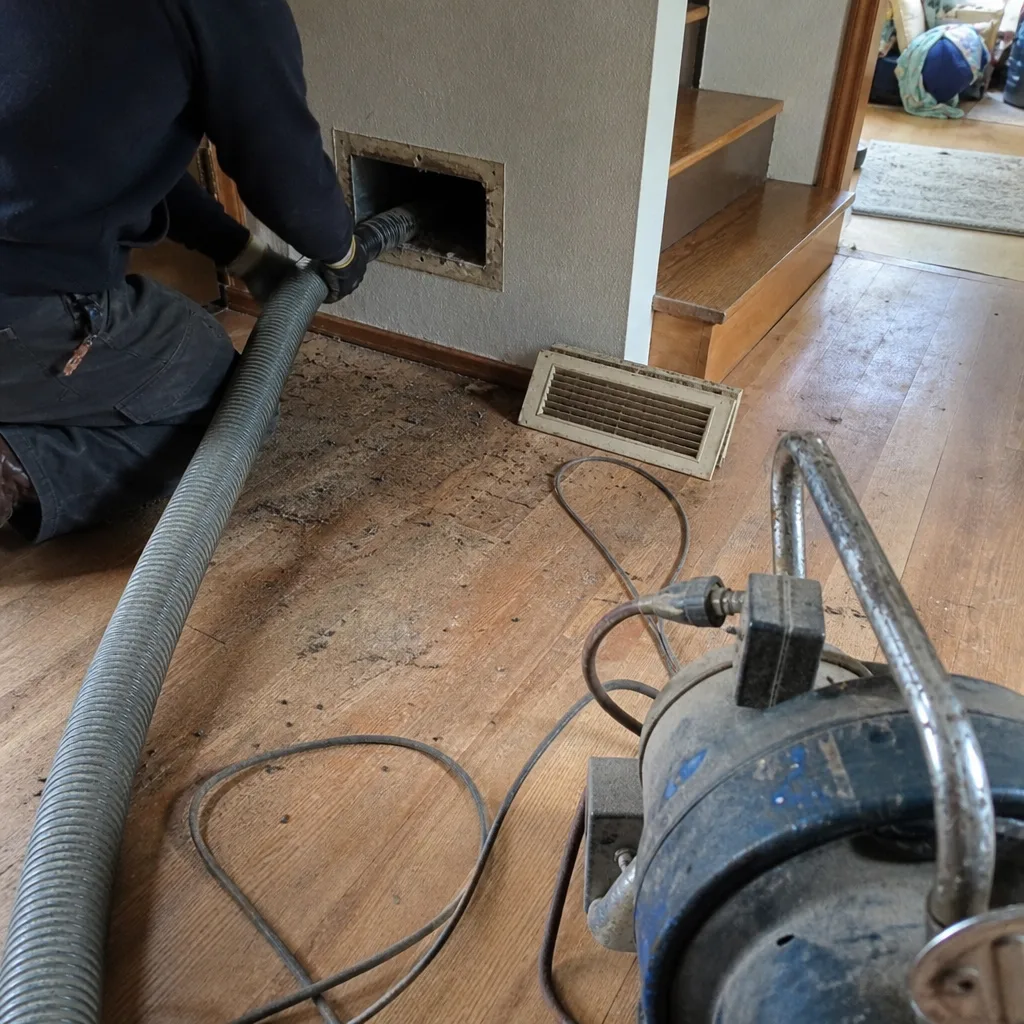 Before
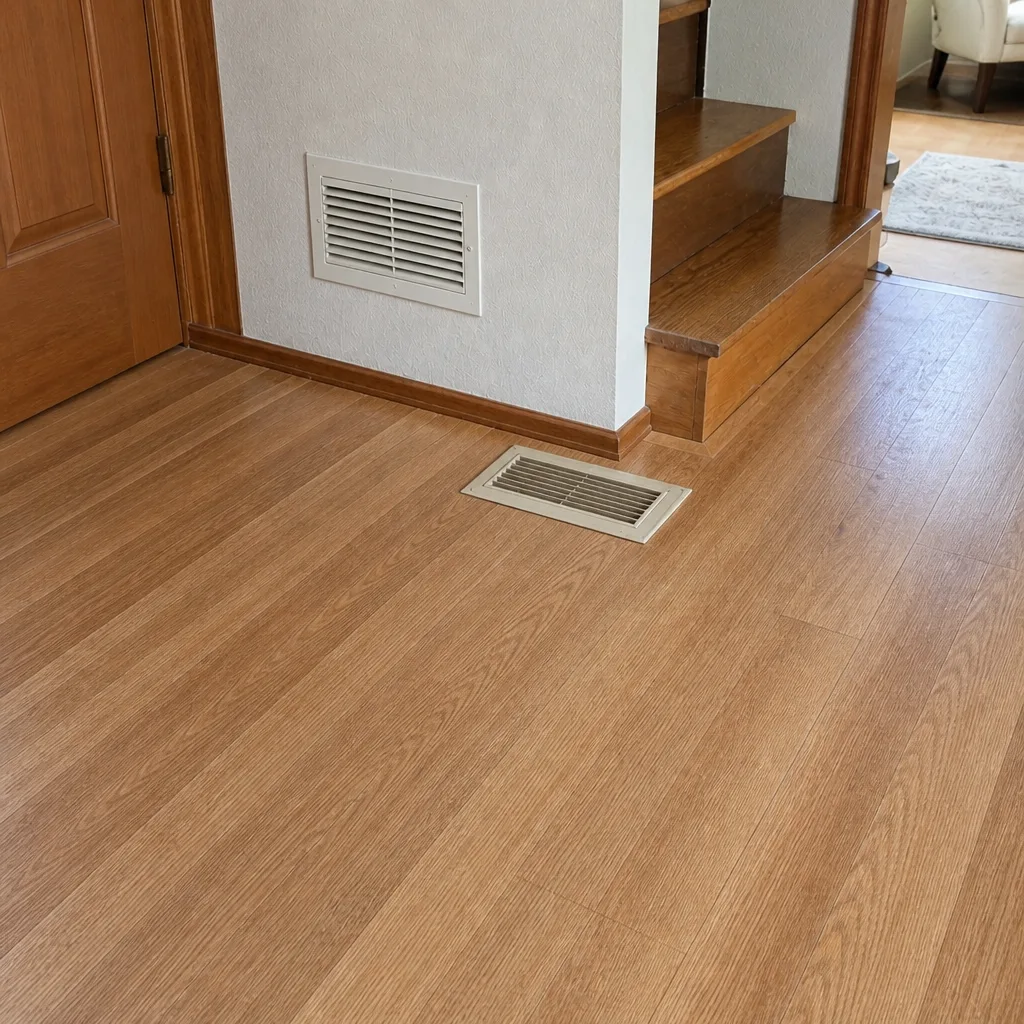 After
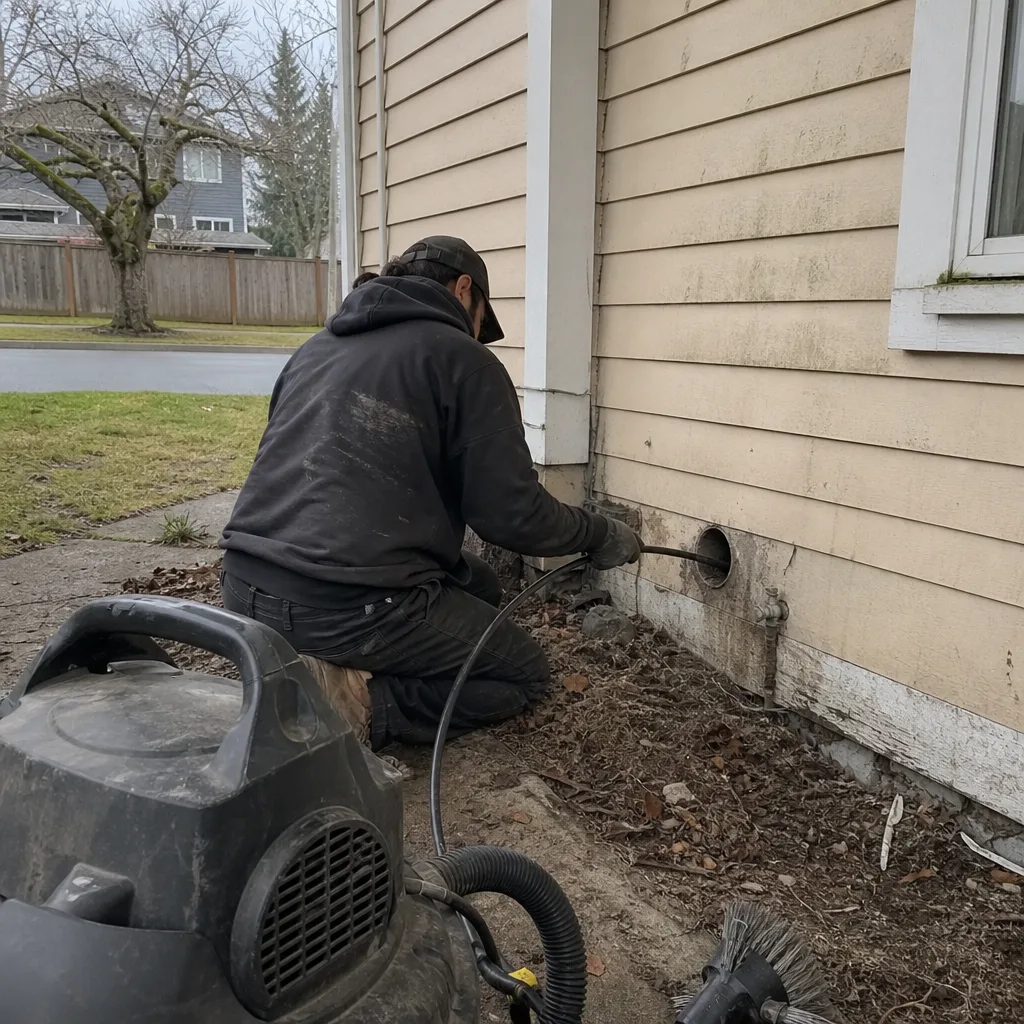 Before
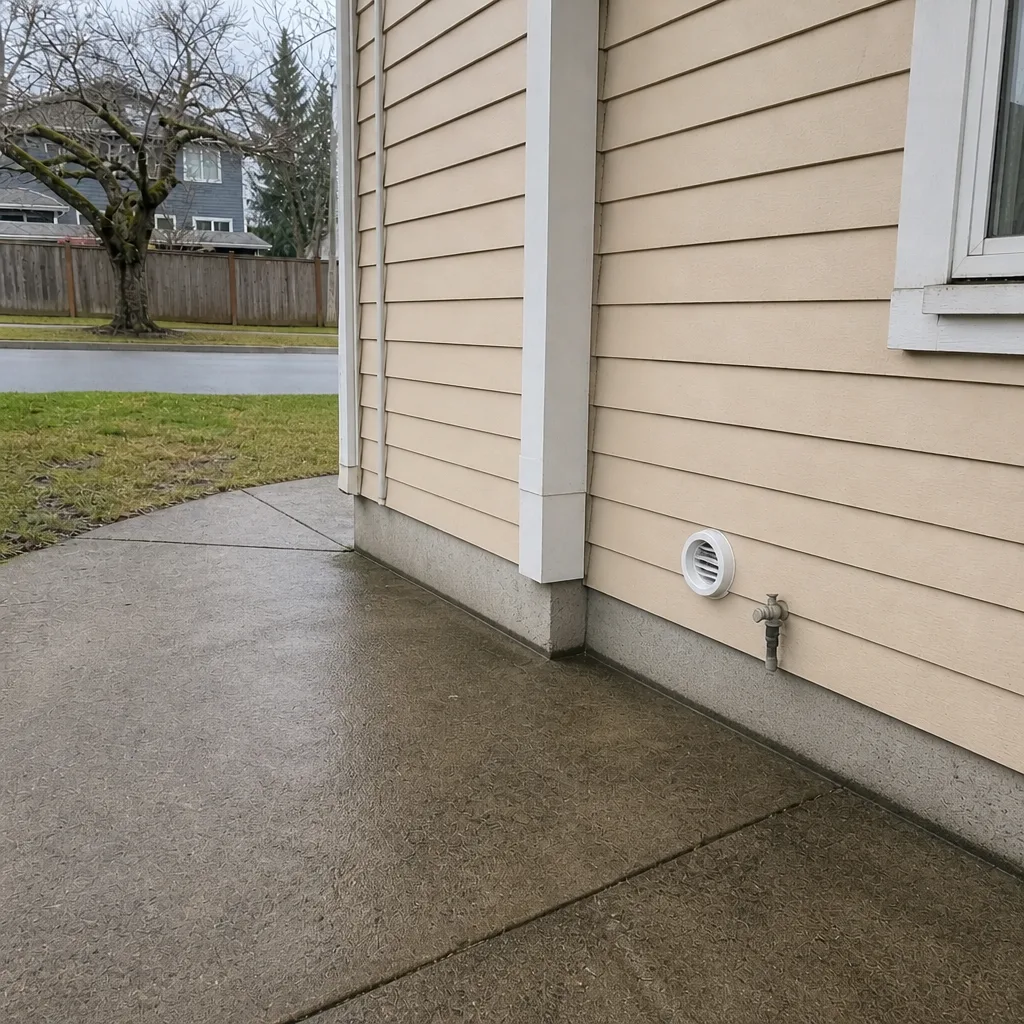 After
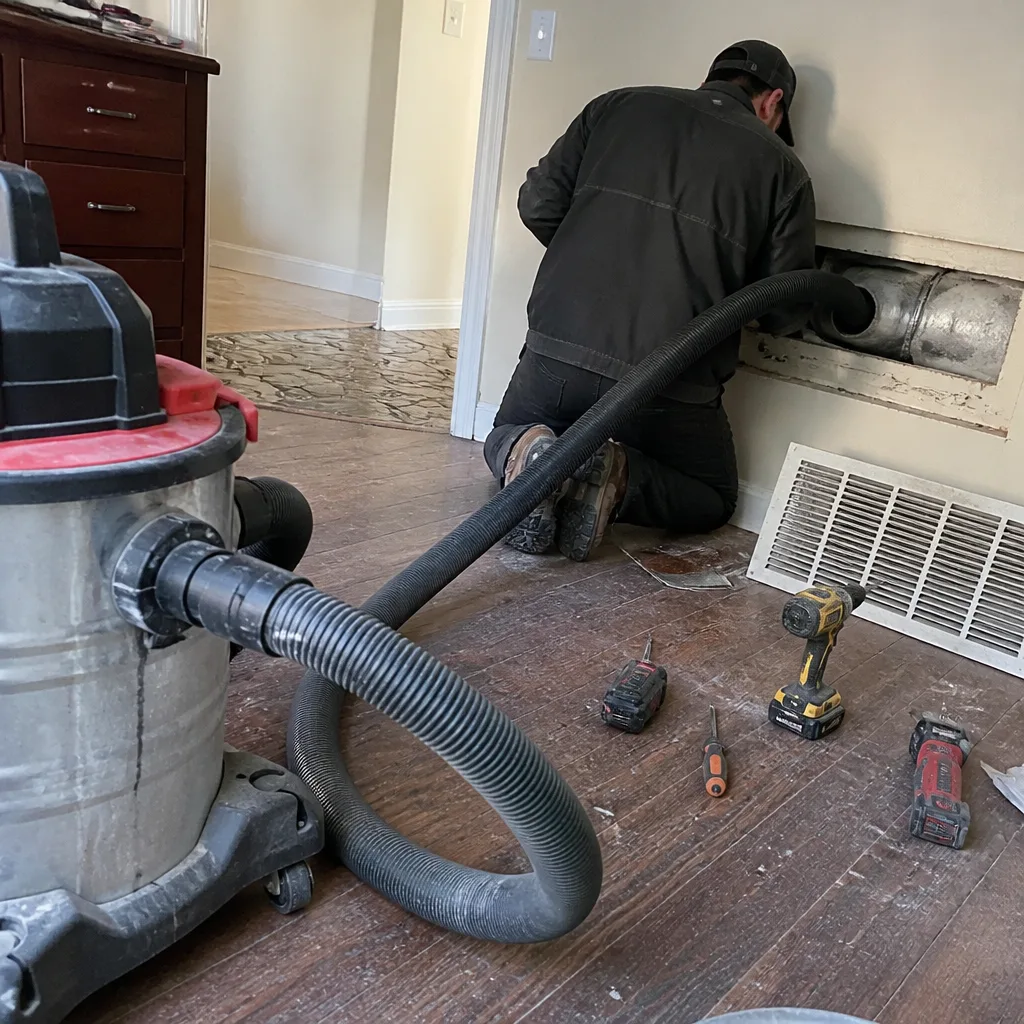 Before
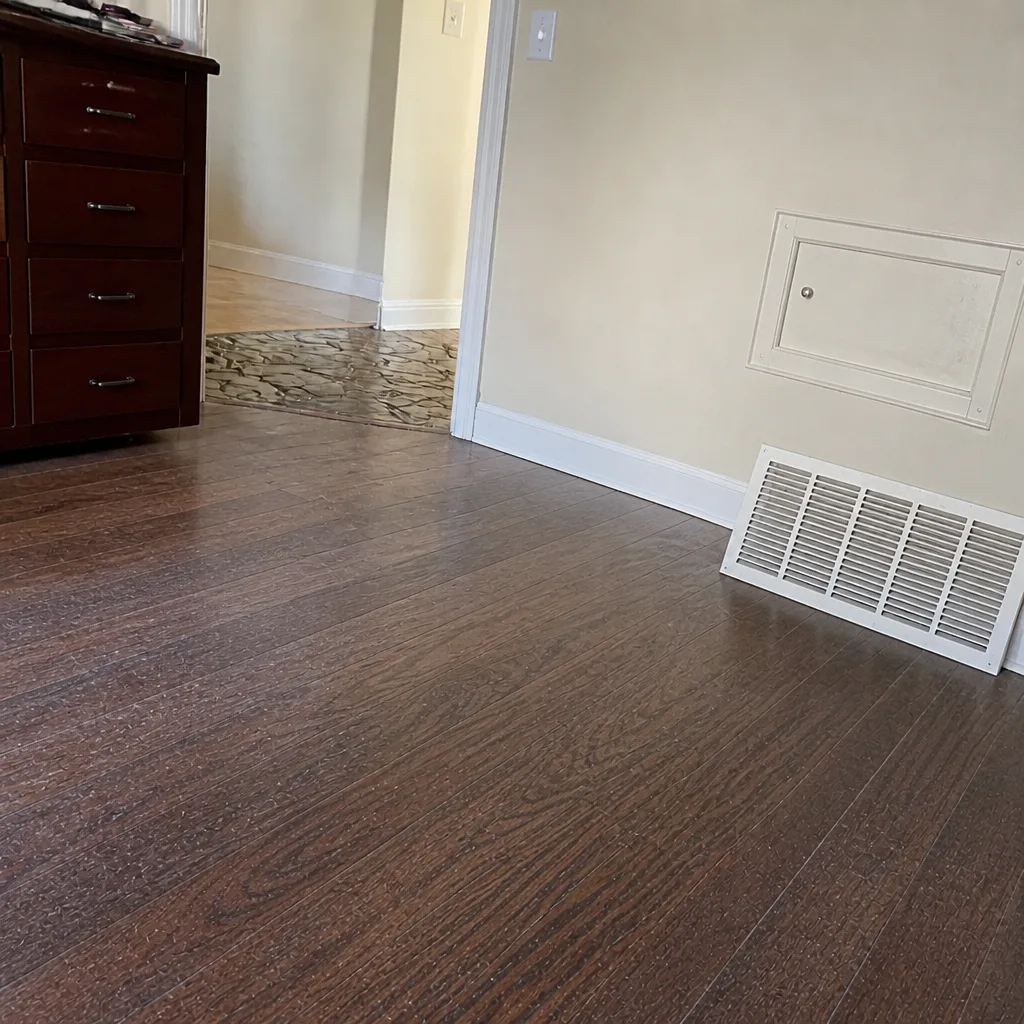 After
When to Call a Professional
Call a professional when the checklist signals point to internal contamination rather than routine surface dust – a caked blower wheel, heavy register buildup across multiple runs, a static pressure reading that’s climbed meaningfully above the baseline, or any post-renovation or post-smoke-season assessment that turns up fibrous debris or construction dust. Call when the system has been cleaned but never sealed, when airflow has weakened at distant registers, or when you’ve never had a full inspection and don’t know the system’s starting condition. Those are the jobs that reward professional agitation, sealed HEPA extraction, and containment.
Air Duct Cleaning Green Lake offers free estimates in Green Lake – call (877) 820-8098. We answer 24/7. Fast dispatch from 7am to 7pm, Sunday through Friday. A professional should be licensed and insured as their state requires, and we recommend asking for before-and-after photos as part of any estimate. That’s the standard we hold ourselves to.
Frequently Asked Questions
There’s no fixed interval that fits every home – the right answer depends on your condition-based signals, not the calendar. A Green Lake home that went through a smoke-heavy summer, a renovation, or two years of heavy heating-season load may need a cleaning sooner than one that didn’t. Read your registers, inspect the blower, and log static pressure – when those point to loading, it’s time. Most homes land somewhere around every three to five years, but the signals are the real trigger. Call (877) 820-8098 for a free estimate – we’ll tell you what the system is showing.
The blower wheel is the most important component to check on your own, because it’s the earliest indicator of system condition. A loaded blower wheel shows up before airflow problems do at the registers, and it explains a surprising number of “the system is running but the house isn’t comfortable” complaints. Inspect it through the access panel with the system off at the thermostat and breaker – you’re looking, not touching. If the fins show caked dust, stop and get an estimate.
We quote one flat price per system, agreed before any work starts, and the written estimate is what sets the final price. That’s the honest answer – a per-vent teaser figure almost always grows once the technician is on site, and we don’t do it. The price depends on the number of runs, the system’s condition, and whether the job needs sealing or sanitizing added. Call (877) 820-8098 for an exact quote – estimates are free.
A cheap quote almost always reflects a cheaper job – a quick surface pass that pulls the loose dust off and leaves the adhered layer bonded to the duct wall. The professional job uses mechanical agitation and sealed HEPA extraction, which is a real amount of work, and a full-system price reflects it. Ask any contractor what equipment they’re running and whether they provide before-and-after photos. If the answer is vague, the price reflects it.
Before-and-after photos of your own ducts, taken on the day of service, are how you know. Ask for them before you book. We photograph every cleaning and leave the images with the homeowner, along with the post-service static pressure reading. That record is also the start of your maintenance log – the baseline you’ll compare future readings against. A cleaner who can’t show you the result is asking you to take their word for it.
Usually yes, if the system has any gap or failed joint – a cleaned duct with an open joint just re-contaminates, so cleaning without sealing is a half-finished job. Duct repair and sealing is an in-house service for us, done on the same visit as the cleaning. That’s the order: clean, seal, sanitize. Ask about it during your estimate. Call (877) 820-8098 – estimates are free.
The Bottom Line
Calendar-based duct maintenance was written for somewhere else. Green Lake homes need a checklist built on what the system is actually showing: register condition, blower wheel loading, static pressure trends, and the seasonal triggers of wildfire smoke, heating season, and renovation. Log it, photograph it, compare it – that record is what makes the whole checklist worth doing. When the signals point to internal contamination or an unsealed system, that’s when professional agitation and sealed extraction earn their price. Air Duct Cleaning Green Lake handles cleaning, sealing, and filtration integration on one visit. Call (877) 820-8098 for a free estimate. We answer 24/7, with fast dispatch from 7am to 7pm, Sunday through Friday.
Written by the team at Air Duct Cleaning Green Lake.