
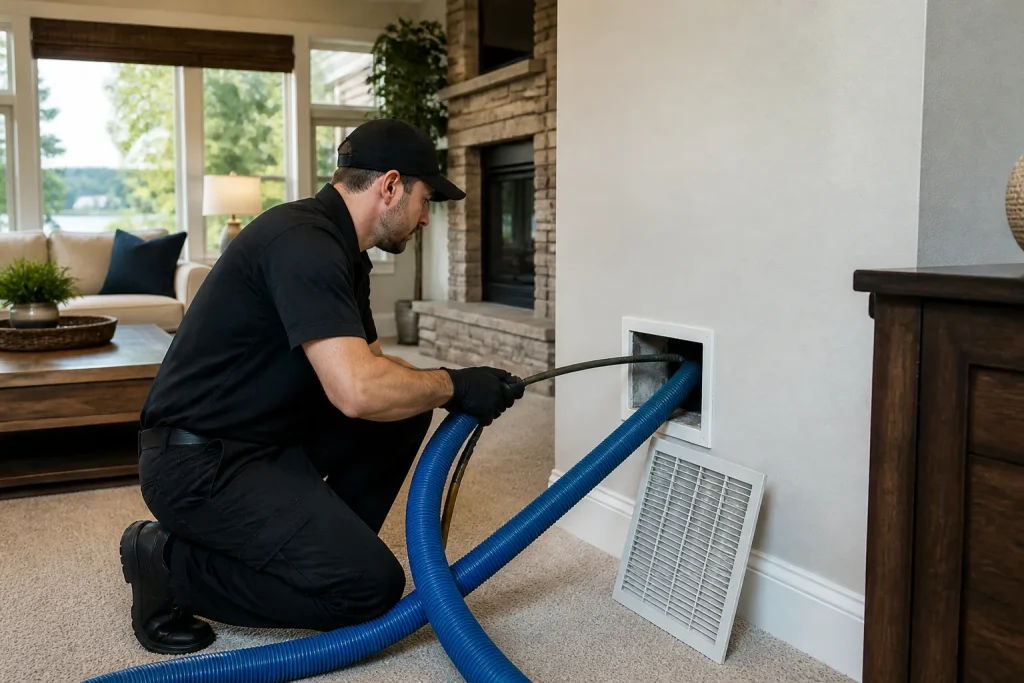
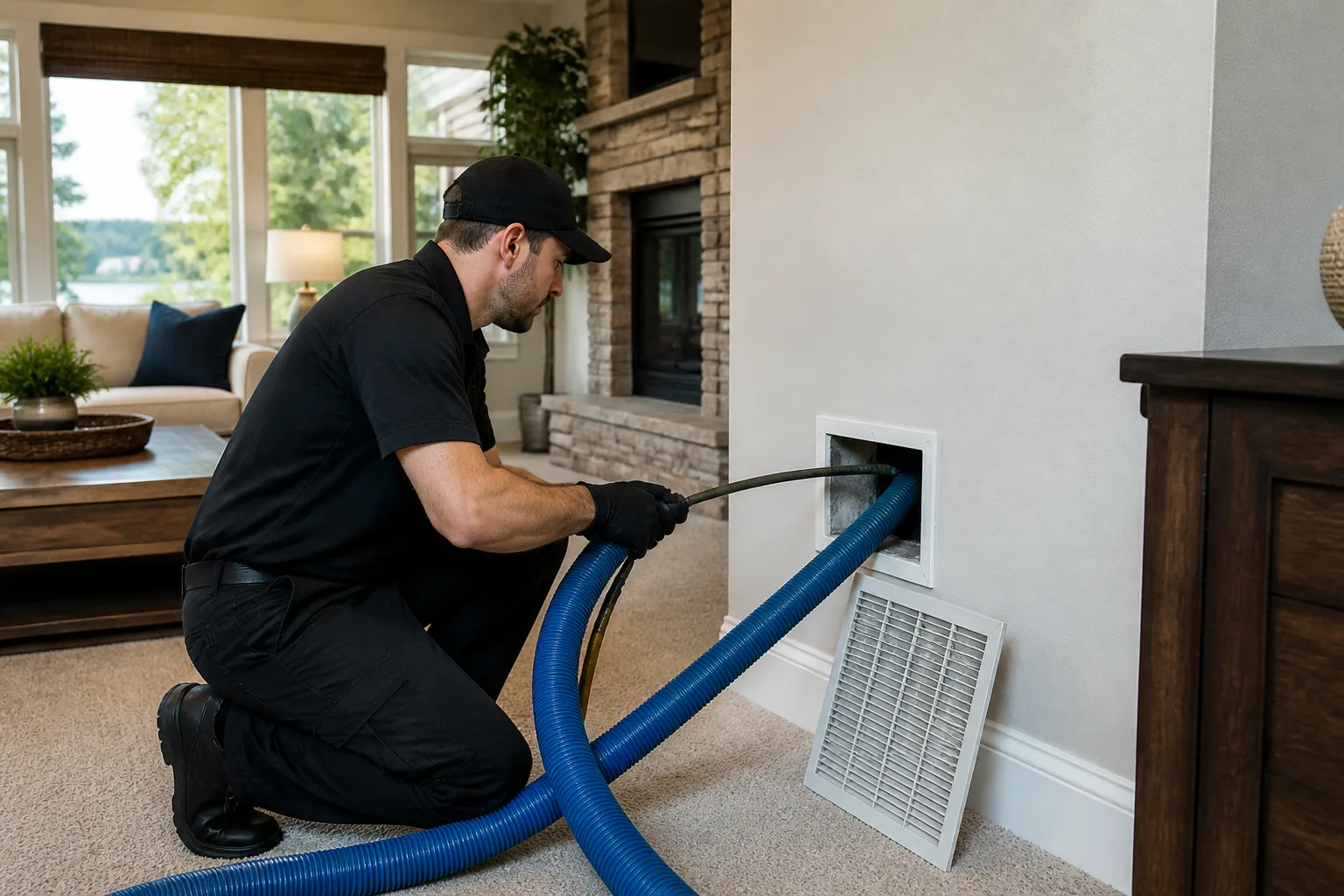
Nikro Air Duct Cleaning in Green Lake: A Homeowner’s Guide
Most homeowners can’t inspect a contractor’s equipment trailer, so they read reviews instead. It’s the only tool available to them. But reviews tell you whether someone showed up on time; they don’t tell you whether that person’s vacuum could pull enough static pressure to keep loosened dust inside the hose rather than cycling it through your living room. The difference between a Nikro system and a contractor shop-vac shows up in airflow, not star ratings. This guide explains what Nikro equipment actually does, in plain terms.
If you’d rather just have someone qualified handle it, call (877) 820-8098 and we’ll walk you through what to expect during a Green Lake duct cleaning visit.
What Is Nikro Air Duct Cleaning Equipment?
Nikro Industries makes industrial-rated HEPA vacuum systems built specifically for indoor air quality work. Duct cleaning isn’t a household chore with a hose attached; it’s a containment operation, and the equipment needs to hold a negative pressure field inside the duct system long enough to remove material. Nikro units are designed around that job.
Three things distinguish a Nikro system from contractor-grade equipment:
- HEPA filtration at 99.97% at 0.3 microns. Extracted air passing through the filter comes out clean enough to exhaust into the room being cleaned. That specification matters when the extracted particulate is dust, mold spores, pet dander, and construction debris.
- High CFM airflow ratings. Sufficient cubic feet per minute of airflow is what creates and maintains negative pressure during a residential duct clean. A vacuum that moves less air can’t hold the field, and the cleanup becomes a redistribution exercise.
- Industrial-grade housing and motor longevity. These units are designed to run extended duty cycles in commercial buildings and mold-remediation containment zones, then be parked and brought into a residential home the next morning.
Nikro’s HEPA standard is the same filter specification found in hospital isolation rooms and remediation containment equipment. We pair Nikro HEPA extraction with Abatement Technologies negative-pressure tools when contamination risk is elevated, which is standard practice for mold work and post-construction cleanup.
What 99.97% HEPA Filtration Actually Prevents
A duct cleaning without high-efficiency filtration doesn’t eliminate contamination. It moves it from the duct into the room, where it settles on furniture and gets inhaled. The 99.97% at 0.3-micron specification is the threshold that separates extraction from redistribution.
What that particle size means in practice: 0.3 microns is roughly the size where HEPA filters are hardest to test against, because it’s near the most penetrating particle size. A filter that holds 99.97% of particles at 0.3 microns holds a higher percentage of both larger and smaller particles. So the specification is conservative. If a vacuum passes it, it’s catching dust, mold spores, pet dander, and most airborne bacteria and viruses.
Why this matters in a Green Lake home: many neighborhoods here were built between the 1920s and 1960s, and the ductwork in those houses has decades of accumulated material. Some of that material is fine enough to stay airborne for hours once it’s disturbed. Extraction through HEPA is the only way to remove it without a fresh layer on every surface in the house.
One small observation: if a cleaning crew finishes and your dining table looks dustier than when they started, that tells you something about the filtration on their truck. A proper HEPA-equipped setup leaves the table alone.
How to Verify Equipment Before You Book in Green Lake
You don’t have to accept “we use professional equipment” as an answer. Ask specific questions, and ask them before the visit. Here’s what acceptable answers look like:
- “What HEPA rating does your vacuum have?” Acceptable: 99.97% at 0.3 microns, HEPA-certified. Unacceptable: “high-efficiency,” “HEPA-like,” or a filter that’s simply called “the filter.”
- “What CFM does your unit produce, and how many units will be running?” A single high-CFM unit or a two-unit arrangement maintaining negative pressure. If the answer is “we use a shop-vac with a HEPA bag,” that’s not a negative-pressure machine.
- “What equipment do you use for agitation?” Rotobrush rotary brush systems or equivalent rotary agitation. Whip lines are cheaper and don’t contact the duct walls the same way; rotary brush technology is the standard commercial IAQ contractors use.
- “Do you offer containment or negative-pressure equipment for heavier jobs?” For routine maintenance, standard setup is fine. For mold remediation or post-construction cleaning, Abatement Technologies negative-pressure tools are standard. If the answer is no across the board, they don’t do that tier of work.
- “Do you repair and seal, or just clean?” Cleaning without sealing leaves gaps, disconnected joints, and damaged runs in place, and the system gets dirty again faster.
We use Rotobrush and Nikro equipment, and we also offer Honeywell and Aprilaire air quality components so a cleaning and an air quality upgrade can happen in one visit.
What a Nikro-Equipped Technician Does Differently During a Service Call
The equipment decides the ceiling on the job, but the procedural differences are what a homeowner can actually observe. Here’s what to look for during a Green Lake duct cleaning visit on a 1920s home with mature ductwork.
- They set up containment first. Before turning on equipment, they identify return and supply registers, isolate the air handler, and connect the vacuum at the main plenum or a register so the entire system sees negative pressure throughout the clean.
- They agitate, don’t puncture. A rotary brush system travels the duct interior; technicians don’t cut into flexible duct or flex a rigid trunk. Whip lines and hand brushes work on the surfaces they touch and leave the rest alone.
- They open registers before the vacuum goes on, not after. Sequence matters. If agitation starts before negative pressure is established, dust ends up in rooms.
- They check what they find. Disconnected joints, crushed flex, water staining, or visible microbial growth inside the duct is information the technician should show you and discuss before cleanup continues.
- They finish with filtration, not just cleanup. New filter, correct MERV, and a discussion of whether the system needs Honeywell or Aprilaire upgrades.
Duct repair and sealing are in the same scope. If a technician finds damage and says “we’ll have someone call you about that,” the work stops halfway. Our team handles duct repair and sealing in-house so the job isn’t left for a second contractor.
For related work on the same visit, dryer vent cleaning is often paired with duct cleaning because the lint load tells you what’s accumulating elsewhere in the house.
Why Nikro Equipment Matters More in Green Lake Homes
Green Lake’s housing stock runs old. Plenty of homes sit within walking distance of the lake that were built before ducted HVAC existed and had systems retrofitted into existing walls and attics in the decades since. That retrofit reality shows up during a clean.
A few practical consequences:
- Flex duct retrofit runs are common. They sag, kink, and disconnect from collars. A vacuum that produces enough static pressure to hold negative pressure through a longer, less-efficient duct run extracts more effectively. CFM ratings stop being abstract.
- Dust accumulation in a Green Lake home has a season. Wind off the lake, mature tree canopy in spring, and pollen in late spring all feed the system. Houses near Woodland Park and around the Green Lake loop often hold a heavier particulate load than comparable homes inland.
- Attic and crawlspace ductwork sees Puget Sound humidity swings. That’s the environment where slight water intrusion and insulation debris build up inside duct jackets. A HEPA-filtered extraction system is the right tool for that job; manual cleanup is not.
- Return air paths in older homes are often undersized. That’s a repair question, not a cleaning one, but it’s the kind of thing a technician should be able to identify and talk to you about on the spot.
If you’re managing a property in the area and need air duct cleaning alongside routine filter replacement, the same equipment standard applies to both.
When to Call a Pro Instead of Handling It Yourself
Homeowners can change a filter, wipe down return grilles, and vacuum out visible debris from a register. That’s about the ceiling of safe DIY work. Duct interiors aren’t safely accessible without equipment designed for it, and disconnecting flex duct to reach inside often damages the run. If you’re noticing visible dust plumes from a supply register when the system kicks on, an unusual musty smell, or a recent water event that touched ductwork, it’s time for a professional inspection.
Also worth noting: if the ducts were cleaned years ago and no one addressed gaps or disconnected joints, the system is leaking air and reaccumulating material faster than a cleaning alone can manage. Our full HVAC cleaning service covers air handler, coils, and duct together so nothing gets left behind between the components.
The Bottom Line
Nikro equipment is worth understanding because it’s the tool that separates a duct cleaning from a dust redistribution event. HEPA-rated 99.97% filtration at 0.3 microns plus sufficient CFM to hold negative pressure is the standard; everything else on the spec sheet matters less. When you’re evaluating a contractor in Green Lake, ask what equipment they’re bringing before you book. Our technicians have up to 14 years of experience, and we use Rotobrush, Nikro, and Abatement Technologies equipment alongside Honeywell and Aprilaire product integration because these are the tools the work requires. One crew, one visit: cleaning, repair, and air quality upgrades handled together.
If you’re in Green Lake and need help, Air Duct Cleaning Green Lake offers free estimates. Call (877) 820-8098. We answer 24/7. Fast dispatch from 7am to 7pm, Sunday through Friday.
Frequently Asked Questions
Yes, meaningfully. A contractor shop-vac with a HEPA bag can move air and catch some particulate, but its filter spec and CFM rating are not designed for negative-pressure containment in a residential duct system. Nikro units are built around that job specifically, with 99.97% at 0.3 microns HEPA filtration and enough airflow to hold the pressure field during agitation. When a shop-vac is used, some of what the technician dislodges ends up back in the house.
Whole-system residential air duct cleaning typically runs in a range determined by system size, number of registers, and whether repair or sealing is needed. We set a flat price per system after a walk-through, in writing, before work starts. We don’t price per vent, because per-vent pricing pushes technicians to shortchange the work on the runs that need it most. Call (877) 820-8098 for an exact quote; estimates are free.
Ask for before-and-after photographs of your own ducts, not stock images. A HEPA-equipped cleaning also has an observable signature: the rooms stay clean, the surfaces don’t collect a fresh layer of dust, and you can see inside the registers on request. We document the system at start and finish so you can review what came out of your ductwork. Call (877) 820-8098 for a walkthrough before you book.
Most homes go three to five years between cleanings, but Green Lake homes with pets, recent renovation, older retrofit ductwork, or anyone with respiratory sensitivity benefit from a shorter interval. The honest answer is that a proper inspection matters more than a calendar schedule. If you can’t remember the last time it was done, it’s worth having someone look. Call (877) 820-8098 and we’ll help you decide whether it’s needed now.
Written by the team at Air Duct Cleaning Green Lake.
Need Air Duct Cleaning Help?
Call Air Duct Cleaning Green Lake - the local pro we connect you with is licensed and insured, with free written estimates in Green Lake.
(877) 820-8098